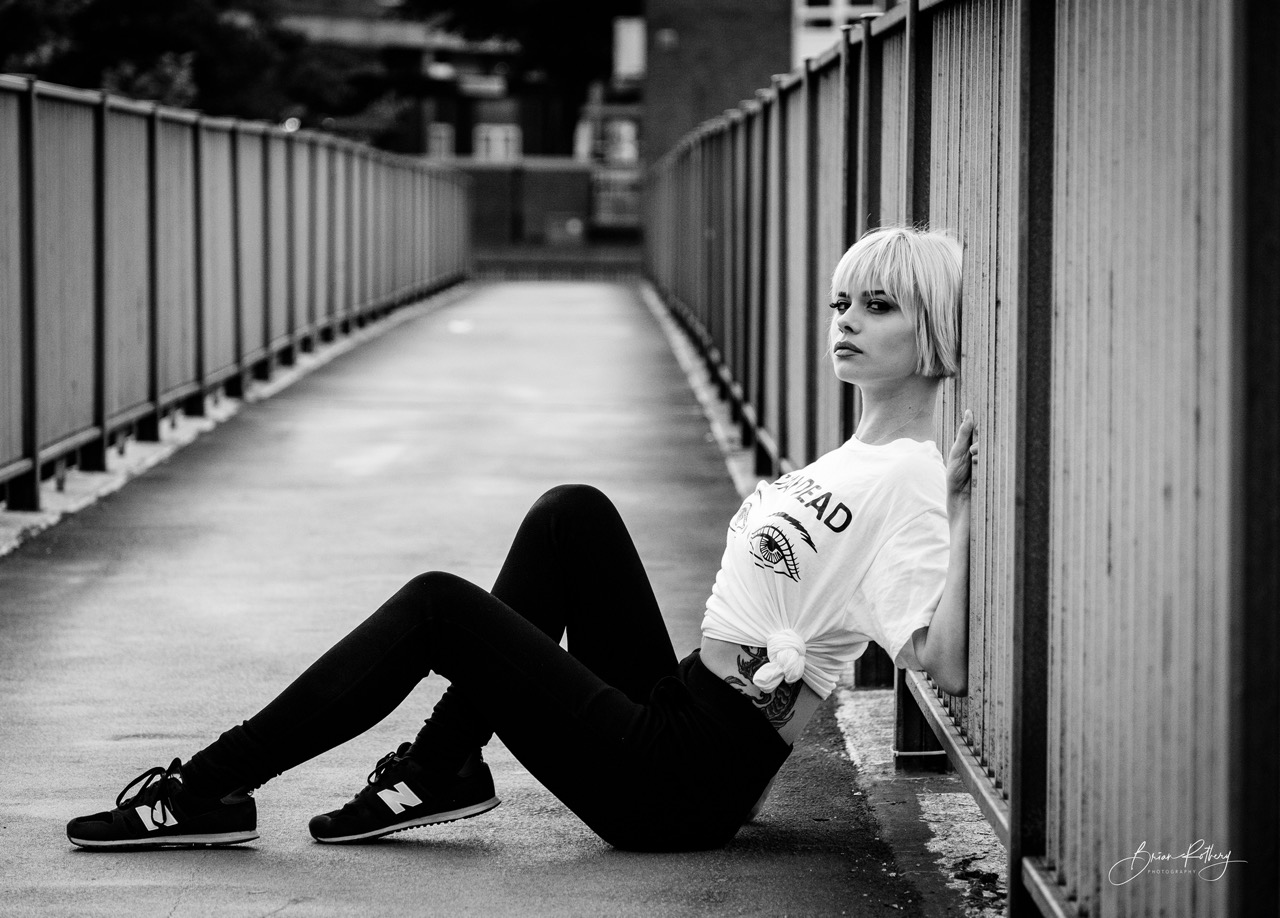

A polished headshot can introduce you, but it can’t tell your whole professional story. If your profile photos feel outdated or your business imagery lacks consistency, people may find it harder to recognise the person and values behind your work. If you’re searching for professional photography, the same principle applies wherever you’re based: thoughtful imagery can help create a visual identity that feels distinctive and genuinely yours. Commercial studios such as Image-Tec demonstrate how dedicated photography services can help professionals capture their craft and build a cohesive visual presence.
It’s understandable to feel unsure about being photographed or unclear about which images you need. Start by deciding where the photographs will appear and what you want them to communicate. That turns a broad idea into a practical plan, with imagery shaped around your professional identity and the places your audience encounters you.
This guide explains how a cohesive set of portraits can support your profiles, website and marketing, and how to give each image a clear role. You’ll also find practical preparation tips to help you feel more at ease in front of the camera and create natural, versatile, recognisable imagery.
Key Takeaways
- Learn how a purposeful image library can communicate more than a single headshot and give your professional identity greater consistency.
- Use a clear photography brief to define your audience, message, visual tone and intended image uses before a shoot.
- Discover which portraits and detail-led images can support your profiles, website and social content.
- Prepare for a personal branding photoshoot with a practical checklist, and approach camera nerves with realistic expectations.
- See how Brian Rothery’s tailored approach can draw on portrait, fashion and urban portrait photography to reflect your professional identity.
What personal branding photography communicates about your professional identity
Personal branding photography is a planned collection of professional images that communicates who you are, what you do and the qualities you want people to associate with your work. It gives your audience visual cues about your approach before you speak or meet. Its value lies not just in looking polished, but in making your intended professional impression clear and recognisable.
A single image can introduce you, while a considered image library supports your wider professional presence. It gives your website, profiles and marketing materials a consistent visual thread, with different photographs suited to different contexts. This builds on the idea of personal branding: shaping how others understand and remember your professional identity.
Authenticity matters. Consistency doesn’t mean every image must look identical. It means the expression, styling, setting and overall visual tone feel connected to the same person and purpose. A warm, approachable portrait may suit a relationship-led consultant, while a more editorial composition could express a creative professional’s point of view. The aim is a coherent first impression, not a manufactured persona.
What makes a personal brand photograph different from a headshot?
A headshot is usually a profile-focused portrait framed around the face. Personal branding photography takes a broader view, creating images for different business contexts. Alongside a close portrait, a collection might include a wider environmental image or a detail that hints at how you work.
Small choices shape the message. Relaxed posture and a natural expression can feel welcoming, while setting and composition can suggest a thoughtful, energetic or independent working style. A professional photographer can guide you through these decisions so the photographs feel intentional without becoming stiff or overly staged.
Who benefits from personal brand photography?
Founders, consultants, creatives and other client-facing professionals can benefit when their work depends on visibility and building trust. If you regularly publish articles, share updates or present your services online, a reusable collection of images can help you maintain a recognisable presence instead of relying on one portrait or informal social photographs.
Not everyone needs the same style or range of images. A consultant may prioritise clear, approachable portraits, while a creative might want imagery that conveys more personality and visual energy. Start with your audience and the impression you want to leave. Brian Rothery’s tailored personal brand photography at BR-Photography is shaped around each client’s creative needs.
How to turn your brand identity into a coherent photography brief
A useful photography brief turns your professional identity into decisions a photographer can act on. It makes personal branding photography purposeful, rather than a collection of attractive but disconnected photographs.
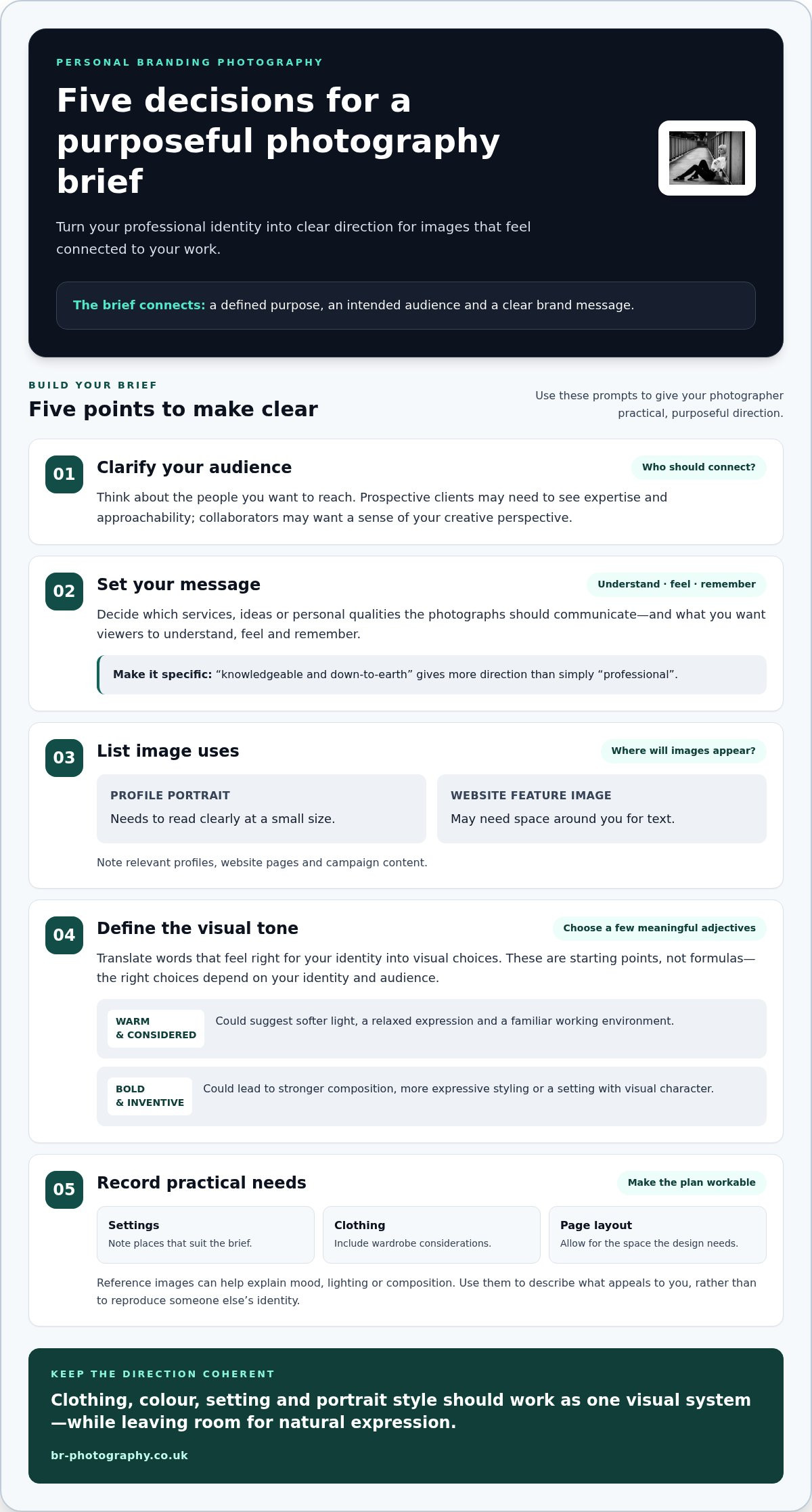
A useful brief connects every image to a defined purpose, an intended audience and a clear brand message. Before planning a session, consider what you want people to understand about your work, how you want them to feel and what you hope they’ll remember afterwards.
Which brand questions should you answer before a session?
Start with the people you want to reach. A prospective client may need to see expertise and approachability, while a collaborator may want a sense of your creative perspective. Decide which services, ideas or personal qualities the photographs should communicate. Be specific: “knowledgeable and down-to-earth” gives more direction than simply “professional”.
Next, map out where the images will appear. A profile portrait needs to read clearly at a small size, while a website feature image may need room around you for text. Note practical requirements too, such as preferred settings, clothing considerations or space needed for a page layout.
- Clarify your audience: Who should connect with the images?
- Set your message: What should viewers understand, feel and remember?
- List image uses: Note relevant profiles, website pages and campaign content.
- Define the visual tone: Choose a few meaningful adjectives to guide the look.
- Record practical needs: Include settings, wardrobe ideas and layout considerations.
How do you choose a visual direction that still feels like you?
Translate your chosen adjectives into visual choices. “Warm and considered” might suggest softer light, a relaxed expression and a familiar working environment. “Bold and inventive” could lead to stronger composition, more expressive styling or a setting with visual character. These are starting points, not formulas. The right choices depend on your identity and audience.
Reference images can help you explain mood, lighting or composition. Use them to describe what appeals to you rather than to reproduce someone else’s identity. Clothing, colour, setting and portrait style should work as one visual system, while leaving room for natural expression. You can explore different approaches in the personal branding photography portfolio as you consider what suits your brief.
Brian Rothery tailors the creative direction to each client’s needs. A concise brief gives the collaboration a strong starting point, helping shape imagery around your professional goals without forcing you into a style that doesn’t feel like you.
Which personal branding images do you need for your website and social channels?
Plan photographs around where they’ll be used, not just how they look in a gallery. A portrait cropped for a professional profile has a different job from a wide website image or a photograph accompanying an article. Review your existing pages and profile layouts before the session to identify useful framing, backgrounds and compositions.
Think in image types rather than a fixed number of photographs. A head-and-shoulders portrait gives a clear introduction; a wider environmental portrait shows more of your working context; detail-led images add visual texture or hint at your creative practice. Together, these options offer flexibility without asking every image to do everything.
| Image type | Useful placements | What it can communicate |
|---|---|---|
| Head-and-shoulders portrait | Professional profiles, speaker biographies | A clear, direct introduction, with expression and eye line helping set the tone. |
| Wider environmental portrait | About pages, website banners, editorial features | A sense of working style or environment, with space for page text where needed. |
| Detail-led image | Social posts, campaign content, supporting website sections | A visual cue about your tools, process or creative practice without relying on another close portrait. |
What images work well across professional profiles and websites?
For a profile, choose a portrait that remains clear when displayed small and tightly cropped. An about page usually offers more room: a wider composition can place you in context and create a more personal introduction. If your website uses a banner or text overlay, consider the layout so the subject and copy have space to sit clearly.
How can one session support consistent social content?
Variety can come from modest changes: tighter and wider framing, different expressions, a shift in posture or a change of background. These choices give you options for recurring posts while keeping the overall visual tone recognisably yours. Consistency comes from a connected approach, not repeating the same pose in every photograph.
Explore the portrait and fashion photography portfolio for examples of portrait-led visual approaches. Planning a personal branding photography session around real placements helps create a useful image library, with each composition considered for its intended role rather than chosen at random.
Prepare for a personal branding photo shoot with ease
A little preparation helps turn camera uncertainty into a clear, collaborative process. Think beyond what to wear: your goals, planned image uses and visual references all help shape photographs that feel relevant to your professional identity.
Use this checklist to get organised:
- Set your goals: Note what you want people to understand, feel and remember about your work.
- List image uses: Identify the profiles, website pages and marketing content the photographs need to support.
- Choose references: Gather examples that show a mood, setting or composition you like, rather than a look you want to copy exactly.
- Plan clothing: Select outfit options that suit your audience, profession and intended visual tone.
- Review the schedule: Consider what you’ll need on the day and allow yourself time to arrive feeling settled.
Choose clothing that supports the message you want your professional images to convey. There’s no universal rule that you must wear a particular colour, pattern or level of formality. A creative professional may feel most at ease in expressive styling, while someone in a more traditional field may prefer a tailored look. Choose what feels like you and fits the brand direction you’ve established.
What should you wear for professional brand photographs?
Bring considered options that offer a coherent range of looks, rather than outfits that feel unrelated. Think about how each choice will sit within your website or profile and whether it supports the qualities you want to communicate. Comfort matters too: clothing you can move in naturally helps you focus on the session instead of adjusting your outfit.
How can you feel more confident in front of the camera?
If you’re nervous, say so during planning. Sharing what feels uncomfortable and what you hope to achieve gives the photographer useful context. You don’t need to arrive knowing how to pose. Guidance on posture, expression and movement can help you settle into the session and create natural-looking portraits without forcing a performance.
Brian Rothery tailors personal brand photography to each client’s creative needs, using a collaborative approach to shape the images. If a contemporary, location-led feel suits your identity, explore the urban portrait photography work for visual inspiration.
How BR-Photography makes personal branding imagery purposeful and personal
Distinctive professional imagery starts with understanding the person behind the work. Photographer Brian Rothery leads BR-Photography’s tailored personal brand photography, shaping each project around the client’s professional identity and creative needs. For anyone searching “personal branding Leeds”, the focus is still on building a visual direction with a clear purpose, rather than applying a generic template or chasing a passing trend.
The process is collaborative. Your audience, key message and intended image uses guide decisions about portrait style, setting and composition. A consultant looking to convey approachability may need a different visual emphasis from a creative professional wanting to express a strong point of view. The photographs should feel connected to your work and recognisably you.
What does a tailored personal branding photography session prioritise?
It prioritises authentic representation. Portrait photography can create a direct, personal introduction; fashion photography can inform a considered approach to styling and visual expression; urban portrait photography can bring environmental context into the frame. These are creative possibilities, not fixed looks. The right combination depends on the person, their goals and the impression they want to make.
Explore the BR-Photography portfolio to see examples of Brian Rothery’s visual work. Use them as a starting point for identifying details you respond to, such as mood, framing or setting, then relate those preferences to your own professional identity.
What is the next step if you are planning a session?
Begin with a short outline: who you want to reach, where you’ll use the photographs and what you want them to communicate. You don’t need a fully formed creative plan. A clear starting brief gives the photographer a useful foundation for developing a relevant direction with you.
This preparation also helps keep the imagery functional. Each photograph can be considered in relation to a real purpose, whether it’s introducing you on a profile, adding context to a website page or supporting your ongoing professional content. The result is a considered visual resource shaped around your work, not a one-size-fits-all idea of a professional portrait.
Shape a professional presence that feels unmistakably yours
Your professional imagery should do more than fill a profile space. A clear brief, purposeful image choices and a consistent visual tone help your audience understand who you are and what you bring to your work. The strongest direction is shaped around your identity, not a generic formula.
BR-Photography offers dedicated personal brand photography tailored to each client’s creative needs. Led by photographer Brian Rothery, the work draws on portrait, fashion and urban portrait photography to explore different visual possibilities and create imagery that feels authentic and useful across your professional presence.
You don’t need to arrive with every detail decided. Start with your audience, the places you’ll use the photographs and the impression you want to make. From there, a collaborative approach can help turn your ideas into a considered visual direction.
Ready to explore what your professional imagery could communicate? Discuss your personal branding photography with BR-Photography.
Frequently Asked Questions
What is personal branding photography?
Personal branding photography is a planned set of professional images that communicates your identity, work and approach. Unlike a single headshot, it can include close portraits, wider environmental photographs and details that support different uses across your professional presence. Each image should have a role, whether it’s introducing you on a profile, adding personality to a website page or supporting an article or campaign.
Who needs personal branding photography?
It can be useful for founders, consultants, creatives and other professionals whose work involves being visible to clients or collaborators. A considered image library may be especially valuable if you regularly update a website, publish content or represent your business online. The right style and range of images depend on your role and audience; a personal brand shoot should reflect your professional identity, not follow a universal template.
How do I prepare for a personal branding photoshoot?
Start by clarifying who you want to reach, what you want your images to communicate and where you plan to use them. Gather visual references for mood or composition, review your profile and website layouts, and plan clothing that suits your intended visual tone. If you feel nervous, mention it during planning. You don’t need to know how to pose in advance; guidance can help you feel more at ease.
What should I wear for personal branding photos?
Choose clothing that feels like you and fits your profession, audience and visual direction. Consider how the outfit will look in the settings you’ve planned and whether you can move comfortably in it. Bringing a few coordinated options can create a useful range of looks. There’s no universal rule about colours, patterns or formality; the best choices support the message you want your photographs to convey.
Can I use personal branding photos on LinkedIn and my website?
Yes. Personal branding photographs can be planned for professional profiles, website pages and other marketing uses. A clear, close portrait may suit a profile, while a wider image can give an about page more context or leave room for text. Before a session, review the layouts where you expect to use the photographs so framing and composition can be considered for those placements.
How often should I update my personal branding photos?
There’s no fixed schedule for updating personal branding photos. Review them when your appearance, role, services or professional visual identity changes, or when your current images no longer feel representative. It’s also worth checking whether your photographs still suit your website and profile layouts. The aim is for your imagery to reflect who you are now, rather than replacing it simply because a set amount of time has passed.
Disclaimer
"The information provided in this Blog post is for general informational purposes only. While I strive to provide accurate information, I make no representations or warranties of any kind about the accuracy, reliability, or completeness of this information. Any reliance you place on such information is strictly at your own risk. In no event will I be liable for any loss or damage derived from the use of this blog."


