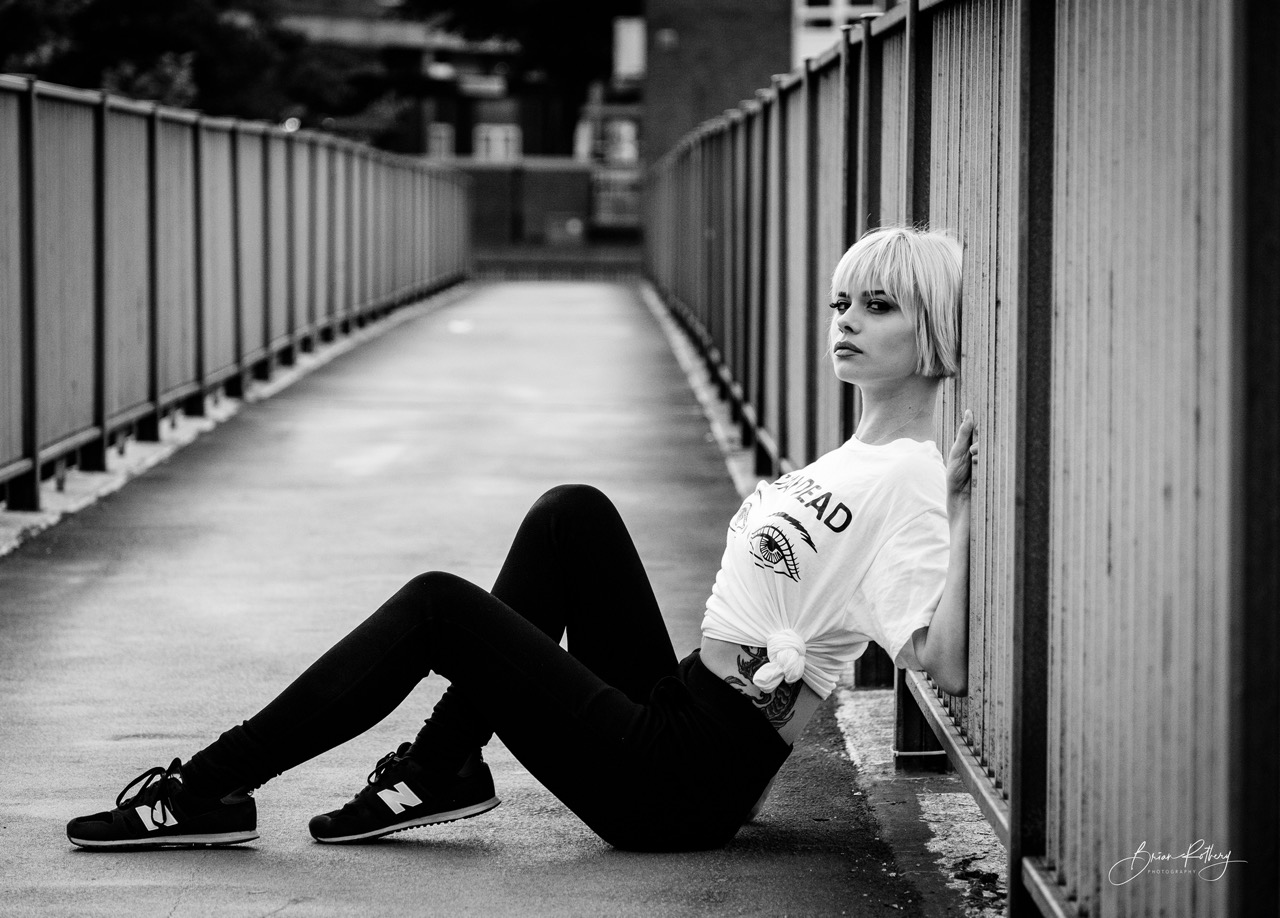

What makes a stronger model portfolio: more images, or a smaller selection with a clear purpose? If you are searching for a professional model portfolio photographer, you may be weighing up which shots to include, how to prepare, and whether the finished images will show genuine range.
A professional portfolio should feel like you while giving agencies and clients a clear sense of your versatility. That takes more than changing outfits. Each image needs a role, from a clear portrait or full-length frame to an editorial look or a photograph that uses movement to bring personality into the story. Aim for variety with a coherent visual direction, not a set of near-identical photographs.
This guide explains how to plan a distinctive selection, prepare for a shoot, and collaborate on a concept with BR-Photography. You will learn how composition, location, and lighting can shape a series of images, what happens from the concept call to the on-location shoot, and how the finished photographs are prepared for delivery. A considered approach helps make the session feel more manageable and gives each image a reason to be in your portfolio.
Key Takeaways
- Build a portfolio with a clear purpose: each image should introduce a different aspect of your presentation, expression or visual range.
- Combine commercial, fashion editorial and urban portrait approaches to add variety while keeping a recognisable personal identity.
- When comparing a model portfolio photographer leeds search, assess relevant examples, visual consistency and storytelling against the direction you want to pursue.
- Prepare by defining your goal and gathering references for mood, styling, framing and lighting, rather than copying another model’s images.
- A concept-led process can shape portfolio imagery from an initial discussion through an on-location shoot to finished image delivery.
What Makes a Model Portfolio Useful to Agencies and Clients?
A model portfolio is a curated selection of images that demonstrates your presentation, expression and visual range. It introduces how you communicate on camera and the kinds of work your look might suit. It does not guarantee representation or bookings.
A single headshot may show your face clearly, but it can’t tell the whole story. Nor does a gallery become varied just because it contains different outfits. If the expression, framing and mood barely change, the images may all serve the same purpose. Edit with intent so each photograph adds something instead of competing with the rest.
What should a model portfolio communicate?
Think of each image as offering a different cue. Expression can feel open, assured or introspective. Styling can suggest a commercial, fashion-led or more personal direction, while framing and setting affect how the viewer reads the subject. Together, these choices create a more complete introduction than any one detail could on its own.
Polished presentation matters, but authenticity gives the images credibility. A carefully composed photograph should still feel connected to the person in front of the camera, rather than hiding them beneath a borrowed persona. Build the portfolio around your individual direction, not just a trend you’ve seen online. Trends can inform a concept, but they shouldn’t become the whole concept.
For example, a clean, straightforward portrait might communicate an approachable presence, while a more atmospheric frame could explore movement or mood. The contrast gives an agency or client different information about you, provided the images still feel like parts of the same visual introduction. Browse this portrait and fashion photography portfolio to see how choices in image-making can contribute to a coherent body of work.
How is a portfolio different from headshots?
A headshot is a focused portrait, usually designed to make your face and expression easy to assess. A portfolio is broader: it brings complementary images together to show how you present yourself across different moods, styling and visual contexts. One doesn’t replace the other. A clear headshot can be part of a wider selection, but it can’t serve every purpose by itself.
Variety should be deliberate, not arbitrary. One image might use simple styling and direct framing; another could introduce a more editorial composition. Fashion photography offers a broad reference for how styling, setting and visual storytelling can work together, although your portfolio doesn’t need to imitate a particular aesthetic.
When looking for a model portfolio photographer, consider more than whether individual images are striking. Ask what each one communicates, how it complements the others and whether the overall selection feels recognisably yours. That’s the difference between a set of portraits and a purposeful visual introduction.
How Editorial Photography Builds Range Without Losing a Cohesive Look
A varied portfolio doesn’t need to feel like several different people photographed on separate days. The connection comes from you: your presence, expression and the creative direction running through the images. Each frame can have a distinct purpose, while a consistent approach to styling, colour or storytelling helps the selection feel considered.
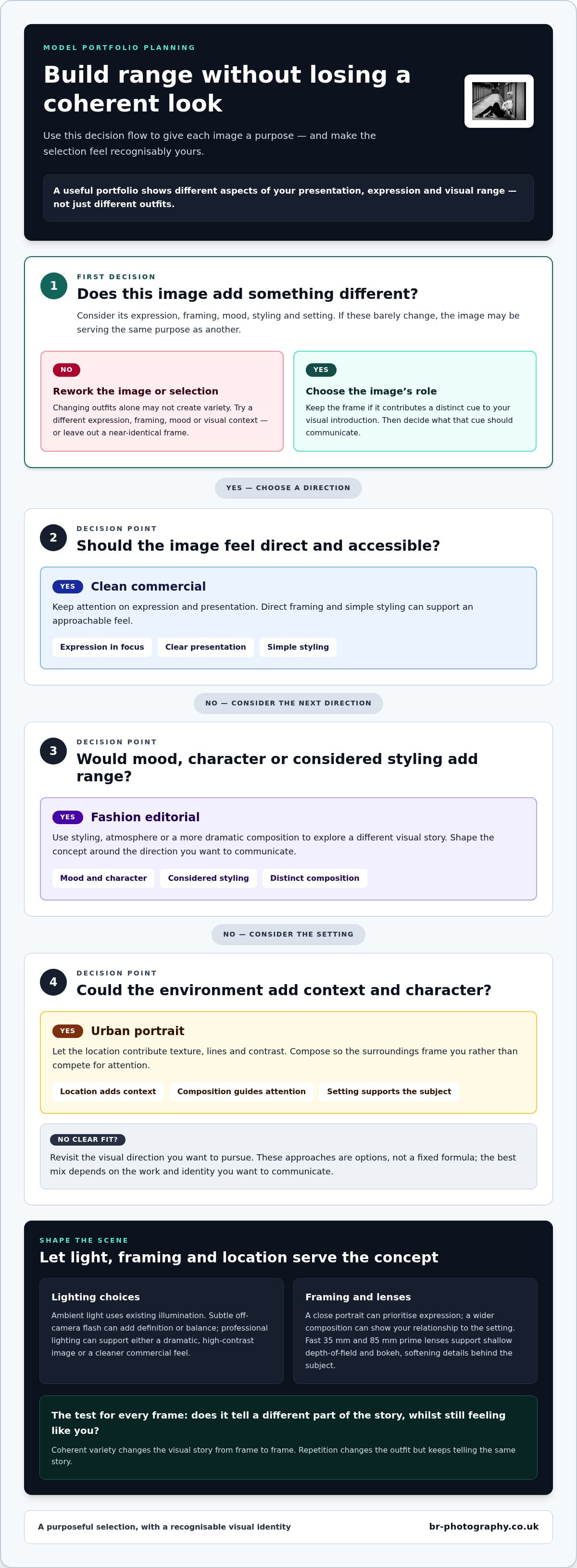
Consider three useful approaches. Clean commercial imagery can feel direct and accessible, keeping attention on expression and presentation. Fashion editorial can introduce stronger styling, atmosphere or a more dramatic composition. Urban portrait photography can use the environment to add context and character. None is automatically right for every model; the best mix depends on the work and visual identity you want to communicate.
Coherent variety changes the visual story from frame to frame; repetition changes the outfit but keeps telling the same story. Framing, composition and styling are practical tools for creating that difference. A close portrait can prioritise expression, while a wider composition can show how you relate to the setting. A change in pose or wardrobe can add another dimension if it supports the concept rather than simply filling space.
When does fashion-editorial imagery fit a model portfolio?
Fashion editorial imagery can communicate mood, character and a considered approach to styling. Its visual language can also connect with campaign, lookbook and street-style contexts, each of which may call for a different balance of atmosphere and clarity. Shape the concept around your intended direction so these choices have a purpose. Explore Fashion Photography as part of a portfolio that feels distinctive while staying true to how you want to present yourself.
How do lighting and location shape the images?
A location can do more than provide a backdrop. An urban setting can introduce texture, lines and contrast, while composition determines whether those details frame you or compete for attention. Ambient light uses existing illumination; subtle off-camera flash can add definition or balance to the scene. Professional lighting can support a dramatic, high-contrast image or a cleaner commercial feel, depending on the concept.
Fast 35 mm and 85 mm prime lenses support shallow depth-of-field and bokeh, which can soften details behind the subject. Ambient light can be sculpted using existing city illumination, with subtle off-camera flash used where it supports the image. The lens and lighting choices should serve the photograph’s purpose, not dictate it.
When comparing a model portfolio photographer leeds search with the work you want to make, look at how location, lighting and composition contribute to each image’s story. A portfolio shoot can begin with a discussion of your creative direction. You can share your portfolio photography concept as a starting point for that conversation.
How to Assess a Model Portfolio Photographer’s Creative Approach
Choosing a photographer is about more than finding images you like. Look for a creative approach that suits the direction you want your portfolio to take, whether that means clean commercial portraits, expressive fashion imagery or location-led storytelling. A strong body of work gives each photograph a clear intention and uses a considered visual language throughout.
As you review examples, ask yourself: could I imagine these images communicating the qualities I want agencies or clients to notice? You don’t need to want every look in a photographer’s portfolio. Instead, look for flexibility in how mood, setting and composition are shaped around a person and a concept.
What should you look for in portfolio examples?
Look closely at framing, expression and the relationship between subject and setting. A photograph should feel purposeful, rather than like a variation made only to add another pose. Consider whether the images tell a story, and whether changes in mood or styling feel distinct but visually consistent. BR-Photography’s portrait and fashion photography portfolio gives you examples to assess in this way.
Image finishing also shapes the final character. Professional colour grading can bring consistency to a set, while skin retouching can refine a portrait. High-end retouching can also enhance fabric texture, helping garments retain visual detail. The aim is considered polish, not an effect that distracts from the model or styling.
Look beyond the finished frame, too. Lighting influences an image’s atmosphere and definition; location scouting helps find settings that support the concept; composition guides the viewer’s attention. These choices work together. A compelling location won’t strengthen a photograph if it overwhelms the subject, just as lighting can’t create a convincing story without a clear visual intention.
How can a photographer help you feel at ease?
Feeling unsure about posing is common, especially if you haven’t had a professional shoot before. A collaborative approach gives you room to share what feels natural and discuss the visual direction before the camera comes out. A concept call can help clarify your goals, references and the kinds of images you hope to create.
Rather than relying on rigid poses, consider how framing and setting might support a more natural result. An on-location portrait can use the surrounding environment as part of the composition, avoiding a forced studio look. Small adjustments to posture, movement or where you direct your gaze can then be explored in relation to the concept.
Use your review as a practical conversation, not a test. If you’re searching for a model portfolio photographer, compare examples by asking whether the imagery suits your intended direction, feels consistent and gives you a sense of how the photographer tells a story. This gives you a clearer basis for judging creative fit.
How to Prepare for a Model Portfolio Shoot
A confident shoot starts before the camera comes out. A little preparation gives you a clearer brief, makes creative decisions easier and helps the images serve a purpose beyond simply looking polished. You don’t need a fully formed vision; a few clear priorities and references are enough to begin a useful conversation.
How do you define the shoot’s purpose?
Start by deciding what you want the photographs to do. Are they for a personal portfolio, an introduction to an agency or fashion-related work? Then describe the impression you’d like them to leave: perhaps approachable and natural, confident and direct, or expressive and fashion-led. A clear aim gives the concept call a useful starting point and helps shape the shoot’s visual direction.
Gather references that communicate mood, styling, framing and lighting. You might save one image for its atmosphere, another for how the subject is framed, and a third for the way light shapes the scene. Treat these as prompts, not templates. Copying another person’s pose or whole aesthetic can make the result feel borrowed. Discuss what appeals to you so the photographer can develop those ideas into a concept that reflects your direction.
Bring your questions and preferences to the concept call. Talk through what feels natural, what you’re unsure about and the visual choices you’d like to explore. A focused discussion of your aims and references helps establish how the creative direction will be developed collaboratively.
What happens from concept call to image delivery?
BR Photography’s process follows a clear sequence, moving from an initial idea to finished photographs:
- Contact-form request: Share your enquiry and outline what you’re hoping to create.
- Concept call: Discuss your goals, visual references and creative direction, then shape the idea for the shoot.
- On-location shoot: Bring the agreed concept to life through photography shaped around the person, setting and story.
- Image delivery: Receive publication-ready photographs prepared for use in your portfolio and relevant platforms.
Knowing the stages can ease uncertainty, especially if this is your first professional shoot. You don’t need to arrive with every detail solved. Share what matters to you, raise any questions and use the conversation to align on the intended result. Preparation is about creating a shared direction, not memorising poses or trying to perform a version of yourself that doesn’t feel genuine.
Ready to turn your ideas into a considered shoot concept? Discuss your portfolio shoot and share the direction you’d like to explore.
How BR-Photography Approaches Model Portfolio Imagery
BR Photography creates portfolio-focused imagery through Fashion Photography and Urban Portrait Photography, with an editorial approach centred on people, character and story. Rather than treating each frame as a standalone pose, the aim is to make visual choices work together. An urban setting, the direction of light and the way a subject is framed can contribute to images that feel distinctive while staying true to the model.
Location scouting helps identify urban and minimalist architectural backdrops that support the concept. Lines, surfaces and surrounding light can become part of the composition, adding context without drawing attention away from you. Explore Fashion Photography to see the fashion-led side of this approach.
What informs the visual direction?
The concept call is a chance to discuss your creative needs and establish what the images should communicate. It can help shape choices around mood, setting and composition, whether you’re looking for an expressive editorial feel or a cleaner presentation. The direction is collaborative: your preferences inform the visual plan, while the photographer brings a creative and technical perspective to develop it.
Lighting is considered in relation to both the subject and the location. Ambient light can be sculpted using existing city illumination, with subtle off-camera flash used to add definition where it supports the image. This makes it possible to work with the character of a setting rather than relying on one fixed lighting style.
Fast 35 mm and 85 mm prime lenses support shallow depth-of-field and bokeh, helping separate the subject from background detail when that suits the composition. Their use is considered alongside the location, light and visual direction of the photograph.
What can you expect from the collaboration?
The process moves from a contact-form request to a concept call, then an on-location shoot and image delivery. Each stage has a role: the initial request introduces your aims, the call develops the idea, and the shoot puts the agreed direction into practice. Finished images are delivered publication-ready, ready to become considered visual assets in your portfolio.
In-house high-end retouching includes professional colour grading, skin retouching and fabric texture enhancement. These finishing choices refine the photographs while supporting the intended look, from colour consistency to garment detail. The retouching should serve the image, not distract from your expression or presence.
If you’re considering a model portfolio photographer, look for a process that connects creative discussion, location, lighting and finishing into one coherent approach. BR Photography, led by Brian Rothery, brings those elements together around the individual and the story the photographs are intended to tell.
Shape the Portfolio That Moves You Forward
Your next portfolio doesn’t need to answer every possible brief. It should give a clear sense of the direction you want to pursue now, while leaving room for your confidence and creative identity to develop. Before planning a shoot, consider which qualities you want the images to communicate and what kind of opportunity they should support. That focus gives the creative process a meaningful starting point.
When choosing a model portfolio photographer, look for an approach that treats the setting and finish as part of the story, not decoration. Editorial-style photography can use urban locations and professional lighting to establish a distinctive mood. In-house high-end retouching, including professional colour grading, skin retouching and fabric texture enhancement, can refine the final images while keeping the focus on your presence.
You don’t have to arrive with every creative decision already made. Bring your ideas, questions and sense of direction; collaboration can help turn them into images that feel purposeful and individual. Discuss your portfolio photography with BR Photography and start shaping a visual introduction that feels like you.
Frequently Asked Questions
What should a model portfolio include?
A model portfolio should include images that show how you present yourself across different contexts, such as a clear portrait, a full-length frame and photographs with contrasting styling or mood. Choose images that each add useful information rather than simply showing another outfit. For example, a simple, direct portrait can sit alongside a more expressive fashion image, giving viewers a broader sense of your look and how you communicate on camera.
Do I need professional photos before approaching a model agency?
No, professional photographs aren’t always needed for an initial agency application. Some UK agencies ask aspiring models to submit natural digitals first: clear, unretouched photos that show their current appearance without elaborate styling. Follow the agency’s own submission guidance closely. If you’re asked for digitals, a professional editorial portfolio may be more than you need at that stage; you can consider a creative shoot later if it suits your goals.
Can a beginner have a model portfolio photoshoot?
Yes, you can have a portfolio shoot as a beginner; previous modelling experience isn’t essential to start exploring how you photograph. If you feel unsure about posing, say so during the creative discussion. Talk through the mood you want and take time to find expressions or movement that feel natural. A collaborative concept can help make an unfamiliar shoot a more considered creative experience.
How do I prepare for a model portfolio photoshoot?
Prepare by deciding what you want the images to communicate, then gather a few references that illustrate the mood or framing you like. Note what appeals to you in each one, rather than trying to reproduce the whole image. Before the shoot, share relevant preferences and questions during the concept discussion. This gives the photographer useful context and helps you arrive with a clearer idea of the creative direction.
What is the difference between a model portfolio and a headshot?
A headshot focuses attention on your face and expression, making it useful when someone needs a quick impression of your appearance. A model portfolio provides broader context through complementary images with different framing, styling or atmosphere. For instance, a headshot may introduce you on an agency profile, while a portfolio can show how you present in a more editorial setting. The right selection depends on what the viewer needs to understand.
What happens during a model portfolio photography session?
A portfolio photography session starts with the agreed creative direction, then develops through the shoot as you and the photographer work towards the intended images. You can discuss questions or preferences as you go; you don’t need to know how to pose in advance. After the shoot, the photographs are prepared for publication-ready delivery. Share how you plan to use them during the initial discussion so the creative direction supports your purpose.
Can urban portraits work in a model portfolio?
Yes, urban portraits can add a sense of place and atmosphere, particularly if you want images with an editorial or contemporary feel. Architectural lines, textured surfaces and existing light can contribute to the composition, while a simpler background can keep attention on your expression and styling. The setting should support the portfolio’s direction, not dominate it. Urban Portrait Photography can provide a distinctive contrast to more straightforward, cleanly framed portraits.
Disclaimer
"The information provided in this Blog post is for general informational purposes only. While I strive to provide accurate information, I make no representations or warranties of any kind about the accuracy, reliability, or completeness of this information. Any reliance you place on such information is strictly at your own risk. In no event will I be liable for any loss or damage derived from the use of this blog."


