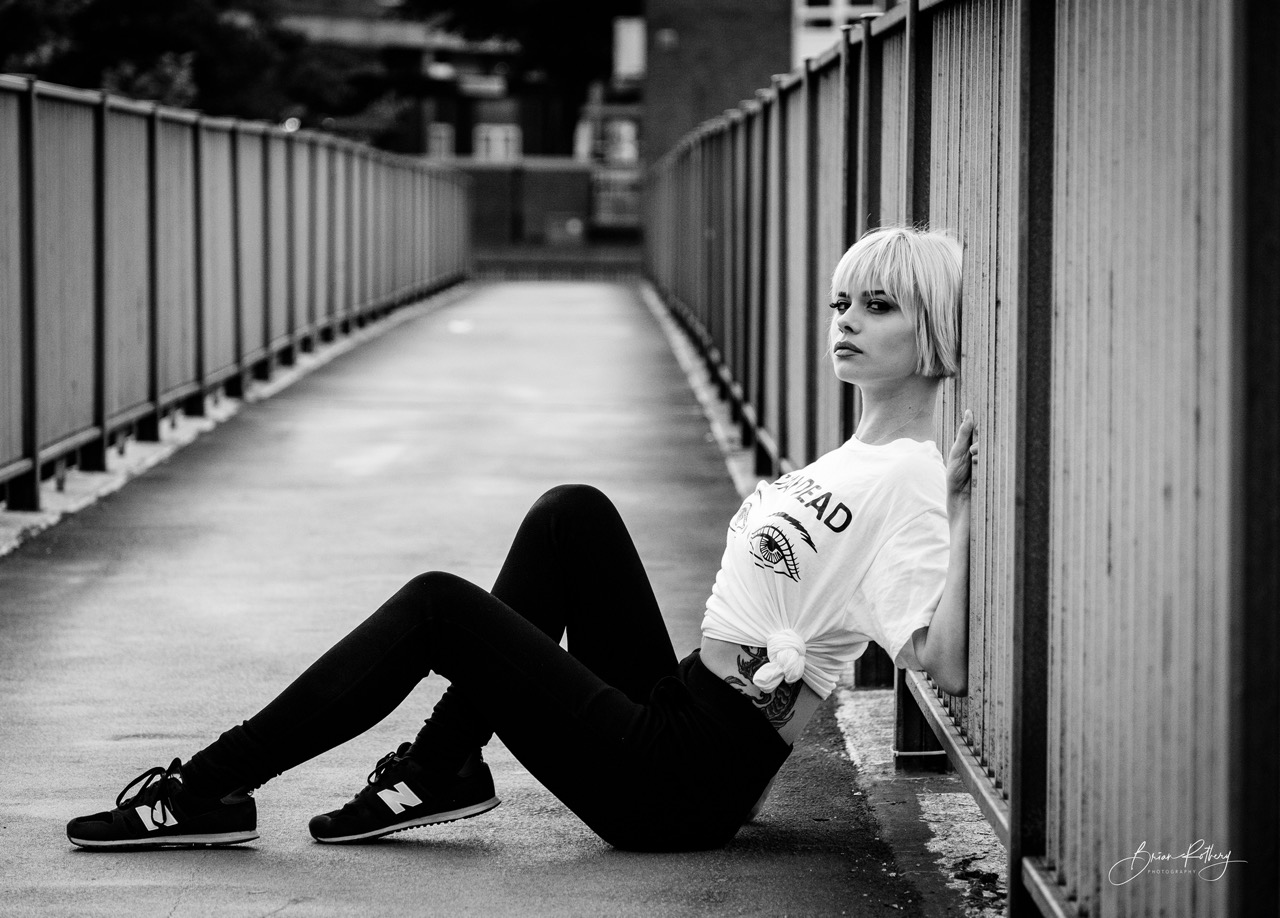

What if the photographer whose portfolio you love isn’t the right fit for the images you need? The questions to ask a photographer before booking go beyond favourite shots and visual style. A portfolio shows what a photographer creates, but it may not explain how they’ll interpret your brief, guide you during a session or agree how the finished images can be used.
It’s reasonable to want clarity before stepping in front of the camera or committing to a creative project. You should know what to expect, feel supported throughout the process and understand what you’ll receive. A useful conversation can help you work out whether the photographer’s approach suits your personal portrait, fashion project or personal brand goals.
This guide covers how to assess creative fit, collaboration and value before you choose. You’ll find questions about the photographer’s approach and portfolio, how the session will run, what to clarify about deliverables and image use, and which booking details to confirm. Asking them before you commit gives you a clearer basis for making your decision.
Key Takeaways
- Start with the purpose, audience and intended use of your images so the photographer can respond to a clear brief.
- Use questions to ask a photographer before booking to explore how they develop ideas, interpret references and guide you through the session.
- Confirm what finished images are included, how they’ll be delivered, what editing to expect and how image usage is agreed.
- Discuss scheduling, changes, preparation and communication before you commit, rather than relying on assumptions.
- Choose the photographer whose relevant work, approach and agreed terms align with your original brief.
Questions to ask a photographer before booking: start with your goals
A strong booking decision starts with what the photographs need to do, who they’re for and where they’ll appear. Images for a personal portrait have a different purpose from fashion photographs or a personal brand gallery designed to create a cohesive visual identity. Be specific about the result you want, not just the look you like.
Consider whether you’ll use the images on a website, social media, in a portfolio or elsewhere, and what you want viewers to feel or understand. Intended use can affect the brief and the image-use terms to discuss. You may encounter the phrase work for hire, which describes a US legal doctrine. Don’t assume it explains the rights that apply to a UK photography commission. Ask the photographer to set out usage and ownership terms clearly.
What do I need these photographs to achieve?
Ask yourself, and the photographer, what the images should communicate and who will see them. Is the brief personal, editorial, portfolio-led or business-focused? A personal brand shoot, for instance, may need to express your values and support your online presence, whilst a fashion brief may focus more on garments, styling and visual narrative. Similarly, niche commercial sectors—such as high-end property media showcased by hmbdrealestatemarketing.com—require a distinct focus on space and architectural presentation. Share reference images, but explain what appeals to you: the lighting, mood, composition or sense of movement. This gives the photographer direction without asking them simply to copy another image.
How can I tell whether a portfolio fits my brief?
Look beyond a photographer’s most striking individual images. Where available, review complete galleries to see whether expression, lighting, composition and storytelling feel consistent across a session. Ask how examples relate to the work you need, rather than judging only whether you like the overall aesthetic. Browse the portrait and fashion photography portfolio with your brief in mind. Note which examples feel relevant to your intended use and why.
Save these questions to ask a photographer before booking:
- What should these images communicate, and who is the intended audience?
- Where will I use the photographs, and what image-use terms should we clarify?
- How would you interpret my references and shape them into a coherent brief?
- Can I see a complete gallery that reflects a similar kind of work?
- What do you notice in my references, and how would you develop that direction?
You don’t need a finished creative brief before making contact. A good conversation should help you refine the purpose, audience and visual direction together. That gives you and the photographer a clearer basis for deciding whether the project is a fit.
Ask how the photographer will shape the creative direction and session
A portfolio shows what a photographer can create; a conversation reveals how they’ll work with you to create it. Ask how they listen to your ideas, interpret reference images and turn them into a coherent direction. You don’t need to arrive with every detail decided. Find out whether the photographer can help you make thoughtful choices about concept, styling, framing and the overall feel of the images.
Questions about style, references and creative direction
Share a few visual references and explain what you’re drawn to, such as the lighting, composition or mood. Then ask how the photographer would translate those cues into an original approach suited to your brief. Clarify how you’ll make decisions about styling, location and framing, and what you’ll need to prepare. For fashion enquiries, explore the fashion photography service as a starting point for discussing the imagery you have in mind.
Useful prompts include:
- How would you develop my references into a visual direction?
- Which creative decisions should we make together before the session?
- What should I prepare, and what should I bring?
- How would you adapt the concept if a location, outfit or idea doesn’t work as planned?
How will the photographer help me feel comfortable?
Feeling awkward in front of a camera is common, and you don’t need to pretend otherwise. Tell the photographer if you’re nervous or haven’t had a professional session before. Ask what direction you’ll receive before and during the shoot. For example, will they offer guidance on posture, expression and movement, and check that the images still feel like you? A supportive process makes room for feedback, not just instructions.
Ask what happens if a pose or planned approach feels unnatural. You might prefer a quieter, less posed style, or need a moment to settle into the session. The photographer’s answer can show whether collaboration is part of their process or whether you’re expected to follow a fixed plan.
Creative fit is the alignment between your brief, the photographer’s visual approach and the way you communicate together. If those elements don’t align, an impressive portfolio alone may not deliver the images you need.
Make sure the practical agreement supports the creative plan too. Pixpa’s overview of the critical elements of a photography contract can help you identify topics to clarify, including retouching, image licensing and cancellation terms. Ask the photographer to confirm the details that apply to your project instead of assuming what’s included.
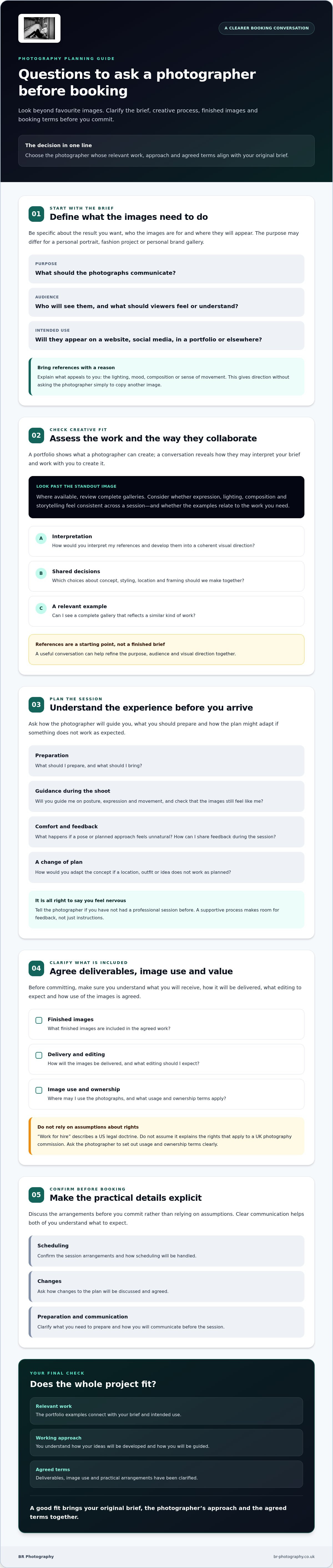
Clarify deliverables, image use and value before you commit
A promising creative direction needs clear terms behind it. Before agreeing to a session, ask what the proposed arrangement includes and have the details confirmed in writing. Don’t assume that a particular number of finished images, a specific editing approach or permission to use photographs across every channel is included. These questions to ask a photographer before booking help you compare each proposal with your intended use.
What will I receive, and when?
Ask what finished images you’ll receive, how they’ll be delivered and what editing is included. Clarify whether the photographer will make colour and exposure adjustments, undertake retouching or handle specific requested edits. Ask when delivery is expected and how you’ll be told if the timing changes. Image counts and turnaround times vary, so get the terms for your project rather than relying on assumptions or another photographer’s process.
How may I use the finished photographs?
Explain where you plan to use the images, such as personal channels, a business website, social media, editorial publication or promotional material. Ask which uses the written agreement covers, and whether commercial campaigns, third-party sharing or future uses need separate permission. If your intended use changes, find out how to discuss it. Reviewing the terms before the session helps prevent a mismatch between the images you commission and the ways you hope to use them.
To assess value, compare the substance of each proposal, not just its headline fee. Use this simple check to keep the decision grounded in your brief:
Deliverables: What finished images, editing and delivery method are specified?
Usage: Which channels and purposes are covered, and what needs further agreement?
Communication: How will the photographer confirm timing and let you know about changes?
Relevance: Does the proposed work suit your brief and intended use?
These points make it easier to spot where proposals differ. One may describe image-use terms clearly, whilst another may need follow-up. One editing approach may suit your visual identity better than another. Value comes from the fit between the agreed work and what you need, not from assuming there’s a standard offer.
Before committing, ask for points discussed verbally to be included in the written agreement. If a deliverable, usage permission or timing remains unclear, pause and clarify it. Clear expectations give you and the photographer a shared reference for the project.
Check the practical details and identify any booking red flags
A clear creative brief is only part of a smooth booking. Work through the practical decisions in order: discuss the brief, confirm the terms in writing, agree what preparation is needed, then book. This gives you and the photographer a shared understanding of the work before the session date is set.
What should I confirm before the session?
Ask what clothing, props or reference material will help achieve the agreed direction, and check whether anything needs to be ready in advance. Confirm the session plan, how you’ll communicate and who your main contact will be. For an urban portrait session, discuss how the location supports the brief and review the urban portrait photography page as a reference point for the style of work. If your concept requires a controlled indoor setting, clarify whether the photographer works from their own studio or arranges an equipped hire space such as LUUM Studio.
Useful questions to ask a photographer before booking include:
- What should I prepare or bring, and is there anything I should avoid?
- How will we confirm the session plan and any practical arrangements?
- Who should I contact if my plans or requirements change?
- How will you let me know about updates to the agreed arrangements?
Which answers deserve a follow-up question?
Vague answers aren’t automatically a reason to walk away. They may mean a detail hasn’t been discussed yet. If it’s unclear what you’ll receive, how you may use the images, what you’re responsible for or how a change will be handled, ask for an explanation and written confirmation. You should also be able to understand how the proposed approach serves the goal you’ve described.
Pay attention to mismatched expectations, not differences in personality alone. A photographer may communicate in a style that differs from yours, or their portfolio may include work beyond your preferred look. What matters is whether you can discuss the brief openly and reach clear agreements about the practical details. If an answer leaves you uncertain, ask a more specific question before deciding.
Once the brief, terms and preparation are clear, you can make a confident decision without treating the booking process as a test. Details about portrait, fashion, urban portrait and personal brand briefs can be discussed through BR-Photography’s contact page.
Make your final choice by weighing fit, trust and next steps
The strongest choice isn’t necessarily the photographer with the most dramatic portfolio or the broadest list of claims. It’s the one whose work and approach make sense for your brief, and whose terms you understand. Use the priorities you set at the start to compare photographers fairly, rather than measuring your portrait, fashion or personal brand needs against work created for an unrelated purpose.
How do I compare photographers fairly?
Create a short scorecard based on what matters to your project. Consider whether the portfolio includes relevant examples, whether the photographer listened and developed your ideas collaboratively, whether the process and communication feel clear, and whether image usage has been agreed. You could mark each area as clear, needs discussion or not a fit. This isn’t about producing a perfect numerical ranking; it helps you see where you feel confident and where you still need answers.
For context on the person behind the work, read about photographer Brian Rothery. Then compare the approach with your aims. A style that works beautifully for someone else may not suit your visual identity or intended audience. Your original brief is the useful benchmark.
What is the easiest next step if the fit feels right?
Send a concise summary of what you need, where you plan to use the images and what you hope they’ll communicate. Include useful references, along with questions you still have about the creative approach, session process or usage terms. You don’t need to have every detail solved. A first conversation can help establish whether the photographer’s way of working aligns with your goals and identify what needs clarifying before you book.
BR-Photography, led by Brian Rothery, works across portrait, fashion, urban portrait and personal brand photography, with sessions tailored to clients’ creative needs. If you’re considering one of these services, explain your aims and ask how the work could support them. A clear conversation helps establish whether the approach fits.
Discuss your photography brief with BR-Photography and explore whether the approach fits what you need.
Choose a photographer who fits the work you need
The questions to ask a photographer before booking should help you look beyond a striking portfolio. Focus on whether the photographer understands your goals, can shape a collaborative session, and clearly explains deliverables and image usage. Confirm the practical arrangements too, so you know what to expect before you commit.
The right choice is the one that fits your brief, not someone else’s. Relevant work, considered communication and clear terms can give you confidence in both the creative process and the images you’re commissioning.
BR-Photography, led by Brian Rothery, offers portrait, fashion, urban portrait and personal brand photography. Personal brand sessions are tailored to visual identity and storytelling, helping create imagery that represents you authentically. If you’re exploring a project, share your goals and intended image use to start a conversation about fit.
Discuss your photography brief with BR-Photography. A clear brief is a strong first step towards images that feel right for you.
Frequently Asked Questions
What questions should I ask a photographer before booking?
Ask about their experience with your type of brief, creative approach, preparation, deliverables, image usage and communication. First, explain what the photographs need to achieve and who will see them. Then check whether relevant portfolio work and the proposed process support that goal. The questions to ask a photographer before booking should help you assess both the expected images and the working relationship. Confirm important details in writing before you commit.
How do I know if a photographer is right for me?
Compare your brief with relevant portfolio work, then discuss how the photographer would approach your goals. Notice whether they listen, explain their ideas clearly and make room for your preferences. If you feel unsure in front of the camera, ask what guidance you can expect during the session. A good fit combines visual alignment, clear expectations and a process you feel comfortable taking part in, not simply images you admire.
What should I ask about photography image rights?
Explain how you intend to use the photographs, whether for personal purposes, a portfolio or business promotion, and ask which uses the written agreement permits. Check whether commercial campaigns or sharing images with a third party require additional permission. Receiving finished photographs doesn’t automatically mean every possible use is included. Read the agreement before booking, and ask the photographer to explain any wording or limits you’re unsure about.
Can I ask a photographer to help with posing and styling?
Yes. Tell the photographer what support would help you feel prepared, then ask how posing suggestions, direction and styling decisions are handled. Find out what you should bring or plan in advance. If you have reference images, share them and describe what appeals to you, such as the mood, clothing or composition. This gives you both a starting point for shaping a direction that feels considered and authentic to your brief.
How can I compare photographers beyond their portfolios?
Look at work relevant to your brief, then compare communication, creative collaboration, preparation and clarity about deliverables and image usage. Ask each photographer how they’d approach the same goal and consider whether their response reflects your priorities. A simple scorecard can help you weigh these factors without getting distracted by unrelated styles, awards or headline claims. The strongest choice is the one that fits the work you need and the process you’re comfortable with.
What should I confirm before booking a portrait photographer?
Confirm the agreed brief, session approach, deliverables, editing expectations, image usage terms, communication and practical arrangements. Ask what preparation is needed and how changes to the plan will be discussed. Details depend on the photographer’s agreement, so request written confirmation rather than relying on assumptions. Once the essentials are clear and the creative fit feels right, you’ll have a stronger basis for deciding whether to book.
Disclaimer
"The information provided in this Blog post is for general informational purposes only. While I strive to provide accurate information, I make no representations or warranties of any kind about the accuracy, reliability, or completeness of this information. Any reliance you place on such information is strictly at your own risk. In no event will I be liable for any loss or damage derived from the use of this blog."


