
Your Instagram feed is not a modelling portfolio. Whilst a digital presence is vital in 2026, building a modeling portfolio from scratch is a deliberate exercise in commercial strategy rather than a simple collection of your favourite selfies. It's natural to feel a sense of anxiety about this transition. You might worry about being exploited by "portfolio mills" that prioritise profit over your career, or perhaps you feel a quiet tension about stepping in front of a professional lens for the first time.
We believe your book should be a strategic investment that reflects your unique commercial versatility. This guide will teach you how to transform from an aspiring talent into a professional model by creating a visual asset designed to command the attention of leading UK agencies. We will explore the essential shots required for a modern book, how to select a photographer who acts as a genuine creative partner, and the precise methods for presenting your work to industry scouts. It is time to stop guessing and start building a career with professional intent.
Key Takeaways
- Treat your portfolio as a strategic visual CV designed to demonstrate your commercial versatility and "blank canvas" potential to agencies.
- Learn how to align your personal aesthetic with the specific "look" currently favoured by top-tier UK agencies to ensure your book remains relevant.
- Master the process of building a modeling portfolio from scratch by prioritising essential assets like clean headshots and movement over fleeting trends.
- Understand the professional "edit" to remove distracting content and ensure your book tells a cohesive story of your professional range.
- Gain the confidence to pitch to agencies with targeted introductory emails and the raw, unedited "digitals" required by modern talent scouts.
Understanding the Strategic Role of a Modelling Portfolio
Building a modeling portfolio from scratch is a deliberate exercise in commercial utility rather than a simple collection of your favourite photos. In the competitive landscape of 2026, a portfolio functions as a curated visual CV. It's the primary tool used to communicate your professional range to casting directors and scouts who have only seconds to make a decision. Your book must prove that you aren't just someone who looks good in a mirror, but a professional who understands how to translate a brand’s vision into a compelling image.
The primary goal of these initial images is to demonstrate that you are a "blank canvas". Agencies need to see your bone structure, your natural skin texture, and how your body occupies space without the distraction of heavy styling or aggressive editing. For those seeking a foundational overview of the modeling profession, it's clear that the industry relies on specific visual standards that transcend temporary internet trends. A professional book is a high-value career investment, designed to move you past the amateur stage and into a space where your image carries real market value.
Portfolio vs. Social Media: Why You Need Both
Social media is often mistaken for a professional book, yet the two serve entirely different functions. Instagram and TikTok are lifestyle tools; they offer a "behind-the-scenes" look at your personality and engagement. Agencies use them to check your "social proof" and modern relevance. However, these platforms often rely on filters and low-resolution uploads that obscure your true features. A professional portfolio consists of high-resolution, uncompressed imagery that meets strict industry specifications. Relying solely on filtered, non-professional content signals a lack of industry knowledge and can immediately disqualify you from high-stakes commercial projects.
The Investment Mindset: Quality Over Quantity
A common pitfall when building a modeling portfolio from scratch is the urge to fill the pages with as many photos as possible. This is a mistake. In the fashion industry, three exceptional shots are infinitely more valuable than twenty mediocre ones. High volume often masks a lack of direction. You must also be wary of "portfolio mills" that promise hundreds of images for a low fee. These businesses often prioritise high turnover and generic poses, resulting in a book that looks dated the moment you leave the studio. True professional photography focuses on bespoke quality, ensuring every shot serves a specific strategic purpose. A professional photoshoot is not a mere purchase of images; it's the acquisition of a strategic business asset that acts as your primary leverage in a competitive market.
Defining Your Market and Aesthetic Direction
Building a modeling portfolio from scratch starts with an objective audit of your physical attributes. You aren't just a face; you are a solution to a casting director's problem. By 2026, the UK market has become highly segmented, with agencies looking for specific archetypes rather than generalists. Editorial modelling often requires very specific height and proportion standards, whereas commercial work prizes relatability and a lifestyle appeal. Identifying where you naturally sit within these categories prevents wasted energy and ensures your book speaks directly to the right scouts. Know your market. It is the foundation of every booking.
Identifying Your Modelling Niche
Specialising early allows you to build a cohesive narrative that agencies can easily sell to clients. Editorial work is high-concept and often artistic, focusing on avant-garde storytelling. Commercial work is the engine of the industry, focusing on the saleability of products for high-street brands. We are also seeing a significant rise in personal brand modelling, where entrepreneurs and creators require high-end imagery to anchor their digital presence. According to the Bureau of Labor Statistics Occupational Outlook, the work environment for models is often fast-paced and varied, making it essential to understand your niche before stepping into a professional setting. Specialisation isn't about limitation; it's about clarity.
Researching Agency Expectations
Don't just send your photos to every agency in London. Study the current rosters of top-tier UK firms to understand their aesthetic gaps. Are they currently over-represented in your category, or is there a clear opening for your specific look? High-fashion agencies often look for unique, striking features that challenge traditional beauty norms. In contrast, commercial agencies seek a polished, approachable aesthetic that appeals to a broad demographic. Targeting agencies that align with your height, skill set, and aesthetic is a strategic move that significantly increases your chances of a signing. It turns a cold application into a calculated business proposal.
Authenticity is your greatest asset, but it must be tempered with a professional edge. Before your shoot, create a mood board. This is not a scrapbook; it's a technical brief for your photographer. It should include lighting styles, specific poses, and wardrobe directions that align with your chosen niche. This collaborative approach ensures you and your photographer are working towards the same commercial goal. If you feel uncertain about how to translate your look into a strategic asset, you can always discuss your vision with a professional partner to ensure your direction is sound. A well-planned session is the difference between a collection of photos and a career-launching book.
The Professional Photoshoot: Capturing Your Essential Looks
The photoshoot is the moment your strategy transitions into tangible assets. When you are building a modeling portfolio from scratch, you cannot afford to leave the outcome to chance. Every frame must serve a specific commercial purpose. You aren't just taking pictures; you are creating a visual argument for why an agency should invest in your career. This requires a shift in mindset from being a passive subject to becoming an active participant in the creative process. The camera is a mirror of your intent. If you are unsure of your direction, the lens will capture that hesitation.
Wardrobe selection is often where beginners falter by choosing "trendy" over "timeless". In a professional book, the model is the product, not the clothing. Busy patterns, loud logos, and fleeting fashion trends distract from your features and date your portfolio rapidly. Stick to a palette of neutrals and simple silhouettes that highlight your form and skin tone. This "clean" approach allows casting directors to imagine you in their specific brand aesthetic without fighting against your personal style choices. Simplicity is a sophisticated business decision.
The Essential Shot List for Every Beginner
A versatile book is built on three foundational pillars. First is the Beauty Shot. This is a tight headshot with minimal makeup that focuses on your skin, eyes, and bone structure. It is your most important calling card. Second is the Full-Length shot. This demonstrates your proportions, posture, and how you carry clothing. Agencies need to see your physical frame clearly. Finally, the Editorial Look allows you to show range. This is where you demonstrate your ability to wear and sell a concept, using movement and expression to tell a story that goes beyond a simple portrait.
Collaborating with a Strategic Creative Partner
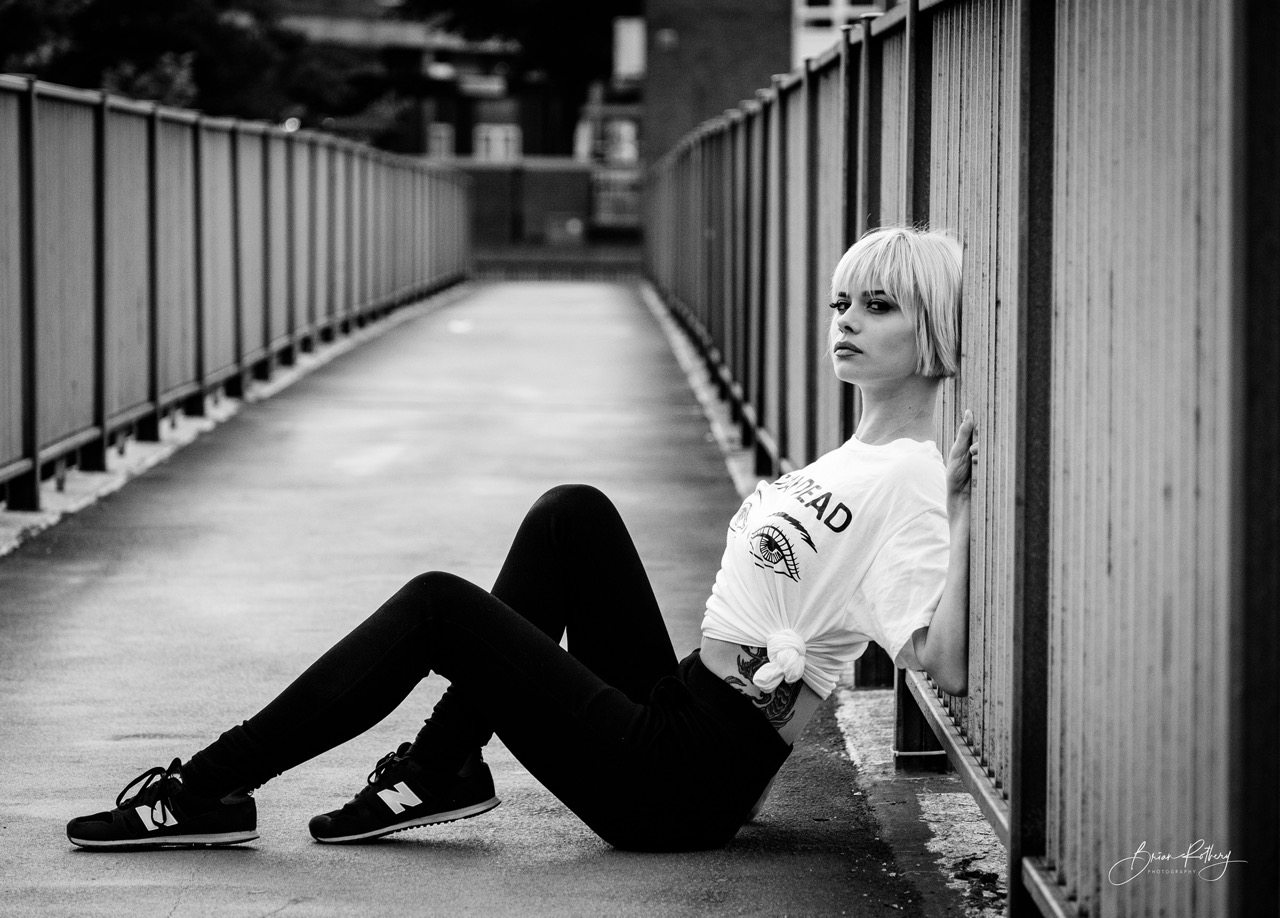
The relationship between a model and a photographer should be a collaborative alliance. A professional photographer acts as both a creative director and a mentor, guiding you through the technicalities of light and shadow. If you feel a sense of camera anxiety, a strategic partner will work to put you at ease, ensuring your authentic self emerges through the lens. This is why we often utilise urban portrait photography and fashion-forward settings; these environments provide a modern, high-end context that generalist studios cannot replicate. By working in real-world, stylish locations, you prove you can handle the demands of a professional commercial set whilst maintaining a confident, expert mindset.
Curating and Organising Your Visual Assets
Building a modeling portfolio from scratch is only half the battle; the ruthless curation of those images defines your professional standing. The "Edit" is the stage where you transform a collection of raw files into a cohesive, high-value asset. It's about removing the noise. If an image doesn't immediately signal "Professional", it has no place in your book. You are curating a narrative of versatility, not a gallery of every shot you happened to like. Every page must serve as evidence of your ability to adapt to different brand requirements.
Consistency is the hallmark of an expert. When a scout flips through your book, they should see a logical progression that demonstrates range without sacrificing quality. This means ensuring that the technical elements—colour grading, lighting style, and retouching—feel intentional and harmonised. A disjointed portfolio suggests a lack of direction. By treating your images as a strategic collection, you project the confident, expert mindset that agencies expect from their top talent.
The Selection Process: Less is More
Objective critique is difficult for any artist. Beginners often fall into the "repetition trap", including four nearly identical headshots because they can't decide which one is best. This signals indecision and amateurism. You must choose the absolute best frame from each look and discard the rest. If you find it impossible to be objective, ask a professional photographer or a trusted industry contact to provide an honest assessment. Your book should start with your most impactful beauty shot and move through your commercial and editorial range. A truly professional book concludes on a strong, memorable note that leaves a lasting impression on the viewer.
Technical Standards for 2026
In the 2026 UK market, digital submissions are the primary currency, yet some high-end boutique agencies still value a physical book for in-person castings. Technical standards are non-negotiable. Your digital files must be high-resolution but optimised for quick sharing; scouts won't wait for massive folders to download. Retouching must remain "natural" at all costs. Over-editing skin texture or artificially altering bone structure is a major red flag for managers. They need to see the authentic "you" who will actually show up on set. Organise your files with clear naming conventions—including your name and the shot type—to make the manager's job as easy as possible.
The final curation is what separates the hobbyist from the professional. If you find the selection process overwhelming, contact a strategic creative partner to help you curate a book that commands agency attention and secures your future in the industry.
Launching Your Career: Pitching to Agencies with Confidence
Your portfolio is now a strategic asset; the final phase is presenting it to the gatekeepers of the industry. Pitching to agencies requires a blend of professional etiquette and surgical precision. A common mistake is the "scattergun" approach, sending generic emails to every agency in the UK. Instead, your introductory email should be concise, targeted, and strictly professional. Include your stats; height, waist, hips, and shoe size, alongside a link to your digital book. Agencies value efficiency. They want to see that you understand the business side of the industry as clearly as the creative side.
Whilst building a modeling portfolio from scratch provides the "dream," agencies also need to see the "reality." This is where private submissions differ from open calls. Many top-tier London agencies have moved away from walk-in open calls in favour of digital submissions. This allows them to vet talent more effectively. Your pitch is your first audition. Treat every interaction as a high-stakes commercial engagement, maintaining the confident, expert mindset we have cultivated throughout this guide.
Preparing Your "Model Bag" and Digitals
Digitals, or "polaroids," are the raw, unedited requirement that every agency demands alongside your professional shots. These are not fashion images; they are simple, well-lit photos taken against a plain wall in form-fitting clothing. They prove that your professional portfolio is not a result of excessive retouching. You can take these at home using natural daylight. Ensure you have a clean headshot, a profile shot, and a full-body shot. When you finally secure that first meeting, your "model bag" should be ready with basic essentials: nude seamless underwear, a simple pair of heels, and a digital copy of your book. Preparation eliminates anxiety.
Navigating the British Modelling Landscape
The UK modelling scene is concentrated in London, but regional hubs like Manchester and Birmingham offer significant opportunities for commercial and lifestyle work. Understanding this structure helps you target agencies that match your current location and career goals. Be vigilant regarding red flags. Legitimate agencies in the UK do not charge upfront fees for signing or "registration." They earn their income through commission on the jobs they book for you. If a company demands a large sum before offering representation, it is likely a scam. Your career is too valuable to risk on predatory practices.
Maintaining your portfolio is an ongoing commitment. As your look evolves and your experience grows, your book must be updated to reflect your current market value. Stagnation is the enemy of growth in a fast-paced market. If you are ready to move beyond the aspiring stage, it is time to invest in your professional visual identity today. A strategic partnership is the most direct route to agency attention.
Secure Your Competitive Edge
Success in the fashion industry is rarely accidental; it's the result of a calculated business strategy. We have explored how building a modeling portfolio from scratch involves much more than mere aesthetic appeal. It requires defining your niche, mastering the "blank canvas" look, and curating a book that speaks the specific language of agency scouts. By treating your portfolio as a strategic investment, you position yourself as a professional ready for the demands of a high-stakes commercial environment.
The journey from aspiring talent to signed model is shorter when you have the right creative partner. We specialise in bespoke fashion-forward imagery that adheres to strict agency-ready standards. Under the expert creative direction of Brian Rothery, you'll find the support needed to feel at ease whilst producing imagery that truly performs. Don't leave your career to chance. Elevate your career with a professional modelling session and present your best self to the UK's leading agencies. Your professional future starts with a single, strategic frame.
Frequently Asked Questions
How many photos do I need for a beginner modelling portfolio?
A beginner portfolio should ideally contain between 6 and 10 high-quality images. It's a common misconception that a book needs to be thick to be effective. Agencies prefer to see a concise selection of your absolute best work, including a clean headshot, a full-body shot, and a few editorial or commercial variations. Quality always outweighs quantity in a professional context.
Do I need to go to a modelling school before building a portfolio?
No, attending a modelling school is not a prerequisite for professional success. Most top-tier UK agencies actually prefer a "blank canvas" so they can train you according to their specific house style and client requirements. Your time and capital are better spent collaborating with a strategic creative partner to build a high-end book that demonstrates your natural potential and on-camera presence.
What should I wear to my first professional modelling photoshoot?
You should prioritise simple, form-fitting basics that don't distract from your features. Neutral colours like black, white, or grey work best. Think skinny jeans, plain t-shirts, and simple swimwear or bodysuits. Avoid busy patterns, large logos, or fleeting fashion trends that will date your images quickly. The goal is to show the agency how you look as a professional product.
Can I build a modelling portfolio with just my smartphone?
You cannot create a professional industry book using only a smartphone. Whilst mobile devices are excellent for taking "digitals" or maintaining a social media presence, building a modeling portfolio from scratch requires the resolution, lighting control, and lens quality only professional equipment provides. Agencies expect high-resolution assets that can be used for professional casting decks and high-end digital presentations.
How much should a professional modelling portfolio shoot cost in the UK?
The cost of a professional shoot varies based on the photographer's expertise, the studio location, and the complexity of the production. It's best to view this as a strategic investment in your personal brand rather than a simple expense. High-end services include expert creative direction and bespoke styling, which provide a significantly higher return in terms of agency interest compared to low-cost, generic alternatives.
What are "digitals" or "polas" in modelling?
Digitals, also known as polaroids or "polas," are raw, unedited photos that show your natural appearance. These are taken with minimal makeup and simple clothing against a plain background. Agencies require these alongside your professional portfolio to see your current skin texture, hair length, and physical proportions without the influence of professional retouching or complex studio lighting.
How do I find a reputable fashion photographer for my portfolio?
Look for a photographer who specialises in fashion or urban portraiture and has a portfolio that aligns with agency standards. Review their previous work to ensure their aesthetic is modern and professional. A reputable photographer acts as a strategic creative partner, offering guidance on posing and wardrobe whilst making you feel at ease during the session to capture your most authentic self.
Should I include "nude" or "lingerie" shots in my first book?
Disclaimer
"The information provided in this Blog post is for general informational purposes only. While I strive to provide accurate information, I make no representations or warranties of any kind about the accuracy, reliability, or completeness of this information. Any reliance you place on such information is strictly at your own risk. In no event will I be liable for any loss or damage derived from the use of this blog."


