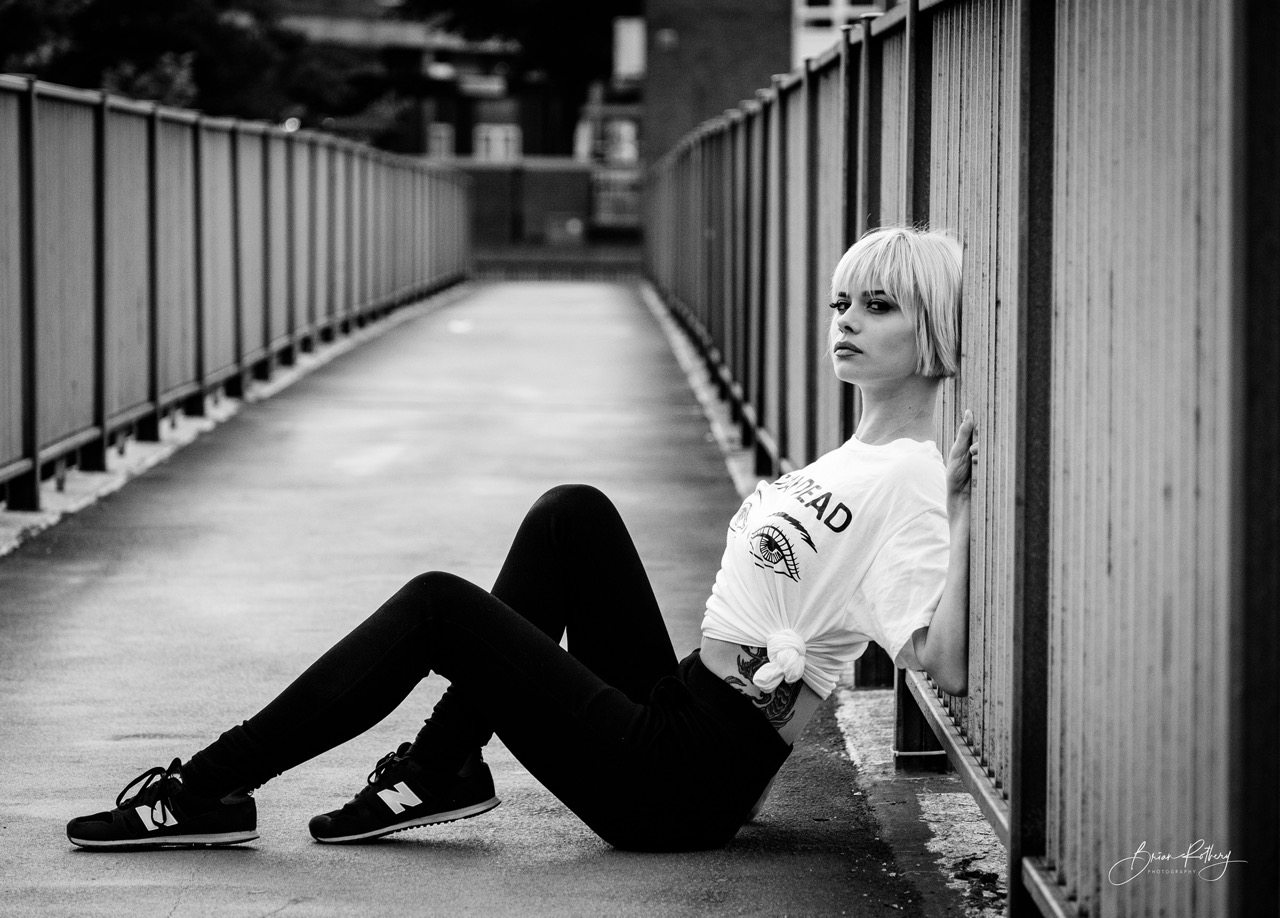

Your first modelling portfolio isn't a collection of your favourite photos. It's a strategic visual CV, and the industry will judge it in seconds. If you've been searching for a fashion portrait photographer UK without quite knowing what you actually need from the shoot, you're already asking the right question - most aspiring models never do.
It's completely understandable to feel overwhelmed. The industry asks for multiple distinct "looks," the prospect of standing in front of a professional lens can feel daunting, and the fear of investing in the wrong kind of imagery is entirely legitimate. Those anxieties are shared by almost everyone stepping in front of a camera for the first time.
But here's what changes everything: when you understand that a portfolio is a commercial asset rather than a personal mood board, the decisions become far clearer. This guide will walk you through exactly what images agencies expect to see, how to perform with confidence on set, and how to build a body of work that positions you as a credible, hireable talent from day one.
Key Takeaways
- Your first modelling portfolio is a strategic business asset, not a personal gallery - agencies assess it in seconds, so every image must demonstrate marketability, not just attractiveness.
- There are seven essential shot types that agencies expect to see, and understanding which images to prioritise will determine whether your portfolio opens doors or gets overlooked.
- Working with a skilled fashion portrait photographer UK is a professional investment, not an optional expense - amateur imagery actively undermines your credibility before you've even stepped into a casting room.
- Preparation is a craft in itself: from wardrobe selection to skin and hair readiness, what you do before the shutter clicks is just as important as what happens during the session.
- The right creative partnership - one built on strategic direction and genuine collaboration - can define your visual identity and position you as a hireable talent from the very start of your career.
Beyond the Pretty Picture: Why Your First Portfolio is a Strategic Business Asset
A portfolio that simply looks beautiful is a portfolio that does very little. That distinction matters enormously, and yet it's the one that most aspiring models never fully grasp until they've already made costly decisions. Your portfolio isn't a celebration of how you look on a good day. It's a commercial document, and the industry reads it exactly that way.
Think of it as a visual CV. Just as a written CV must demonstrate relevant skills, measurable achievements, and professional credibility, your portfolio must prove that you can deliver what a client, brand, or agency actually needs. That means demonstrating range, adaptability, and the ability to inhabit a brief. Attractiveness is the baseline. Marketability is the goal.
The Role of the Visual CV in the UK Market
Casting directors and agency bookers in the UK work at speed. When they review new faces, they're not lingering over individual images for their artistic merit. They're scanning for evidence of commercial range: can this person sell a product, anchor an editorial, and shift convincingly between looks? Your portfolio must answer those questions before anyone asks them. Authenticity matters here too. The UK market has moved decisively away from the heavily retouched, artificially perfected aesthetic that dominated earlier decades of fashion photography. Agencies want to see a genuine, distinctive visual identity, one that carries a high-fashion edge without feeling manufactured. Cohesion is everything. From the very first image, your portfolio should communicate a clear, consistent creative perspective.
Marketability vs. Aesthetic: Finding the Balance
Social media has created an entire generation of people who are comfortable in front of a camera. That's genuinely useful. What it doesn't create, however, is the ability to tell a commercial story through a single frame. There's a fundamental difference between a photograph that captures a moment and one that sells a concept, a lifestyle, or an aspiration. Professional-grade storytelling requires intentionality, technical expertise, and creative direction that goes far beyond a well-lit selfie.
Working with an experienced fashion portrait photographer UK professionals trust is where that transition happens. It's the point at which personal imagery becomes a strategic asset. A strategic portfolio, simply put, is a curated body of work designed to convert creative impressions into commercial opportunities. Much like the way Visibull Art and Design transforms raw cross-sections of trees into sophisticated art, a professional shoot takes your natural potential and refines it into a high-value commercial tool.
That's why the investment framing matters. Choosing professional photography isn't an optional upgrade. It's the foundation upon which your entire professional brand is built. Compromise it early, and you're not saving money; you're limiting your ceiling before your career has even begun.
The Essential Portfolio Checklist: 7 Shots That Prove Your Marketability
Knowing what to shoot is half the battle. Most aspiring models arrive at their first session with vague ideas about "looking good" rather than a clear understanding of the specific image types that agencies actually need to see. The result is a portfolio that feels personal rather than professional. Here's how to build one that works commercially, shot by shot.
The Four Commercial Foundations
The Natural Headshot is your handshake. Shot with minimal styling and clean, even lighting, it tells an agency exactly who you are without editorial noise getting in the way. Your features, your skin, your natural expression. Nothing else should compete for attention. This is the image that gets you through the door.
The Full-Length Body Shot communicates proportions, posture, and silhouette in a single frame. Agencies use it to assess your physical suitability for specific briefs, whether that's couture, commercial, or fitness. Keep the styling simple and the background neutral so the focus remains entirely on your form and how you carry yourself.
Editorial Fashion is where range becomes visible. Complex garments, considered styling, and a strong concept all demand a higher level of performance. This shot proves you can inhabit a brief rather than simply stand within it. Understanding how to become a fashion photographer and model involves recognising that editorial work is fundamentally collaborative storytelling, not posing.
Commercial Casual might feel like the least glamorous shot in the set. It isn't. High-street brands, lifestyle campaigns, and e-commerce clients need models who feel approachable and relatable. If your portfolio skews entirely towards high fashion, you're closing off a significant portion of the commercial market before you've even started.
Tailoring Your Range for Agency Requirements
Beyond those four foundations, three additional shot types complete a credible first portfolio. A Formal Look demonstrates sophistication and poise under structured styling. A Movement or Action Shot captures dynamic energy, proving that your presence doesn't flatten the moment a photographer asks you to move. Finally, a Beauty Shot, a close-cropped focus on skin texture, eyes, and features, is essential for beauty, skincare, and cosmetics briefs, where the face itself is the product.
Organising Your Portfolio for Maximum Impact
The sequence of your images matters as much as the images themselves. Open with your single strongest shot, the one that communicates your most distinctive quality instantly. Close with something equally memorable. In between, vary the lighting conditions, colour palettes, and environments deliberately. A portfolio that moves from studio to location to urban setting signals adaptability. One that repeats the same aesthetic across twelve frames signals limitation.
Experienced fashion portrait photographer UK professionals will guide you through this sequencing as part of the creative process. It's not an afterthought. It's strategy. If you're ready to start building your book with genuine commercial intent, get in touch to discuss your portfolio goals and what a tailored shoot could achieve for your career.
Investment vs. Expense: Why Professional Photography is Non-Negotiable
There's a version of this decision that feels entirely rational: keep costs low at the start, upgrade once you've secured representation. It's a logical-sounding strategy. It's also one of the most reliable ways to end your modelling career before it begins.
The images you submit to an agency aren't just photographs. They're your first professional statement. And in a market where bookers form impressions within seconds, a technically weak image doesn't just fail to impress; it actively signals that you don't yet understand how the industry operates.
The Risk of the 'Budget' Mindset
TFP arrangements, where a photographer and model exchange time for images rather than fees, have a legitimate place in the industry. For early experimentation, building creative relationships, or testing concepts, they can be genuinely useful. What they rarely produce, however, is the calibre of imagery that a serious UK agency expects to see in a debut portfolio. The technical consistency, the considered direction, the lighting precision that separates a compelling commercial image from a competent snapshot: these are the outputs of professional investment, not informal exchange.
Poor-quality imagery communicates something specific to a casting director. It suggests a lack of seriousness, a misunderstanding of professional standards, or simply insufficient commitment to the craft. Top agencies in London, Manchester, and beyond receive an enormous volume of submissions. Anything that reads as amateur gets filtered out immediately, regardless of the face behind the lens.
The Value of Expert Direction
Working with an experienced fashion portrait photographer UK professionals recommend isn't simply about access to better equipment. It's about what happens between the photographer and the subject during a session. A skilled photographer reads your features in real time, adjusting angles, light ratios, and framing to draw out your most commercially compelling qualities. They know that a slight turn of the jaw, a shift in shoulder position, or a change in focal length can transform an image from adequate to exceptional.
Crucially, professional direction also minimises session anxiety; knowing that a knowledgeable creative partner is guiding every moment means you can focus entirely on presence and expression rather than second-guessing yourself. That psychological shift produces visibly better results.
The return on a professionally executed portfolio session is tangible. Strong imagery opens agency doors, accelerates the path to paid bookings, and establishes a visual identity that compounds in value as your career develops. Treated as a strategic investment rather than a reluctant expense, professional photography isn't a cost of entry. It's the foundation of everything that follows.
If you're ready to approach your portfolio with genuine commercial intent, reach out to discuss what a tailored session could achieve for your career.

Master the Session: Professional Preparation for Your Debut Shoot
Preparation isn't glamorous. It's also the difference between a session that delivers twelve portfolio-ready images and one that produces three. Most aspiring models underestimate how much of a shoot's success is determined before they ever step through the studio door.
Start with your skin. In the week leading up to your session, prioritise hydration, consistent sleep, and a simplified skincare routine. This isn't the moment to trial a new product or treatment. Stick to what you know works, keep it minimal, and let your natural texture speak. For hair, arrive clean and styled simply unless your creative brief calls for something specific. A skilled fashion portrait photographer UK professionals trust will always work with your natural features rather than against them, but they can only do so much if you arrive under-prepared.
Rest matters more than most people acknowledge. Fatigue shows in the eyes before it shows anywhere else, and no amount of post-production corrects the flatness that comes from a poor night's sleep. Treat the evening before your shoot as part of the professional process.
Practise before you arrive. Spend time in front of a mirror exploring your angles, testing expressions, and understanding how subtle shifts in jaw position or eye direction change the entire energy of a frame. This isn't vanity. It's craft.
The Psychology of the Set
Anxiety on set is normal. What separates models who push through it from those who freeze is the quality of the creative relationship they build with their photographer. Arrive with questions. Be transparent about your experience level. A collaborative rapport built in the first ten minutes of a session produces measurably better results across the entire day. When you trust your photographer's direction, you stop performing and start inhabiting.
Energy management matters across a multi-look session. Eat before you arrive, bring water, and build in mental reset moments between wardrobe changes. Fatigue compounds across hours. Protecting your focus is a professional responsibility, not an indulgence.
Wardrobe Strategy for Versatility
Bring more than you think you need, then edit on the day. Prioritise these essentials:
- Neutral basics: a fitted white shirt, a clean black top, and well-cut trousers form the foundation of multiple looks without competing with your features
- One strong editorial piece: a structured jacket, a statement coat, or a textured garment that signals fashion-forward intent
- Colour awareness: choose tones that complement your skin and eye colour rather than neutralise them; warm undertones typically respond well to earthy palettes, cooler tones to blues and greys
- Minimal accessories: bring options, but keep them simple until your photographer advises otherwise
Organise your outfits in shoot order before you arrive. Efficient transitions between looks preserve energy and maintain the creative momentum that produces your best work.
If you want to arrive at your debut session with a clear strategy and a photographer who'll guide every element of the process, get in touch to discuss how your session can be built around your specific portfolio goals.
Launching Your Career: How a Collaborative Partnership Elevates Your Identity
Everything covered in this guide, the shot types, the preparation strategy, the investment mindset, only delivers its full value when it's channelled through the right creative partnership. That's not a soft observation. It's the practical reality of how careers in this industry actually begin. The photographer you choose for your debut portfolio isn't just a technical operator. They're the person who shapes your first professional identity.
That distinction is precisely where BR-Photography operates.
The BR-Photography Experience
Led by Brian Rothery, BR-Photography brings a specialism in fashion and urban portraiture that directly serves the needs of aspiring models entering the UK market. This isn't a generalist studio that photographs everything from corporate headshots to product catalogues. The focus is deliberate, and that deliberateness shows in the work.
Every session is built around your specific commercial goals rather than a one-size-fits-all template. Brian's approach combines technical precision with genuine creative direction, reading your features, your energy, and your natural strengths in real time to produce imagery that feels both authentic and strategically compelling. For those arriving with limited experience in front of a professional lens, that guidance is transformative. Anxiety doesn't disappear, but it becomes manageable when you trust that every decision being made on set is working in your favour.
The environment is designed to support that trust. Collaborative, focused, and entirely oriented around professional outcomes. You won't be left to figure out your angles alone.
Your Path to Professional Representation
Once your portfolio exists as a coherent, agency-ready body of work, the next phase begins. Approaching UK modelling agencies requires a clear submission strategy: research which agencies represent talent in your market segment, follow their submission guidelines precisely, and lead with your strongest image. Your portfolio does the talking. Your job is to ensure it's saying the right things.
Representation isn't the finish line, either. The models who build lasting careers treat their visual brand as a living asset, updating their portfolio as their range develops, their look evolves, and new commercial opportunities emerge. A debut portfolio opens doors. A consistently refreshed body of work keeps them open.
Working with a trusted fashion portrait photographer UK professionals respect means you're not starting from scratch each time. You're building on an established creative relationship that deepens with every session.
Your career doesn't begin the moment an agency signs you. It begins the moment you commit to presenting yourself with genuine commercial intent. If you're ready to take that step, book your strategic portfolio session with BR-Photography and start building the visual identity your career deserves.
Your Portfolio Won't Build Itself: Take the First Step Today
A modelling career doesn't begin with representation. It begins with a decision to invest in your professional identity with genuine commercial intent. Everything covered in this guide points towards the same truth: your portfolio is the single most powerful tool you control at the start of your career, and the quality of that asset determines the opportunities that follow.
The key principles are straightforward. Build for marketability, not just aesthetics. Prioritise the shot types agencies actually need to see. Prepare with the same seriousness you'd bring to any professional undertaking. And choose a creative partner who understands the difference between a photograph and a strategic visual asset.
That's precisely where working with a specialist fashion portrait photographer UK models trust makes a measurable difference. BR-Photography combines expertise in fashion and urban portraiture with a genuinely collaborative approach, producing high-end imagery that positions you as a credible, hireable talent from day one.
You're closer to a portfolio that opens doors than you might think. Start your modelling journey with a professional portfolio session and build the visual identity your career deserves.
Frequently Asked Questions
What should I wear for my first model portfolio shoot?
Prioritise versatility over statement pieces. Bring a fitted white shirt, a clean black top, well-cut trousers, and at least one structured editorial garment such as a tailored jacket or textured coat. Neutral basics let your features remain the focal point, while one stronger piece signals fashion-forward range. Avoid heavy prints, logos, and anything that creases badly in transit.
Organise your outfits in the order you plan to shoot them before you arrive. Efficient wardrobe transitions preserve energy and keep creative momentum intact across a full session, which directly affects the quality of images you walk away with.
Do I need professional hair and make-up for my debut portfolio?
Not necessarily for every look, but it depends on the shot types you're capturing. For your natural headshot, a clean, polished version of your everyday appearance is entirely appropriate. For editorial or beauty shots, professional hair and make-up elevates the imagery to the standard agencies expect. Arriving with a simplified, well-maintained baseline gives your photographer the best canvas to work from regardless of what's planned.
If professional make-up isn't part of your session, keep your routine minimal and consistent with what you know works for your skin. Avoid experimenting with new products in the days before your shoot.
How many photos should be in a beginner's modelling portfolio?
Quality consistently outperforms quantity. A debut portfolio of eight to twelve strong, varied images is far more effective than thirty mediocre ones. Agencies aren't looking for volume; they're scanning for commercial range, technical quality, and a coherent visual identity. Each image must earn its place by demonstrating something distinct, whether that's adaptability, editorial strength, or natural approachability.
As your career develops and you accumulate professional bookings, you can expand and refine your portfolio. At the start, a tightly curated selection of purposeful images is always the stronger submission.
Can I use social media photos to apply to modelling agencies?
Occasionally, a social media image captures something genuinely compelling, but it shouldn't form the basis of a professional submission. Agencies assess technical consistency, lighting quality, and commercial range, none of which a phone camera and a casual setting reliably deliver. Social imagery also tends to reflect a personal aesthetic rather than the strategic marketability that bookers need to see.
There's a meaningful difference between a photograph that performs well on Instagram and one that convinces a casting director you can anchor a brand campaign. Investing in professionally directed imagery is what bridges that gap.
How often should an aspiring model update their portfolio?
Your portfolio should evolve as your career does. In practical terms, a meaningful refresh every twelve to eighteen months is a reasonable baseline, though any significant change in your look, such as a major haircut, noticeable physical change, or shift in your market positioning, warrants an earlier update. Agencies notice when imagery feels dated, and stale photos quietly undermine an otherwise strong submission.
Working with a trusted fashion portrait photographer UK professionals respect on a recurring basis means you're building on an established creative relationship rather than starting from scratch each time, which produces better results and greater consistency across your visual brand.
Is it better to have studio or location shots in a first portfolio?
A combination of both is the strongest approach. Studio shots demonstrate your ability to perform under controlled conditions and allow lighting and features to be shown with precision. Location and urban shots signal adaptability, environmental awareness, and a capacity to bring energy to unpredictable settings. A portfolio that shifts between the two communicates range in a way that a single-environment set simply can't.
If you can only do one initially, studio work tends to read as more technically polished and is often preferred by agencies reviewing debut submissions. Location work can be added as your portfolio develops.
How do I choose the right modelling agency in the UK?
Research which agencies represent talent in your specific market segment before submitting. High-fashion agencies, commercial agencies, and specialist divisions such as fitness or curve modelling have distinct rosters and client bases. Submitting to agencies that don't align with your look or commercial positioning wastes time on both sides. Study their existing roster, read their submission guidelines carefully, and follow them precisely.
Be cautious of any agency that requests upfront fees for registration or portfolio production. Reputable UK agencies earn their income through commission on bookings, not from aspiring models paying to be listed.
What is the difference between a headshot and a beauty shot?
A headshot is a clean, simply lit portrait designed to show your face, features, and natural expression without editorial distraction. It's your most direct introduction to an agency or casting director, and minimal styling is intentional. A beauty shot, by contrast, is a tightly cropped, technically precise image that places the face itself at the centre of a commercial concept, often used for skincare, cosmetics, or fragrance briefs where skin texture, eyes, and bone structure are the product.
Both are essential in a complete portfolio, but they serve entirely different commercial purposes. Conflating the two, or omitting either, leaves visible gaps in your range that experienced bookers will notice immediately.
Disclaimer
"The information provided in this Blog post is for general informational purposes only. While I strive to provide accurate information, I make no representations or warranties of any kind about the accuracy, reliability, or completeness of this information. Any reliance you place on such information is strictly at your own risk. In no event will I be liable for any loss or damage derived from the use of this blog."


