If 91% of your audience prioritises what they see over what they read, your outdated imagery isn't just a minor aesthetic flaw; it's a silent leak in your conversion funnel. Many professionals feel the weight of 'stale' visuals but hesitate because the technical hurdles of updating website with new photos feel overwhelming. You likely recognise that your brand has evolved, yet your digital storefront remains frozen in a previous era, potentially undermining the trust you've worked so hard to build.
It's time to stop viewing your imagery as a decorative afterthought and start treating it as a high-stakes commercial asset. You'll learn how to strategically refresh your digital presence with high-impact imagery that enhances your brand authority and drives conversions. We'll examine the technical shift toward AVIF formats for superior site speed, the psychological power of authentic personal brand and portrait photography, and a clear roadmap for your next visual evolution. This isn't just about a fresh coat of paint; it's about a calculated realignment with the 2026 market.
Key Takeaways
- Understand why updating website with new photos is a vital commercial investment that directly influences user trust and bounce rates in the 2026 digital landscape.
- Master the 'Visual North Star' framework to select a balanced mix of hero, contextual, and detail shots that align with your brand's evolving narrative.
- Learn to implement modern image standards like AVIF and WebP to ensure your high-resolution visuals don't compromise site speed or Core Web Vitals.
- Discover a structured two-phase approach to auditing your current assets and prioritising the high-impact entry points that define your client's first impression.
- Explore why bespoke portraiture and personal brand photography outperform generic stock by building immediate rapport and avoiding the 'Stock Photo Uncanny Valley'.
Beyond Aesthetics: Why Updating Your Website with New Photos is a Strategic Necessity
Visual decay is a silent erosion of your digital credibility. When a prospect lands on your site, they're performing a subconscious audit of your relevance. If your imagery feels 'stale' or stuck in a pre-2024 aesthetic, you're signalling a lack of innovation. Updating website with new photos is often dismissed as a maintenance task, but it's actually a vital realignment of your market value. 'Good enough' imagery acts as a ceiling on your growth; it quietly kills premium service conversions by creating a gap between your expertise and your presentation.
In the 2026 market, authenticity is the primary currency. Users are increasingly wary of generic, low-effort visuals that fail to communicate a specific brand promise. By prioritising a refresh, you demonstrate that your business is active, evolving, and attentive to detail. This isn't just about looking 'modern'. It's about ensuring your visual output matches the high-end service you provide to your clients.
The ROI of Visual Freshness
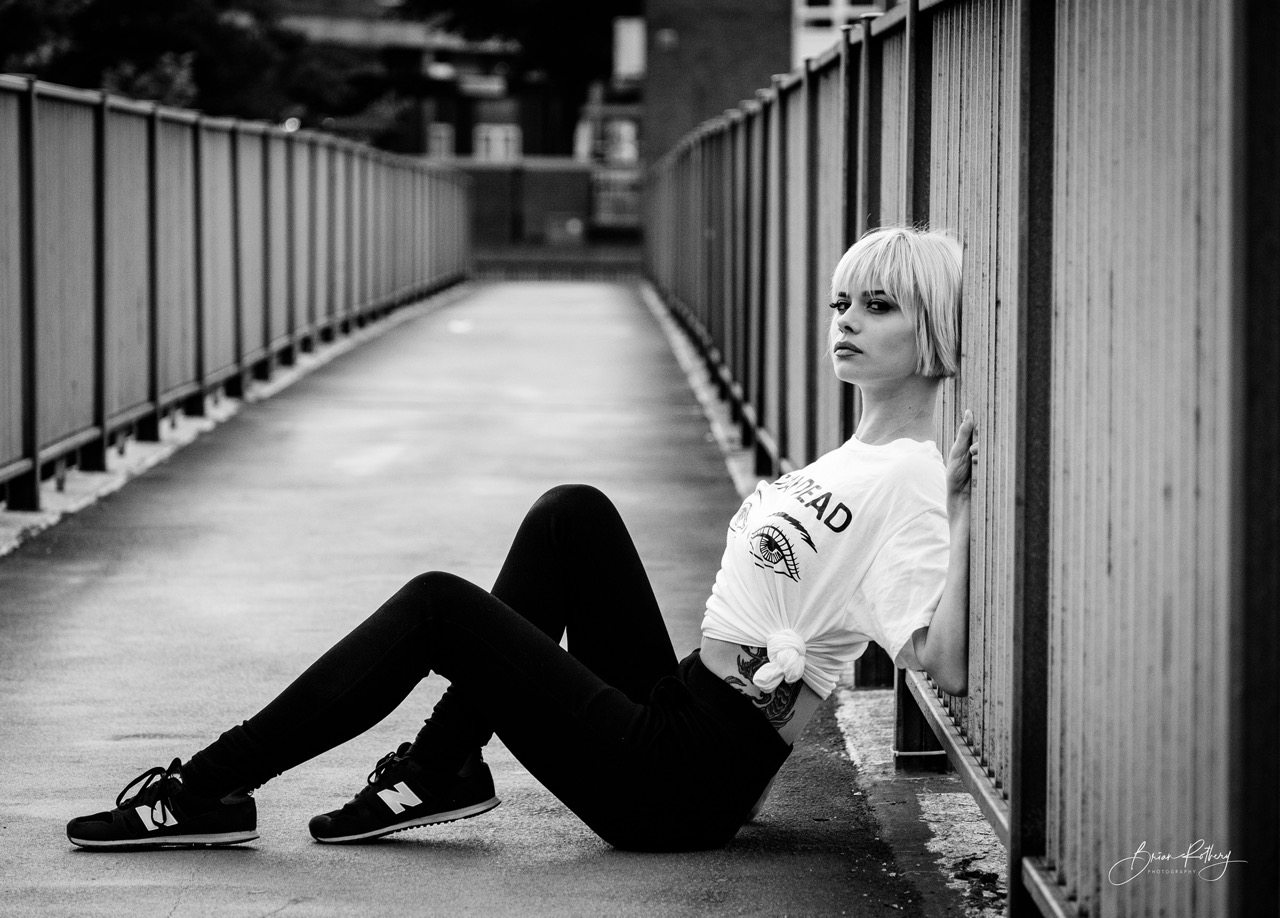
Strategic imagery does more than fill space on a landing page. High-quality portraiture and personal brand photography act as a force multiplier for your written content, increasing session duration by providing a human anchor for your message. When your visuals are sharp and intentional, your perceived authority rises. Visual Authority is the intersection of technical quality and brand alignment. Investing in bespoke assets ensures that your digital presence works as hard as your sales team, turning passive browsers into committed leads through the power of professional urban portrait photography and fashion-forward aesthetics.
For organisations seeking to extend this visual authority into the realm of corporate video and institutional media, you can learn more about Rubén Campos Estudio to see how professional production defines brand excellence.
Combating Brand Misalignment
Your business has likely outpaced its original visual identity. Using legacy photos from three years ago creates a jarring disconnect for the user. They see a version of you that no longer exists, which breeds subtle distrust. This visual language forms a core component of your corporate identity, dictating how the market perceives your stability and professionalism. Transitioning from generic, safety-first imagery to bespoke brand storytelling allows you to reclaim your narrative. Updating website with new photos ensures that every pixel on the screen reinforces your current service level, rather than apologising for where you used to be. It's a move from being a participant in your industry to becoming a leader within it.
The Curation Framework: Selecting Images that Align with Your Brand Narrative
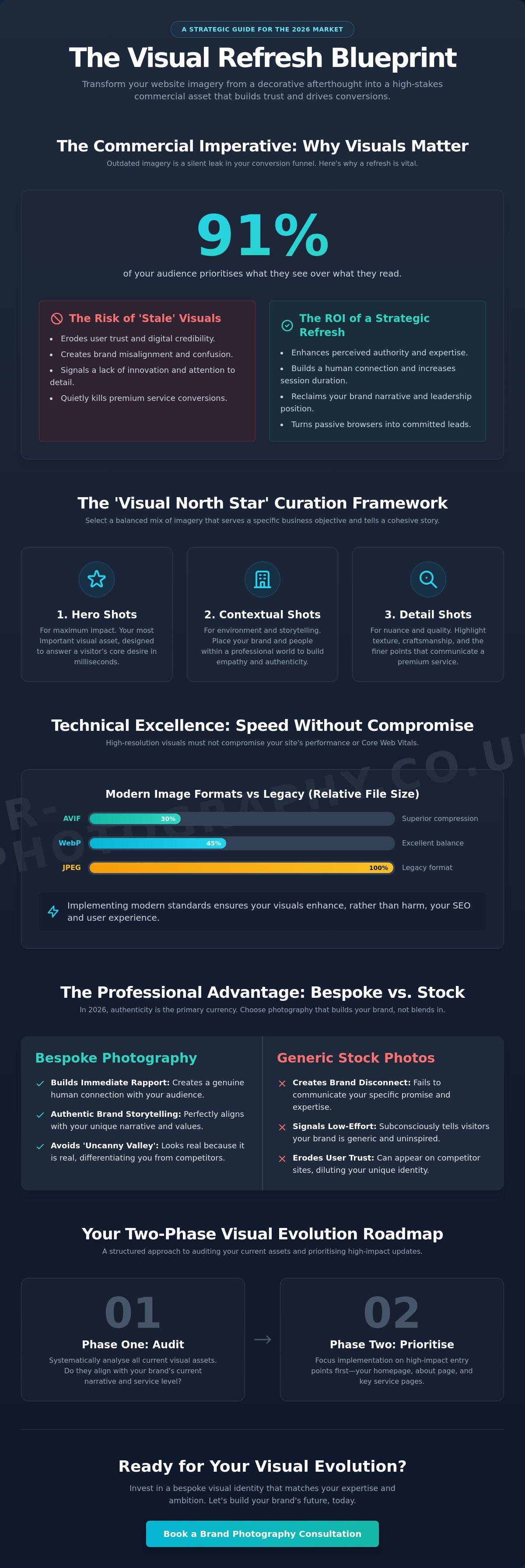
Curation is the bridge between a raw gallery and a high-converting digital presence. Successful curation starts with a 'Visual North Star', a guiding principle that ensures every asset serves a specific business objective whilst updating website with new photos. This framework moves beyond selecting 'nice' images; it's about building a cohesive ecosystem where colour palettes remain consistent across every page. When updating website with new photos, you must consider the 'Rule of Three' to create a layered, immersive experience. This involves balancing Hero shots for impact, Contextual shots for environment, and Detail shots to highlight nuance and texture. We also prioritise the use of negative space, ensuring your imagery provides the 'breathing room' required for clean web design overlays and legible typography.
Storytelling Through Portraiture
Generic headshots often fail to capture the ambition of a modern brand. We advocate for a shift toward environmental and urban portrait photography, which places you within the context of your professional world. This approach builds empathy by showing 'behind-the-scenes' moments that feel authentic rather than staged. By integrating fashion-forward aesthetics into your personal brand photography, you differentiate yourself in a crowded market. It's about projecting a persona that is both approachable and authoritative. Whilst curation is a creative endeavour, it must be balanced with technical foresight, adhering to Google Images SEO best practices to ensure your narrative is actually discoverable by your target demographic.
The Hero Image Strategy
Your hero image is the single most important visual asset on your website. It must answer a visitor's core objection or satisfy their primary desire within milliseconds of the page loading. This requires a strategic focus on focal points and aspect ratios that remain effective across both desktop and mobile viewports. A successful hero shot doesn't just look professional; it functions as a visual mission statement. If you are unsure how to translate your values into a visual language, a collaborative session can help define your unique North Star. By selecting a hero image that resonates emotionally whilst maintaining technical clarity, you establish an immediate bond of trust. This strategic selection process ensures that your visual rebranding isn't just a change of scenery, but a calculated upgrade to your market position.
Technical Excellence: Optimising Your New Imagery for Performance and SEO
High-impact visuals are a liability if they compromise your site's performance. In 2026, the technical execution of your imagery is as critical as the creative direction. When you are updating website with new photos, you must navigate the tension between high-resolution clarity and ultra-fast loading speeds. Google's Core Web Vitals, specifically Largest Contentful Paint (LCP), prioritise pages that deliver their primary visual assets almost instantaneously. Large, uncompressed files are the most frequent cause of poor LCP scores, which can directly suppress your search rankings. To maintain a competitive edge, your technical strategy must move beyond simple JPEG uploads and embrace modern compression standards.
The 2026 standard for digital imagery is the AVIF format, supplemented by WebP as a robust fallback. These formats offer superior compression efficiency compared to legacy types, allowing for rich, detailed personal brand photography that doesn't bloat your page weight. Beyond the file format, your naming conventions serve as a roadmap for search engines. Avoid generic titles like "IMG_5678.jpg". Instead, use descriptive, hyphenated filenames such as "urban-portrait-photography-london-professional.avif" to reinforce your relevance to both users and algorithms.
Compression Without Compromise
Achieving a 'Retina-ready' look requires a sophisticated approach to resolution. Serving images at double the intended display dimensions ensures crisp rendering on high-density Retina screens while maintaining a professional edge. However, this 2x resolution must be balanced with lossless compression tools that strip away unnecessary metadata without degrading the visual quality of your fashion photography. We focus on a 'mobile-first' delivery, using responsive image syntax to ensure that a smartphone user isn't forced to download a desktop-sized file. This level of technical precision protects your brand's integrity across all devices.
The SEO Impact of New Visuals
Search engines treat the addition of new, high-quality assets as a 'freshness signal', suggesting that your business is active and relevant. Updating website with new photos provides an opportunity to refine your accessibility standards. Alt text should be descriptive and concise, ideally between 50 and 125 characters, to serve both visually impaired users and search bots effectively. For your most valuable assets, such as bespoke portraiture, implementing Image Schema markup helps Google identify the subject matter and creator of the work. This metadata acts as a digital signature, reinforcing your authority and ensuring your visual investment contributes directly to your organic growth strategy.
Step-by-Step Guide: Implementing Visual Updates Across Key Pages
Execution is where strategy meets reality. Transitioning from a theoretical plan to a live refresh requires a disciplined, phased approach. Updating website with new photos isn't a task to be rushed or handled haphazardly. It's a structured process designed to replace visual clutter with high-intent assets that guide your visitor's journey. By following a clear implementation roadmap, you ensure that every update serves a functional purpose whilst maintaining the technical integrity of your digital ecosystem. This isn't just about changing pictures. It's about refining the user experience.
- Phase 1: The Audit. Review every existing image. Identify 'low-value' assets, such as generic stock photos or legacy files that no longer represent your current service level. If an image doesn't reinforce your brand authority, it's a candidate for immediate replacement.
- Phase 2: The Hero Refresh. Update your primary entry points first. Your homepage hero image should be the most technically perfect and strategically aligned asset in your library.
- Phase 3: The About Page. Introduce the human element. This phase focuses on personal brand photography to build immediate rapport and empathy with your audience.
- Phase 4: The Portfolio. Organise your work into cohesive visual narratives. Instead of a random grid, curate galleries that tell a story of transformation or success.
- Phase 5: Testing. Verify mobile responsiveness and focal points. Ensure your subjects aren't awkwardly cropped on smaller screens and that loading speeds remain optimal.
Mastering the 'About Me' Visuals
Your 'About' page is frequently one of the most visited pages on your site, yet it's often the least optimised. This is the space to move beyond the rigid corporate headshot. We recommend mixing professional portraits with candid urban portrait photography to create a sense of relatability. Pay close attention to your gaze and posture; your eyes should lead the reader toward your primary call-to-action. This subtle visual cue creates a psychological path for the visitor to follow. When updating website with new photos, remember that the goal is to feel accessible without sacrificing your professional expert status.
Optimising Service and Product Pages
Service pages shouldn't just describe what you do; they should show the result. Utilise lifestyle photography to demonstrate the professional outcome your clients can expect. Consistency in lighting and tone is essential here to create a professional 'suite' of images that feels intentional rather than fragmented. This visual cohesion signals stability and attention to detail. If your current service pages feel disjointed or lack a professional edge, you can book a strategic consultation to align your visuals with your 2026 business goals. Integrating text and imagery whilst maintaining legibility is a delicate balance, but it's the hallmark of a premium digital experience.
The Professional Advantage: Why Bespoke Photography Beats Stock in 2026
The 'Stock Photo Uncanny Valley' is a documented phenomenon where users instinctively recoil from overly polished, generic imagery. When you are updating website with new photos, relying on stock libraries is a high-risk strategy that can erode the trust you've built. Authentic visuals act as a primary trust signal. They prove you are a real person operating in a real space. Bespoke portraiture and urban portrait photography allow you to inject your specific brand personality into every pixel, creating a rapport that stock photos simply cannot replicate. It's about moving from being a nameless vendor to a trusted strategic partner.
Beyond the immediate website refresh, bespoke assets offer significant long-term value. A professional image library provides a consistent visual foundation for your social media channels, LinkedIn presence, and PR efforts. This ensures your brand remains cohesive across all touchpoints whilst reinforcing your market position. Tailoring your visual assets to your specific brand voice is not a luxury; it's a strategic requirement for high-end service providers who want to command premium rates. It's an investment in your brand's future growth rather than a simple one-off cost.
Investing in Personal Brand Photography
A single session with BR-Photography is designed to yield a comprehensive library of assets that can power your digital presence for an entire year. Our collaborative process begins by turning your business goals into a detailed shot list, ensuring every frame serves a specific purpose. Professional lighting and expert direction are non-negotiable for high-end brands. We move beyond the standard headshot to capture the energy and ambition of your business through fashion-forward personal brand photography that resonates with your target demographic. This partnership ensures you feel at ease whilst we capture the definitive version of your professional self.
Your Next Steps for a Visual Overhaul
Setting a clear timeline for your website refresh is the first step toward reclaiming your visual authority. To ensure maximum variety during your session, prepare by selecting multiple outfits and identifying key environments that reflect your daily professional life. This preparation allows us to capture a diverse range of hero, contextual, and detail shots in a single day. Updating website with new photos becomes a seamless experience when you have a pre-defined plan and a library of bespoke assets ready for deployment. Ready to elevate your digital presence? Book a strategic personal brand session with BR-Photography and start the journey toward a more authentic, high-impact brand identity.
Reclaiming Your Visual Authority
Your digital presence is an evolving asset, not a static brochure. Moving beyond generic visuals to bespoke, fashion-forward personal brand photography is a calculated investment in your long-term market value. We've explored how technical precision with AVIF formats and a disciplined curation framework can transform your user experience from 'stale' to superior. Updating website with new photos is the most direct lever you can pull to signal innovation and build immediate rapport with a high-stakes audience.
As specialists in strategic visual storytelling with national UK coverage, we help you translate your business goals into a high-impact image library. It's time to stop settling for 'good enough' and start projecting the authority your expertise deserves. Elevate your brand with bespoke professional photography and secure your place as a leader in your sector. You've built an exceptional business; ensure the world sees it with the clarity and sophistication it warrants.
Frequently Asked Questions
How often should I be updating my website with new photos?
You should aim for a comprehensive visual refresh every 18 to 24 months to maintain market relevance. If your business undergoes a significant pivot or brand evolution, immediate updates are necessary to prevent a disconnect between your current expertise and your digital presence. Consistent visual updates prevent the 'stale' feeling that often drives up bounce rates amongst sophisticated audiences.
Will adding high-resolution professional photos slow down my website?
Professional imagery won't slow your site if you follow modern technical standards. Using lossless compression and proper scaling ensures your visual authority doesn't come at the cost of performance. High-resolution files are only a liability when they are improperly managed; correctly optimised assets actually improve user engagement without compromising load times.
What is the best file format for website photos in 2026?
AVIF is the premier file format for 2026 due to its superior compression efficiency. It allows for rich detail and vibrant colour whilst maintaining an incredibly light page weight. WebP remains a vital secondary format for broader browser compatibility, ensuring your high-end fashion photography looks exceptional across all platforms.
Can I use photos taken on my smartphone for a professional website refresh?
Smartphone photos often lack the dynamic range and professional lighting required for a high-stakes digital presence. Whilst modern devices are impressive, they cannot replicate the strategic direction and technical depth provided by professional urban portrait photography. Your website is a vital investment; don't undermine your credibility with low-fidelity assets that fail to signal premium value.
How many photos do I actually need for a full website update?
A strategic website refresh typically requires 15 to 25 unique assets to cover all primary and secondary pages. This includes your high-impact hero images, contextual shots for service descriptions, and authentic personal brand photography for your 'About' section. Quality always outweighs quantity in a professional curation framework designed for conversion.
Does updating my website photos help with my Google ranking?
Updating website with new photos improves your ranking by signalling 'freshness' to search algorithms. High-quality visuals also increase session duration, which is a critical user experience metric that Google uses to determine your site's authority. When combined with descriptive alt text and proper metadata, new imagery reinforces your relevance in a competitive market.
What is the difference between a headshot and personal brand photography?
How do I ensure my new photos look good on mobile devices?
Ensure your developer uses responsive image syntax to serve the correct file size and resolution to each specific device. During the curation phase, we prioritise images with flexible focal points that don't lose their impact when cropped for vertical mobile viewports. Updating website with new photos requires this technical foresight to ensure a seamless cross-platform experience for every visitor.
Disclaimer
"The information provided in this Blog post is for general informational purposes only. While I strive to provide accurate information, I make no representations or warranties of any kind about the accuracy, reliability, or completeness of this information. Any reliance you place on such information is strictly at your own risk. In no event will I be liable for any loss or damage derived from the use of this blog."


