
Your professional portraits are not just pretty pictures; they are functional business tools that should be deployed with the precision of a marketing campaign. Understanding how to use personal branding photos effectively is the difference between a static image and a high-performance engine for your brand growth. It's natural to feel a bit awkward about 'self-promotion' or to feel overwhelmed by the technical requirements of different platforms. You've likely felt the frustration of having beautiful assets sit idle in a folder whilst your digital presence remains inconsistent and fragmented.
This guide will show you how to transform your professional image into a high-converting visual system across your entire digital and physical presence. We'll move beyond the purely aesthetic to look at the strategic application of these assets. From mastering the 2026 4:5 portrait ratio on Instagram to creating a seamless narrative on your website, we will ensure your visual investment delivers the authority your business deserves.
Key Takeaways
- Reframe your imagery as a cohesive visual narrative system designed to build immediate trust and professional authority.
- Learn technical layout strategies for your website, such as utilising negative space in hero images to ensure your brand message remains legible and impactful.
- Discover how to use personal branding photos strategically across social media to transform your LinkedIn banner and Instagram grid into active engagement tools.
- Develop a modern media kit that provides editors and partners with high-resolution, ready-to-use assets for seamless PR and guest appearances.
- Move beyond a simple transaction by forming a collaborative alliance with your photographer to build a functional and well-organised strategic asset library.
Beyond the Headshot: Reimagining Your Photos as Strategic Business Assets
A single headshot is a static placeholder. A strategic visual system, however, is an active participant in your business growth. When you consider the broader implications of Personal branding, you must move beyond the idea of a 'profile picture' and start viewing your imagery as a series of high-performance assets. This shift in perspective is essential for anyone learning how to use personal branding photos to command attention in a crowded UK market. It's about moving from a passive presence to an active narrative.
The 'Visual Trust' factor is rooted in human psychology. We are hardwired to seek out faces we recognise and respect. Whilst a passive headshot merely confirms your identity, an active brand asset works to build a bridge of empathy and authority before you ever hop on a Zoom call. In a competitive landscape, your visual consistency across every touchpoint ensures your brand remains memorable. It signals that you are intentional, professional, and ready for high-stakes collaboration.
The Psychology of Professional Imagery
Professional lighting and intentional composition do more than just make you look 'good'. They signal reliability and authority to your audience. When your imagery is crafted with creative empathy, it puts nervous prospects at ease. They feel they already know the person behind the service. Choosing 'good enough' or low-quality alternatives is a risk to your brand integrity. High-stakes commercial success requires a visual language that projects a confident, expert mindset; you can check out Kindred Brand Imagery to see how professional brand storytelling can elevate your business visuals. It’s an investment in your future reputation.
Inventory Management: Categorising Your New Assets
To truly understand how to use personal branding photos, you must first categorise your library based on functional utility. Not every photo serves the same purpose. A well-rounded shoot provides a toolkit for different scenarios:
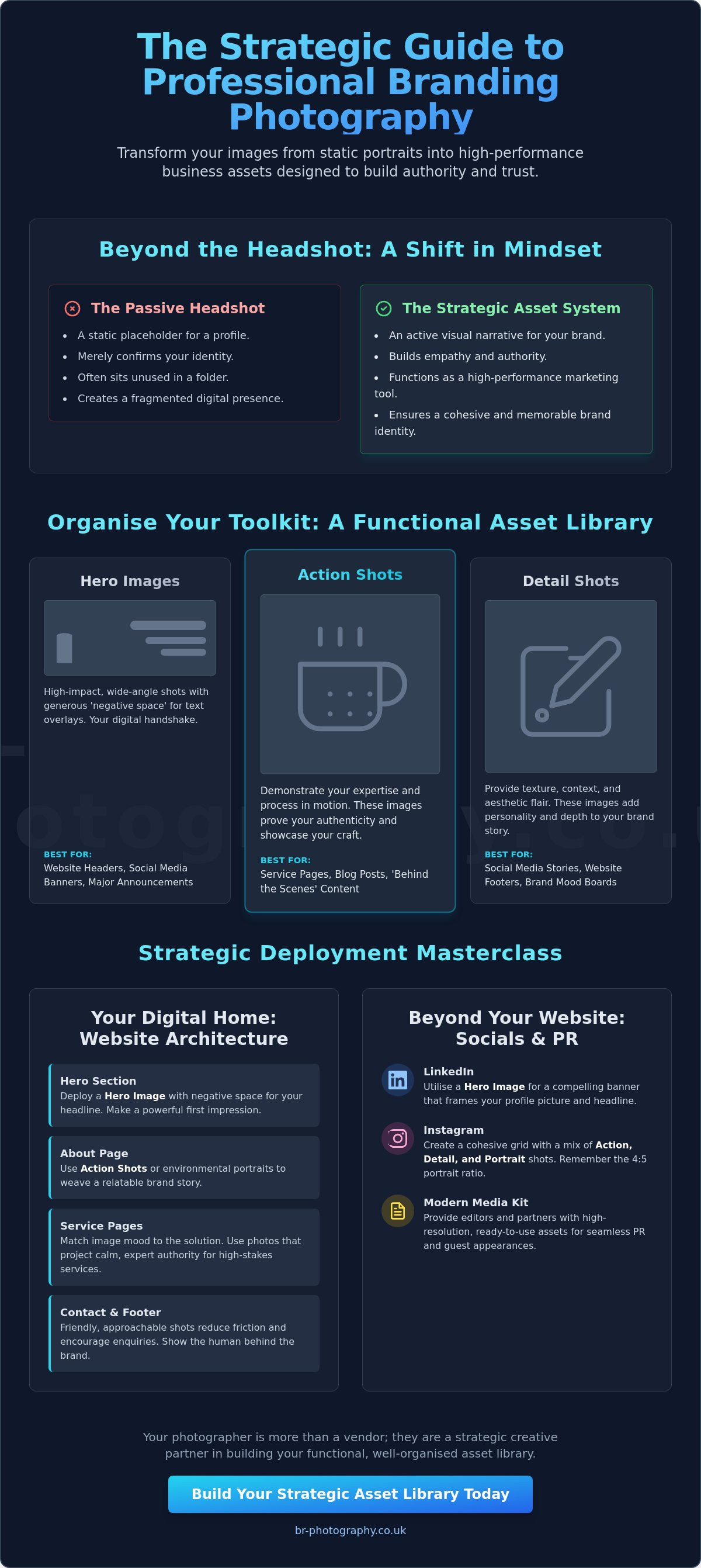
- Hero Images: These are high-impact, wide-angle shots designed for your website headers. They often include 'negative space' to allow for clean text overlays without cluttering the frame.
- Detail Shots: These provide texture and context. Use them in social media stories or blog posts to showcase your environment, tools, or specific aesthetic movements.
- Action Shots: These demonstrate your expertise in motion. Whether you're sketching a design, speaking at a podium, or collaborating with a team, these images prove your process and authenticity.
By organising your assets this way, you ensure you always have the right tool for the specific marketing job at hand. This level of preparation elevates your brand from a simple service provider to a strategic creative partner.
Optimising Your Digital Home: A Masterclass in Website Imagery
Your website serves as the primary hub for your professional identity. It is the space where curiosity transforms into conversion. To succeed, you must move beyond simply "having" pictures and start understanding how to use personal branding photos as functional components of your site’s architecture. Every pixel should serve a purpose, guiding the user from the initial landing through to the final enquiry.
Start with the Hero section. This is your digital handshake. Use wide-angle shots that feature generous amounts of negative space. This technical choice allows your headline and sub-copy to sit cleanly over the image without creating visual clutter. If your face is too close to the text, the user's brain struggles to process both, often leading them to bounce. The About page requires a different strategy. Move away from the stiff, corporate bio and use imagery to weave a relatable brand story. Show yourself in an environment that reflects your values, making the transition from a cold lead to a warm connection feel effortless.
On service pages, the mood of your portrait must match the specific solution you are offering. If you provide high-stakes strategic advice, your imagery should project calm, expert authority. Conversely, your footer and contact pages benefit from friendly, approachable shots. These images reduce friction at the point of enquiry by reminding the visitor that a real, supportive human is on the other side of the form. Don't neglect the technical details; always optimise file sizes to maintain site speed and use descriptive Alt-text. This is a vital part of building a personal brand on social media and the wider web, ensuring your assets are discoverable by search engines.
The Power of Gaze Direction
By positioning your eyes in a photo to look directly toward your call-to-action button, you instinctively lead the reader's attention to the most important element on the page. Utilise the 'Rule of Thirds' in your web design by placing your face where a user's eyes naturally land. This creates a sense of balance and intent. Avoid the generic 'stock photo' aesthetic by opting for authentic, urban portraits that feel grounded in reality. If you want to ensure your site feels this intentional, it may be time to book a strategic session to capture these specific layouts.
Landing Pages and Sales Funnels
Authority shots are essential on sales pages. They visually justify your expertise and premium pricing before the reader even gets to the bottom of the page. Placing 'Behind-the-Scenes' imagery near your testimonials is another high-performance tactic. It anchors your social proof in reality, showing the work that goes into the results you promise. Finally, ensure complete visual cohesion between your digital ads and your landing page. If the imagery doesn't match, you risk breaking the trust you've worked hard to build.
Mastering the Social Media Engagement Engine
Social media platforms are the front lines of your digital presence. Whilst your website acts as your digital home, social channels are where your brand narrative breathes and evolves in real-time. Understanding how to use personal branding photos across these channels is essential to maintain a sense of professional authority without losing the human connection that drives engagement. It's about moving beyond the occasional post and treating your feed as a strategic engagement engine that works for you 24/7.
Success on social media requires a shift from sporadic sharing to intentional batching. By rotating through your different branding 'story' pillars, such as expertise, process, and personality, you can plan months of content using a single asset library. This prevents the common pitfall of 'content fatigue' where you feel pressured to take new photos daily. Instead, you deploy your professional assets with precision, ensuring every post reinforces your market position. High-quality stills also solve a modern aesthetic problem: video covers. Using a professional portrait as a cover for your Reels and Stories ensures your grid remains sophisticated and cohesive, even when your video content is raw and spontaneous.
LinkedIn Strategy for Professionals
On LinkedIn, many professionals focus solely on the circular profile picture, yet the profile banner is your most valuable piece of visual real estate. It's a digital billboard for your authority. Use a landscape-oriented branding asset here, ideally one with negative space that allows you to overlay a clear value proposition or your metropolitan location. Updating your profile picture to match a 'sophisticated expert' persona creates immediate trust. You should also utilise your branding photos in 'Featured' posts to anchor your key achievements. Custom article headers featuring your own imagery, rather than generic stock photos, will significantly increase your click-through rates amongst high-level peers.
Instagram and the Visual Narrative
Instagram requires a 'curated but authentic' approach. Your grid should balance high-end professional work with 'Lifestyle' portraits that break up text-heavy educational posts. Organise your 'Highlights' using consistent cover photos from your shoot to create a seamless user journey for new followers. The 'Face-to-Follow' ratio is a vital metric here; you should aim to appear in your own feed at least once every three to six posts. This maintains the human connection whilst allowing your work and expertise to take centre stage. It’s about being present without being overbearing, a balance that is easily achieved when you have a diverse range of assets at your disposal.
The Professional Edge: PR, Proposals, and Physical Branding
High-stakes commercial success often depends on how the external world represents you. If you are featured in a trade publication or invited to speak at a summit, the quality of your visual assets determines your perceived value. Learning how to use personal branding photos in these external environments is a hallmark of a mature business strategy. It moves you from being a mere participant to a recognised authority in your sector.
Every serious entrepreneur needs a modern media kit. This is a curated, downloadable folder containing high-resolution portraits in various orientations. Journalists and event organisers operate on tight deadlines. If you provide them with 'ready-to-use' professional imagery that requires no additional editing, you significantly increase your chances of securing better placement and larger features. When pitching to conference boards, your imagery must project a 'commanding' presence. A high-end urban portrait or a sophisticated fashion-influenced shot differentiates you from hundreds of other applicants using generic, low-effort headshots.
Establishing Authority in the Press
Journalists favour contributors who make their lives easier. Providing professional, well-lit portraits that align with a publication's specific aesthetic signals that you understand their audience. A minimalist tech journal requires a different visual tone than a stylish lifestyle magazine. For national UK newspapers, the 'Bio-Pic' standard requires a precise balance of approachability and gravitas. It's about demonstrating that you belong in that space before they even read your first quote.
Elevating Your Sales Collateral
Don't limit your assets to digital feeds. PDF proposals and brochures benefit immensely from high-end urban portraiture. These visuals justify your expertise whilst the reader navigates your pricing and service terms. In your daily communication, integrate a subtle portrait into your email signature. It adds a professional touch to every transaction. Your 'Welcome Sequence' emails are also an ideal place for branding imagery, greeting new subscribers with a face they can trust immediately. Finally, ensure your physical touchpoints, such as business cards, pull-up banners, and book covers, use high-resolution files to avoid pixelation. To ensure your next PR push or proposal has the necessary visual weight, you can enquire about a bespoke portrait session to build your own strategic asset library.
Maximising Your Investment: The BR-Photography Strategic Alliance
Viewing your photographer as a mere vendor is a missed opportunity for your brand growth. A true collaborative alliance ensures your visual assets aren't just aesthetically pleasing but are functional tools for your business ecosystem. Mastering how to use personal branding photos requires a structured system for asset management. It's about ensuring your investment continues to deliver value long after the shutter clicks. Your visual identity is not a one-off expense; it's an evolving business asset.
Organise your 'Strategic Asset Library' using cloud-based solutions like Dropbox or Google Drive. Use clear naming conventions that include SEO-friendly keywords and categorise images by their functional use, such as 'Website Hero' or 'Social Detail'. This level of organisation allows you to respond to PR opportunities in seconds rather than hours. The UK market moves quickly; a 'Batch and Refresh' approach ensures your imagery evolves alongside your business pivots. Aim to update your core library every twelve to eighteen months to stay aligned with emerging aesthetic movements and your own professional growth. Understanding how to use personal branding photos as a long-term strategy prevents your digital presence from feeling dated or stagnant.
The BR-Photography Difference
Our approach blends high-end fashion aesthetics with raw urban portraiture to create content that cuts through the digital noise. We don't just take pictures; we build visual systems. This starts with a pre-shoot strategy call to align every shot with your specific business goals. We prioritise creative empathy, acknowledging the natural anxiety of being the subject. This ensures you look confident, authoritative, and entirely yourself. It's about projecting an expert mindset that puts your clients at ease whilst positioning your brand for high-stakes success.
Your Post-Shoot Action Plan
Once you receive your gallery, momentum is your greatest asset. Follow these steps to ensure your imagery begins working for you immediately:
- Step 1: Audit your current digital touchpoints. Identify outdated or low-quality imagery on your website, LinkedIn, and email signatures.
- Step 2: Select your 'Top 10' versatile assets. These should include a mix of hero, action, and detail shots for immediate deployment across your primary channels.
- Step 3: Schedule a 'Visual Refresh'. Systematically update your profile pictures, banners, and landing pages to create a cohesive brand narrative.
Your visual identity is a vital investment for your brand's success. Don't let your assets sit idle in a folder. Book your strategic personal branding session with BR-Photography today to start building your high-converting visual system.
Final Implementation Checklist
To conclude your strategic rollout, here are five immediate actions to take with your new gallery:
- Download both high-resolution and web-optimised versions of every file.
- Backup your entire library to at least two secure cloud locations.
- Rename your 'Top 10' assets with descriptive, keyword-rich filenames for SEO.
- Create a dedicated 'Social Media' sub-folder for quick mobile access.
- Share your new media kit link with your PR contacts or internal team.
Transforming Your Visual Assets into a High-Performance Brand Engine
Your professional image is the most versatile asset in your marketing toolkit. By moving beyond the traditional headshot and embracing a comprehensive visual system, you ensure every touchpoint, from your website hero section to your PR media kit, projects a confident and expert mindset. Mastering how to use personal branding photos allows you to maintain a sophisticated presence whilst navigating the fast-paced demands of the modern market. It is time to stop letting your portraits sit idle in a folder and start deploying them as functional tools for business growth.
We specialise in fashion and urban portraiture, offering national UK coverage for clients who demand a strategic, results-oriented approach to visual storytelling. Our collaborative alliance ensures your imagery functions seamlessly within your larger business ecosystem, building the trust and authority your brand deserves. Elevate your professional identity with a strategic personal branding session today. Your brand is ready for its next level of growth; let's ensure your visuals are ready to lead the way.
Frequently Asked Questions
How many personal branding photos do I actually need to start with?
You should aim for a library of at least 20 to 30 versatile assets to ensure you have enough variety for a full content cycle. This allows for a mix of hero images, detail shots, and action portraits without your feed feeling repetitive. A single strategic session usually provides enough variety to last for several months of consistent posting across your different digital touchpoints.
Can I use my personal branding photos for my LinkedIn profile picture?
Yes, your LinkedIn profile is one of the most effective places to deploy your professional portraits to establish immediate authority. Ensure the image is a high-resolution, sophisticated expert shot that aligns with your current market position. Whilst the circular profile picture is vital, don't forget that your banner offers even more real estate to showcase your brand narrative and professional environment.
What is the best way to use branding photos on a website without slowing it down?
The best way to maintain website speed is to use web-optimised file formats like WebP and ensure images are resized to their exact display dimensions. High-resolution files are essential for print, but on your digital home, they can cause slow loading times that damage your user experience. Always use descriptive Alt-text to aid search engines in understanding how to use personal branding photos on your site.
Should I use the same photo across all my social media platforms?
Using the same profile photo across all platforms creates a cohesive visual identity that makes you instantly recognisable to your audience. This consistency builds trust and reinforces your brand integrity as users move between LinkedIn, Instagram, and your website. However, you should vary the secondary imagery, such as headers and feed posts, to suit the specific tone and technical requirements of each platform.
How often should I update my personal branding photography?
You should aim to refresh your personal branding photography every twelve to eighteen months to ensure your imagery remains relevant and authentic. Significant pivots in your business model, a change in your personal aesthetic, or a move into new metropolitan markets are also clear signals that an update is required. Staying current prevents a disconnect between your digital presence and your real-world appearance.
What should I do if I feel awkward using photos of myself in my marketing?
Feeling awkward is a common hurdle, but focusing on the functional value of the assets as business tools can help shift your perspective. Remember that your audience wants to connect with the human behind the service, and professional imagery acts as a bridge for that empathy. A strategic creative partner will use creative empathy to put you at ease during the shoot, ensuring your confidence shines through.
Do I need different photos for my Instagram feed versus my professional website?
Instagram typically requires more lifestyle and behind-the-scenes assets, whilst your website demands high-impact hero shots with negative space. Your website is your formal digital home where you justify premium pricing, whereas Instagram is a more dynamic engagement engine. Having a diverse library ensures you know how to use personal branding photos to tailor your visual narrative to the specific intent of each audience.
Can personal branding photos be used for physical marketing like business cards?
Personal branding photos are highly effective for physical touchpoints like business cards, book covers, and pull-up banners. High-resolution files ensure that your image remains crisp and professional in print, which is essential for commanding attention at live events or in-person meetings. Infusing your physical sales collateral with professional portraiture adds a subtle, authoritative touch that generic, text-only designs often lack.
Disclaimer
"The information provided in this Blog post is for general informational purposes only. While I strive to provide accurate information, I make no representations or warranties of any kind about the accuracy, reliability, or completeness of this information. Any reliance you place on such information is strictly at your own risk. In no event will I be liable for any loss or damage derived from the use of this blog."


