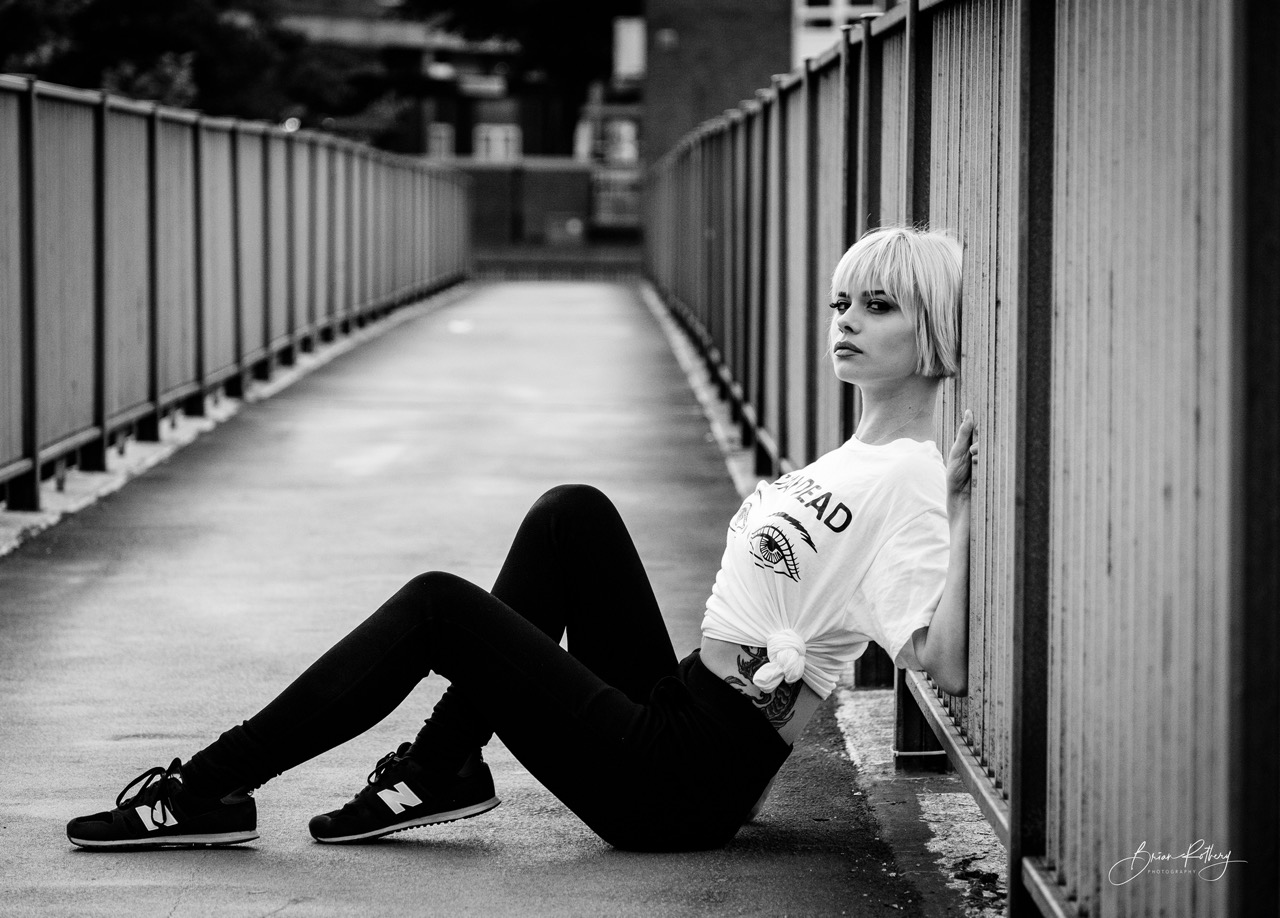

A candid street portrait can feel spontaneous without being careless. In the UK, whether it is legal to photograph a stranger in public takes more than a simple yes or no: taking the image, responding when someone notices and deciding how to use it are separate considerations.
It’s understandable to wonder where observation ends and intrusion begins. Candid street photography portraits are made without a subject’s prior notice or consent, but authenticity isn’t just about catching an unguarded expression. It also depends on the photographer’s judgement, the subject’s response and the context in the frame.
This article explains the legal considerations around photographing strangers in public, how to respond to eye contact or a request to delete an image, and what helps a portrait feel genuine rather than staged. It also explores respectful practice and the choices behind a compelling street portrait, helping you understand the balance between capturing an honest moment and respecting the person at its centre.
Key Takeaways
- Understand why photographing someone in a public place and deciding how to use the image are separate considerations.
- Know how to respond calmly if a subject notices the camera or asks about their photograph.
- Recognise the difference between an unposed moment and a portrait made with the subject’s prior notice and consent.
- See how context, timing and the photographer’s judgement can make a street portrait feel genuine.
- Learn why respectful photographers move on when a situation feels wrong and avoid turning another person’s misfortune into an image.
How a professional photographer handles interactions when a subject notices the camera
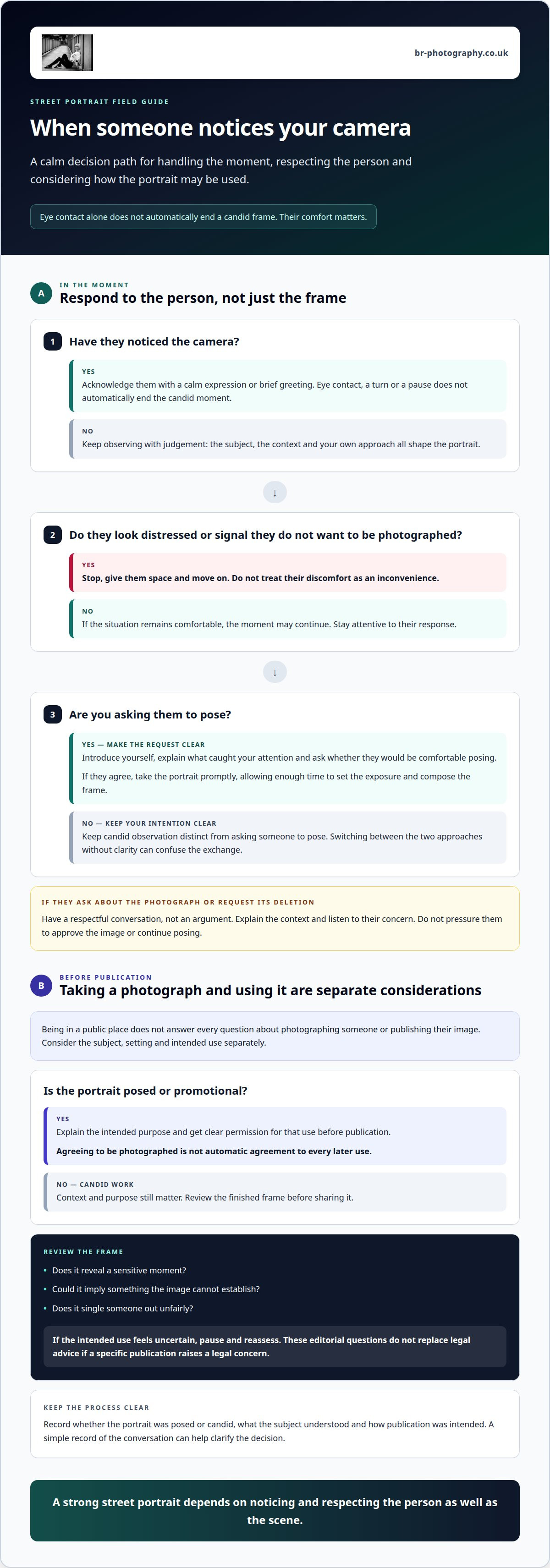
A candid street portrait can still feel natural when someone notices the camera. They might meet the photographer’s gaze, turn towards them or pause, changing the mood of the frame. A professional responds to that moment rather than treating it as an inconvenience. Trust between the subject and photographer matters: without it, an interesting expression can become an uncomfortable encounter.
How can a professional photographer approach strangers for street portraits? They can introduce themselves confidently, explain what caught their attention and ask whether the person would be comfortable posing. Rehearsing a short, natural introduction helps the photographer speak clearly instead of rushing through an explanation while adjusting the camera.
When a subject notices the camera during an unposed moment, the photographer can acknowledge them with a calm expression or brief greeting. Eye contact doesn’t automatically end the candid frame: someone walking towards the photographer or turning in their direction may still be part of the scene. What matters is whether the situation remains comfortable. If the person looks distressed or signals that they don’t want to be photographed, the photographer should stop and give them space.
A direct request to delete an image calls for a respectful conversation, not an argument. The person may not know why the photograph was taken, so the photographer can explain the context and listen to their concern. They shouldn’t pressure the subject to approve the image or continue posing. A clear, considerate response protects the interaction, even when the original aim was simply to capture an unplanned moment.
For a posed portrait, the photographer should approach confidently and keep the exchange concise. Once the subject agrees, they can take the portrait promptly, allowing enough time to set the exposure and compose the frame. That balance matters on a busy street: unnecessary delays can make a willing subject self-conscious, while hurried camera settings can undermine the image.
Preparation also includes choosing an approach before the session. One photographer finds switching between candid and posed portrait-making on the same day too confusing. Keeping those intentions distinct can help the photographer communicate consistently, rather than moving between observation and requests without clarity. In an urban portrait photography setting, the photographer can also consider how the street’s activity supports the portrait without distracting from the subject.
Ultimately, a noticed camera creates a choice point. The photographer can acknowledge the person, explain their intention, ask permission before making a posed portrait or move on if the exchange feels wrong. These small decisions shape the experience as much as framing and light. A strong street portrait doesn’t require the subject to ignore the photographer; it requires the photographer to notice and respect the subject in return.
How professional photographers handle the legality of photographing people in public
In the UK, being in a public place doesn’t answer every question about photographing someone or publishing their image. A professional distinguishes taking a photograph from deciding where it will appear, then considers the subject, setting and intended use. An image made for a personal project and a portrait intended for a campaign serve different purposes, so each situation needs to be assessed on its own facts.
When does a professional photographer need consent to publish a street portrait in the UK? There isn’t one answer for every image simply because it was taken in public. For a posed or promotional portrait, a professional should get clear permission for the intended use before publication. With candid work, context and purpose remain important considerations.
That distinction informs the photographer’s process. They can record whether the image was posed or candid, what the subject understood and how publication is intended. Someone who agrees to take part in a portrait has actively engaged with the photographer; a passer-by captured without prior notice hasn’t. Those circumstances should be considered separately when selecting images for publication.
Imagine a busy public square: one photograph shows a wide scene, with people appearing as part of the setting, while another makes one identifiable person the unmistakable subject. The photographer should consider the image’s context, how prominently the person appears and whether its intended use could change how the scene is understood. The same location doesn’t make the images equivalent.
Promotional use calls for careful communication. If a portrait is intended to represent a person, brand or campaign, the photographer should explain that purpose and obtain agreement before arranging the pose. Agreeing to be photographed shouldn’t be treated as automatic agreement to every later use. A clear discussion helps the subject understand the proposed image and its role.
For candid work, review the finished frame before sharing it. Does it reveal a sensitive moment, imply something the image can’t establish or single someone out unfairly? These questions support sound editorial judgement, but they don’t replace legal advice if a specific publication raises a legal concern. If the intended use feels uncertain, pause and reassess before publishing.
A simple record of the conversation can help keep the process clear. Note whether the portrait was posed, what use was explained and what the subject agreed to. If someone objects after noticing the camera, listen and consider their concern before proceeding. A respectful discussion supports a considered decision about the image and its publication.
For a planned portrait with a clear professional purpose, discuss the project with BR-Photography before the shoot. Agreeing the intention and context early helps shape a portrait that feels considered, rather than relying on assumptions once the camera is put away.
3. Authenticity in street photography
Authenticity in candid street photography portraits depends on more than photographing someone before they notice the camera. The frame should preserve the real context of a public moment, rather than manufacture a story around its subject. In 2017, Nick Turpin proposed “Candid Public Photography” for photographs made candidly, without staging or manipulation, in public spaces. His term offers a useful way to think about what the image claims to show.
Turpin’s #canpubphoto initiative aimed to distinguish this approach from other work labelled street photography. The distinction matters because a genre label alone can’t tell viewers how an image was made. An authentic street scene might draw interest from an unusual gesture, distinctive light or a relationship between a person and their surroundings. Editing or presenting the scene to imply an event that didn’t happen can undermine that record.
Ethical risks include exposing someone in a vulnerable moment, misrepresenting their behaviour through framing or sharing an identifiable image in an unexpected context. A professional considers the subject’s dignity and the story the finished frame communicates, not just its visual impact. A striking expression can make a photograph compelling, but if the situation feels exploitative, choosing not to capture it is a considered decision.
Flash complicates the boundary between candid and staged. Spyros Papaspyropoulos argues that a first frame made with flash can still be candid because it captures the scene before the subject reacts to the photographer’s presence. That timing may preserve an unguarded expression, but responsibility continues after the shutter closes. The photographer still needs to assess the image’s context and likely impact.
Consent changes the nature of the encounter. A posed street portrait is made with the subject’s prior notice and consent, so it shouldn’t be presented as an unnoticed observation. It can still feel honest: a relaxed expression, an unforced stance and the character of the surroundings can preserve spontaneity, even when the subject knows they’re being photographed.
Authenticity also involves noticing how outside influences shape a photographer’s eye. Street photographer Graeme McPhee chose not to post on social media for six months, reducing the influence of other people’s images on his work. His example highlights a practical point: photographers can develop a personal visual approach without copying a familiar pose, trend or editing style.
Before publishing candid street photography portraits, a professional can check whether the image shows what happened, whether its framing changes the apparent meaning and whether the subject is treated as a person rather than a prop. The capture may last an instant, but authenticity reflects choices made before, during and after that moment. That judgement gives viewers a more honest connection to the scene.
4. Candid street portraits
Candid street portraits capture people without their prior notice or consent. Posed street portraits are different: the subject knows about the photograph and agrees to take part beforehand. A person may never realise they were photographed if they don’t look towards the camera. That difference shapes the encounter, the image’s character and how the photographer approaches the scene.
Location helps create a frame with context. A professional can choose a busy public place, blend into the background and observe people moving through it. In Leeds, a street with varied light, architecture and activity may offer several visual layers. The photographer watches for an interesting gesture or interaction, then considers whether the surrounding details support the subject rather than compete with them.
Timing matters because people rarely pause in the same position. James Maher recommends a shutter speed of 1/250th of a second or faster for candid street photography. He also recommends keeping it above 1/250th or 1/200th of a second to freeze movement. These settings help manage motion, while the professional still weighs available light and the pace of the scene.
Focus and lens choice affect how quickly a photographer can respond. Maher typically pre-focuses at around 8-10 feet for candid work, reducing the need to refocus for every frame. He recommends 35mm and 50mm full-frame-equivalent prime lenses. A 35 mm focal length can include both the subject and surroundings, while 40 mm can also retain much of the environment.
Exposure balances sharpness with atmosphere. A mid-aperture of f/5.6 to f/8 can keep more of the scene acceptably clear; f/14 gives deeper depth of field. For softer backgrounds, f/4 or wider creates shallower depth of field. Daytime Auto ISO can range from 100 to 3200, while the photographer adapts to changing light rather than letting technical settings distract from the moment.
Conditions change across a UK street, from bright pavements to overcast skies and evening light. Maher recommends ISO 1600-3200 in overcast conditions and ISO 3200-6400 at night. Aperture Priority can help the photographer respond without repeatedly adjusting Manual Mode. Backlight, sidelight and frontal light each shape mood differently, so the choice depends on the subject and the story in the frame.
These decisions work together, not as a fixed recipe. A photographer might use a 35 mm lens to connect a person with a recognisable street scene, then adjust focus and exposure as the light changes. The goal is to make images that feel spontaneous while preserving enough detail to show where the moment happened and why it caught the photographer’s attention.
How can a professional photographer take candid street portraits respectfully?
Respect begins with assessing the scene, not simply spotting a striking face. In candid street photography portraits, a professional considers the person’s circumstances, the surrounding activity and the story the frame might suggest. Someone chatting with a friend presents a different situation from someone visibly upset. If the moment feels intrusive or exploitative, the photographer moves on instead of taking the picture.
Observation helps the photographer choose a frame without treating people as props. They can watch how the scene develops, then consider whether the photograph would expose private details or make an ordinary action seem embarrassing. A lively public gathering, for example, might offer a compelling view of people interacting. A close crop of someone in distress could make their misfortune the image’s main attraction.
Distance and composition affect how a subject is represented. A wide view may show a person within the flow of a crowd, while a tight frame can make them the entire focus. Before capturing candid street photography portraits, the professional considers whether nearby details provide useful context or unfairly change the apparent meaning. The goal is not to disguise what happened, but to show the moment honestly.
The photographer should also avoid disrupting the scene. They can choose a position that doesn’t block a path or draw attention to someone who wants privacy. If a person notices the camera and appears uneasy, lowering it and giving them space is more considerate than pursuing the shot. If they object, listen without arguing; the exchange matters more than keeping a particular frame.
Before selecting an image for publication, the photographer can review it with practical questions:
- Does the composition show enough context to represent the moment fairly?
- Does the image rely on someone’s vulnerability for visual impact?
- Could another frame communicate the scene without singling out the person?
For example, a photograph of a street performer could include the audience and surroundings, making the activity clear. A cropped image of one spectator’s expression might imply a reaction without showing what prompted it. The professional chooses the frame that best reflects the scene, rather than the one that simply looks most dramatic.
Ethical judgement continues during image selection and captioning. A professional avoids assigning motives the photograph cannot establish and leaves out frames that feel unfair or misleading. In candid street photography portraits, the person remains more important than a technically successful capture. For a portrait shaped by its surroundings, discuss your urban portrait photography with BR-Photography.
BR-Photography
BR-Photography helps people shape considered portraits around their identity, purpose and preferred visual style. If you want the atmosphere of a street setting without relying on an unplanned encounter, Urban Portrait Photography offers a way to create images with intention. Fashion Photography and Personal Branding Photography can also support different creative and professional goals.
Turn to BR-Photography when you want guidance translating an idea into a portrait that feels purposeful and genuine. A clear conversation about the look, setting and intended use helps shape the direction of the shoot.
Contact BR-Photography to discuss your portrait photography plans.
Shape your next portrait with intention
Start by defining what you want your images to communicate. Candid street photography portraits can inspire a sense of spontaneity, but a professional portrait can also build an authentic visual story through a considered setting, natural expression and comfortable direction. The aim isn’t to imitate an unplanned moment, but to create photographs that feel personal and purposeful.
Think about where the images will appear and what they should convey. A portrait for your professional profile may need a different mood from a fashion story or a broader urban image. BR-Photography offers Portrait, Fashion and Urban Portrait Photography, with each project shaped around its creative purpose.
If you’re ready to explore the right approach for your images, contact BR-Photography to discuss your ideas. A clear direction is a strong place to begin.
Frequently Asked Questions
Is it legal for a professional photographer to photograph strangers in public?
In the UK, photographing someone in a public place isn’t automatically unlawful, but that alone doesn’t settle every issue. The circumstances, location and intended use of the image matter. Taking a photograph and publishing it are separate decisions. For example, an image made for a personal street photography project may raise different considerations from one selected for a commercial campaign.
Portrait or street portrait?
A portrait focuses on a person, while a street portrait places them within an urban setting or the activity around them. The distinction is mainly about context and visual approach, not a fixed camera technique. For instance, a close head-and-shoulders image against a plain background reads differently from a portrait that includes a passer-by’s surroundings, street light or architecture as part of its visual story.
What does a professional photographer say if someone notices the camera?
A professional can acknowledge the person and give a straightforward explanation: “I’m photographing the street scene, and you caught my eye. Are you comfortable with the picture?” The wording should suit the moment rather than sound rehearsed. If the person objects, the photographer listens, avoids confrontation and respects their response. Clear, calm communication is more useful than pretending the camera wasn’t pointed their way.
What is a candid photo?
A candid photo records a person or moment without staging the scene for the camera. The subject may be unaware of the photograph, or simply behave naturally rather than pose. A candid image can include eye contact or an immediate reaction; it doesn’t have to show someone looking away. What matters is whether the scene was arranged, not whether the subject ever noticed the photographer.
What techniques do professional photographers use for street photography?
Professionals combine observation, timing and composition to respond to a changing scene. They might watch how people move through a busy location, anticipate where light falls and frame a subject alongside useful environmental details. Pre-focusing can help capture a passing moment without waiting for autofocus. The technique serves the image: a wide view may establish place, while a tighter frame can emphasise expression or gesture.
What is candid street portrait photography?
It’s portraiture made in a public street or similar setting, capturing someone without arranging their pose beforehand. The subject may not know the photograph was taken, particularly if they don’t look towards the camera. The surroundings help distinguish this form from a close portrait against a plain backdrop. A recognisable person, their expression and the street context together shape the image.
What camera and lens does a professional photographer use for candid street photography?
There’s no single required camera. A compact camera can make it easier to work discreetly, while a camera with interchangeable lenses gives more choice over framing. For example, the Ricoh GRIII has a 28 mm lens, and the Ricoh GRIII X has a 40 mm lens. A photographer chooses based on how much of the street they want included around the subject.
What camera settings work best for professional candid street portraits?
Settings depend on movement, available light and the depth of field the image needs. A fast shutter speed helps freeze a moving subject; an aperture around f/5.6 to f/8 can keep more of the scene in focus. In lower light, ISO may need to rise. Aperture Priority can simplify exposure adjustments, leaving the photographer more attention for composition and timing.
Disclaimer
"The information provided in this Blog post is for general informational purposes only. While I strive to provide accurate information, I make no representations or warranties of any kind about the accuracy, reliability, or completeness of this information. Any reliance you place on such information is strictly at your own risk. In no event will I be liable for any loss or damage derived from the use of this blog."


