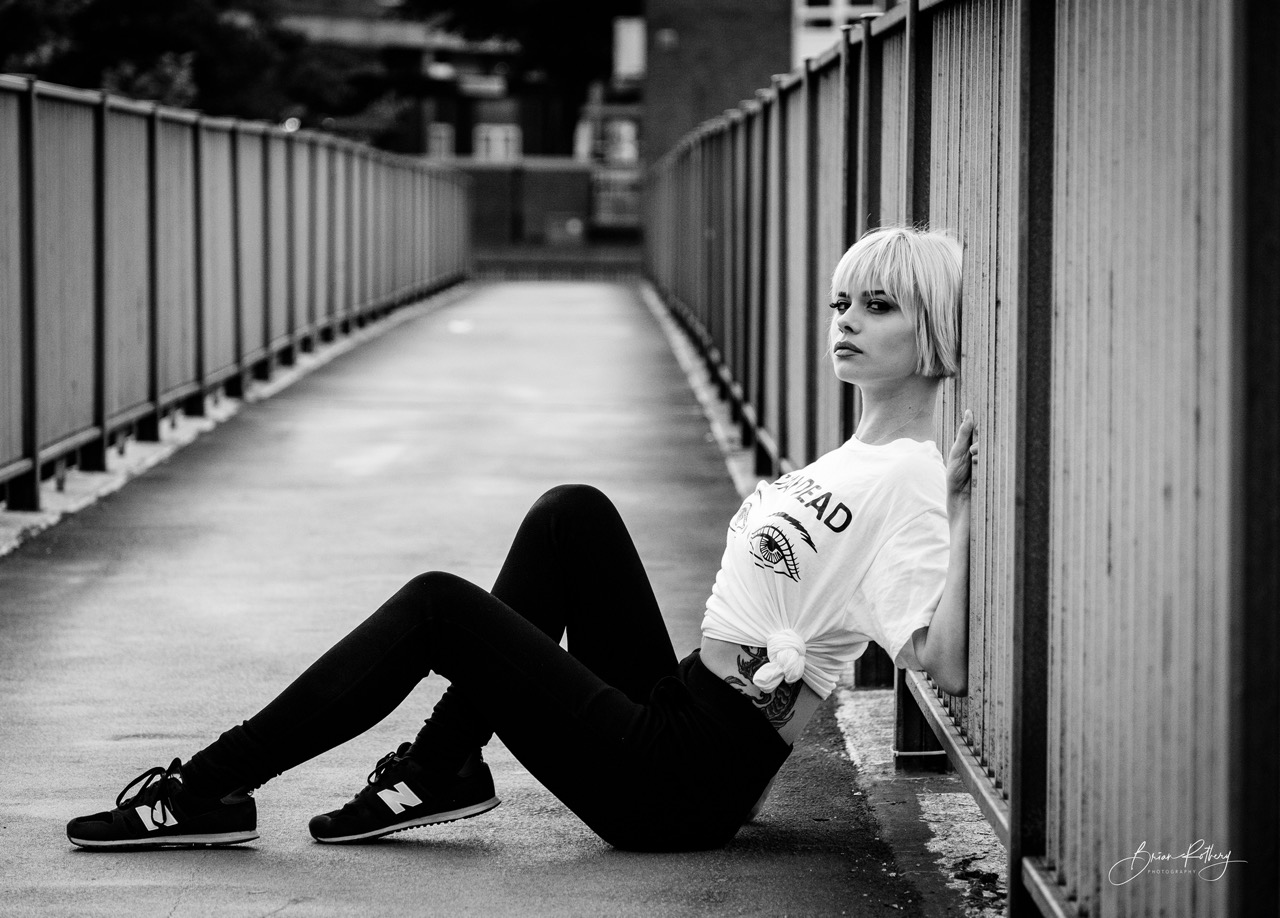

Aspiring models don’t need a professional shoot to make a strong first introduction. An aspiring model’s first portfolio can be a curated set of 10 to 15 images, supported by three to four natural, unedited digitals when approaching agencies. The priority is clarity and range, not a stack of elaborate images.
It’s understandable to think you need polished photographs before taking the first step. But agencies can assess your natural look from simple, well-lit snapshots, so you can start preparing your materials before arranging a professional shoot.
This guide explains how to choose images that show your face, proportions and personality, take useful digitals at home, and prepare an agency submission. You’ll also learn when a professional portfolio session can help you present a considered range of looks while keeping your introduction authentic.
Key Takeaways
- Choose a small, varied set of clear images that reflects the type of modelling you want to pursue.
- Use natural snapshots to introduce yourself to agencies, and follow each agency’s submission requirements.
- Balance simple headshots and full-length images with selected editorial or lifestyle shots that show your range.
- Present your portfolio as a concise visual introduction, with images and information that are current and easy to navigate.
- When you’re ready for more considered portraits, professional photography can help bring consistency and intention to your presentation.
1. Building your modelling portfolio?
An aspiring model’s first portfolio should introduce your look clearly and show the kinds of work you could suit. Include natural headshots, full-length photographs, digitals and selected editorial or lifestyle images. Together, these can show your face, proportions, personality and potential range without elaborate styling.
A beginner’s portfolio can contain around 10-20 images, with 10 to 15 carefully selected photographs forming a focused edit. Choose strong images over a larger collection. Each photograph should add something new, rather than repeat an angle, expression or mood already shown.
Start by deciding which types of modelling interest you, then choose images that support those directions. Fashion work may call for editorial photographs, while commercial interests could suit approachable lifestyle images. Keep the selection relevant, with enough variety to show different expressions, poses and settings.
- Headshots: Choose a clear close-up with a natural expression and minimal distractions.
- Full-length images: Include front and side views to show posture and proportion.
- Editorial photographs: Select a styled image that shows how you respond to a concept.
- Lifestyle images: Use relaxed settings to convey an approachable, everyday presence.
Sequence your images to make a clear first impression. Open with a strong, recognisable headshot, follow with a full-length photograph, then alternate between looks and settings. Avoid placing similar angles or expressions together. Agencies need to see distinct qualities, not several versions of the same pose.
Keep digitals simple and honest. Three to four natural, unedited photographs can accompany an agency submission and show your current appearance. Use clear daylight and plain clothing, and follow each agency’s requested format and image types. An aspiring model’s first portfolio can grow over time; an initial submission needn’t look like a finished campaign.
For online use, choose a platform that makes your images easy to view, such as a personal website or a curated Instagram profile. Keep the sequence consistent across platforms, and include a contact section so agencies can reach you. A photography portfolio presentation can also show how images work together as a connected body of work.
Retouching should finish an image, not rebuild your appearance. Tidy minor distractions, but avoid changes that could make the photograph look unlike you in person. Leave out poorly lit images, even if you like the pose.
Review your selection when your appearance changes, replacing outdated images with recent ones. As you gain experience, add photographs that show new styles or settings. Keep your strongest images at the centre and let your portfolio develop with your talent.
2. Applying to modelling agencies without a professional portfolio
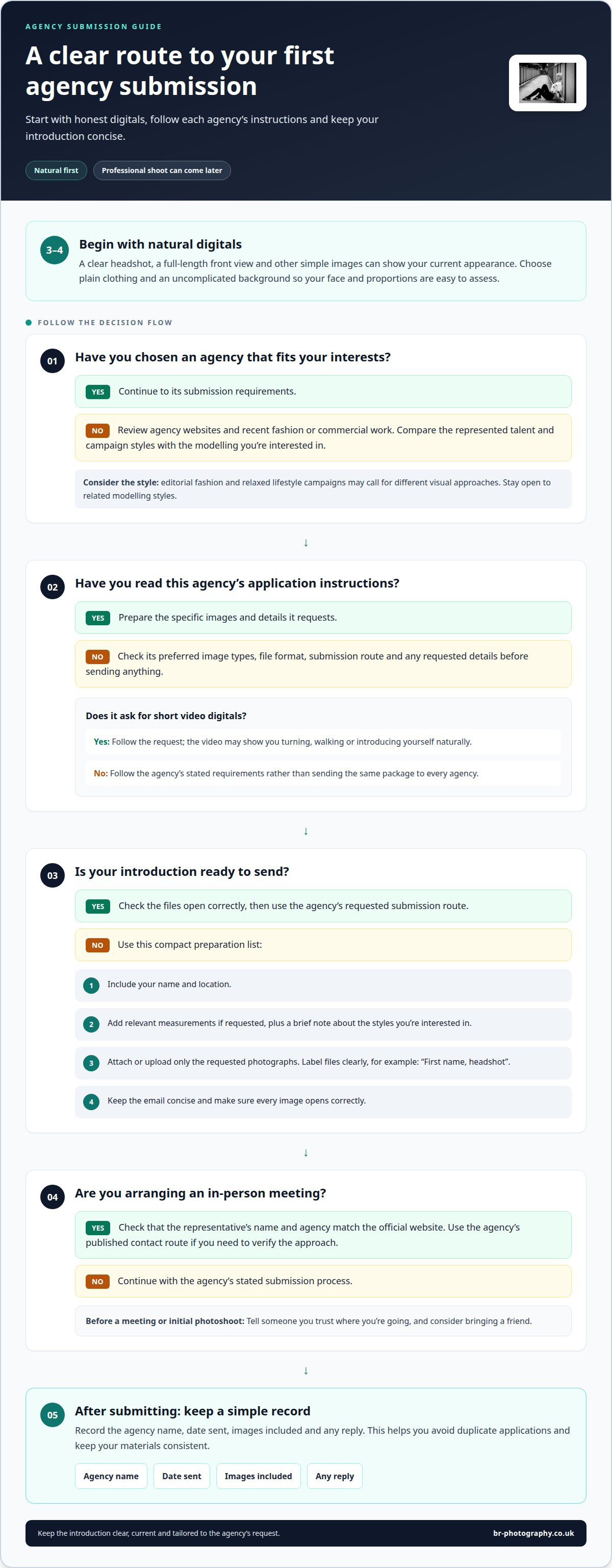
You can approach modelling agencies before arranging a professional shoot. Start with three to four natural digitals: a clear headshot, a full-length front view, and other simple images that show your current appearance. Wear plain clothing and choose uncomplicated backgrounds, so your face and proportions are easy to assess.
Research agencies whose represented talent and campaign styles align with your look. Review their websites and recent fashion or commercial work to understand the models they represent. An agency focused on editorial fashion may seek a different visual feel from one whose campaigns feature relaxed lifestyle settings. Stay open to related modelling styles, too.
Before submitting, read each agency’s application instructions carefully. Note its preferred image types, file format, submission route and any requested details. Some agencies may ask for short video digitals showing you turning, walking or introducing yourself naturally. Follow the specific request rather than sending the same package to every agency.
A concise email can introduce your potential without overstating your experience. Include your name, location, relevant measurements if requested, and a brief note about the styles you’re interested in. Attach or upload only the requested photographs. Label files clearly, such as “First name, headshot”, and make sure each image opens correctly.
Confirm who you’re speaking with before arranging an in-person meeting. Check that the representative’s name and agency match the details on the agency’s official website, and use its published contact route if you need to verify the approach. Tell someone you trust where you’re going, and consider bringing a friend to an initial photoshoot or meeting.
Agencies receive many applications, and simple snapshots or digitals are common in submissions. Clear presentation matters: choose images that show your face, posture and ability to take direction, rather than trying to imitate a finished campaign. A professional portfolio can come later, once you know which images best support your intended work.
If an agency doesn’t progress your application, take the same careful approach when contacting clients or casting directors directly. Tailor each selection to the project: an editorial brief calls for different images from a natural lifestyle campaign. Send a compact, relevant edit, follow the recipient’s requested format, and include a straightforward way to contact you.
Track each submission in a simple document with the agency name, date sent, images included and any reply. This helps you avoid duplicate applications and keep your materials consistent. As your experience develops, refine the photographs and presentation that communicate your fit for the styles you’re pursuing.
3. Selecting headshots, full-body, editorial and lifestyle photos
Choose each photograph for the information it adds, not just because you like the styling. A clean, makeup-light headshot should make your features easy to assess; a full-length frame should show how you carry yourself. Editorial images can demonstrate your response to a concept, while relaxed lifestyle photographs suggest how you might appear in a commercial setting.
Check each image at full size before selecting it. Look for sharp focus on your face, balanced exposure, natural posture and clothing that doesn’t obscure your shape. For full-length photographs, include front and side views. A casting director can then see your profile and how your posture changes across angles, rather than relying on one flattering pose.
- Headshots: Select a direct, natural expression and keep jewellery, make-up and backgrounds understated.
- Full-body photographs: Include front and side angles, with clothing that lets your proportions read clearly.
- Editorial images: Choose a considered concept that shows expression, movement or character.
- Lifestyle photographs: Favour believable actions, such as walking or sitting naturally, over forced spontaneity.
Before booking a photographer, review their portfolio for consistent image quality, varied lighting and authentic-feeling portraits. Look for experience with modelling shoots, then discuss your career aims and the agencies or clients you hope to approach. Share examples of styles you admire, but explain what feels like you. The brief should guide the shoot without turning you into somebody else.
Agree on the purpose and practical plan before the camera comes out. Discuss outfit changes, locations, intended image use and whether a stylist or make-up artist will be involved. A fashion shoot might benefit from styled looks, while simple digitals need minimal styling. Clear expectations help everyone focus on the images your portfolio actually needs.
Coaching during a shoot can make posing more purposeful. Ask for direction on small adjustments, such as shifting your weight, relaxing your shoulders or changing your eyeline. Try movement as well as still poses. Reviewing a few frames between looks can help you see what works, then apply that learning to the next setup.
Preparation can support confidence. Choose clothes in advance, bring alternatives that suit the brief, and practise a few comfortable poses in a mirror. If it’s your first shoot, tell the photographer what feels unfamiliar. A collaborative approach gives you space to ask for guidance and feel more at ease in front of the camera.
Keep portfolio photographs and details current. Replace images when your appearance changes, and update measurements or relevant experience alongside them. As your work develops, select new photographs that show different settings or movement. One portfolio session, for example, can explore several looks and backdrops, creating variety without making every image feel unrelated.
4. A modelling portfolio as a professional CV and visual introduction
A modelling portfolio works like a visual CV: it lets agencies, clients and casting directors assess your look, versatility and presentation. Just as career and recruitment advice on sojobs.us emphasises when applying across creative sectors, clarity and relevance make a much stronger impression than sheer volume. A strong collection doesn’t need to show everything. It should quickly showcase the qualities and styles you can bring to a brief.
Pair your photographs with a concise profile. Include your name, location, contact details, relevant experience and current measurements where requested. Add a short About section that explains your story, personal style and modelling interests. If you’re new to the industry, describe the work you’re interested in instead of inventing experience.
An ecomp card can distil your strongest portfolio shots into a format industry professionals can review before meeting you. Keep it consistent with your wider portfolio: use recent images, readable text and easy-to-find contact details. Clear presentation supports credibility, but doesn’t replace natural digitals or agency-specific submission instructions.
Social media can extend that introduction. Casting directors and creative directors use platforms such as Instagram to discover talent, so curate your profile as carefully as your portfolio. Pin or feature a small selection of relevant images, keep captions professional, and remove posts that create a conflicting impression. Your online presence should feel natural, not like a stream of unrelated campaign imitations.
Do UK modelling agencies charge for portfolio shoots or insist on using their photographers? You can begin an application with natural digitals, so don’t assume you must pay for a shoot or use a particular photographer before applying. Follow the agency’s submission requirements, and treat any proposed paid shoot as a separate decision.
Consider a professional portfolio as an investment in the images your shoot needs to produce. The photographer’s experience, session scope, location, styling and number of finished images can all affect the overall cost. Set a clear spending limit before booking, and decide which images would fill a genuine gap in your current collection. More photographs aren’t useful if they simply repeat what you already have.
Professional images can help when you need a coherent set for a specific direction, such as fashion editorial or commercial work. They can also show how you respond to lighting, posing and a creative brief. Yet a polished image should still look like you. Over-retouching can undermine the natural consistency that makes a visual CV credible.
Review your portfolio whenever your appearance, experience or goals change. Replace outdated photographs, update measurements and revise your profile as your career develops. Keep a simple record of when you last refreshed each detail. That way, an agency receives a current introduction rather than a collection that no longer represents your potential.
5. Why aspiring models need a portfolio
An aspiring model’s first portfolio gives agencies, clients and casting directors a practical way to assess your potential. It can show how you carry yourself, respond to a concept and adapt to different briefs. A natural portrait, for example, communicates something different from a fashion-led pose or a relaxed commercial scene.
That visual evidence adds context a written profile can’t provide. It helps people see your expression, movement and presence, rather than relying only on a list of skills or ambitions. A focused selection can also help someone reviewing your application understand the work you might suit.
A portfolio can help you recognise your own strengths, too. Compare photographs from different shoots and note where your expression feels most natural. You might find that a quiet editorial image shows your ability to hold a concept, while a lifestyle frame feels more approachable. Those observations can guide the opportunities you pursue.
Use that insight to explore options, not restrict yourself. An aspiring model’s first portfolio can include images pointing in more than one direction, such as fashion and commercial work. If you’re drawn to editorial styling but also enjoy relaxed, everyday scenes, showing both can help you consider a wider range of casting opportunities.
Range doesn’t require a dramatic transformation in every photograph. A close-up with minimal make-up can present your natural appearance; a full-length image can show proportion; an action-led frame can convey movement. Each image earns its place by adding useful information, not simply changing the outfit or backdrop.
Consider what evidence each photograph offers. A direct gaze may communicate confidence, a candid smile can suit a friendly campaign, and a composed pose may support a fashion brief. Select images that feel true to you and relevant to the work you want to pursue. A coherent portfolio helps casting directors understand your range without obscuring your identity.
As your experience grows, your portfolio can show new skills and directions. After a shoot or casting, reflect on which images represent you accurately and which feel less aligned with your goals. Add photographs when they bring a distinct quality, and replace older work if it no longer reflects your appearance or interests.
Use your portfolio as a working career tool, not a promise of bookings. It can help you communicate your talent with intention and make informed choices about the opportunities you pursue. If you’re ready to plan a visual introduction that reflects your direction, get in touch about your portfolio goals. Take the next step at a pace that feels right for you.
BR-Photography: Portrait photography
BR-Photography offers portrait photography for aspiring models ready to develop professional images beyond simple digitals. A considered portrait session can help you create a cohesive introduction, with photographs shaped around your intended modelling direction and the qualities you want agencies to see.
For fashion submissions, fashion photography can help express a more editorial style. Urban portrait photography offers a different setting, while personal brand photography can support a wider professional identity. The right approach depends on the images you need and how you plan to use them.
Bring your portfolio goals, preferred styles and intended audience into the conversation to give the photography a clear purpose from the outset. To discuss your portfolio photography with BR-Photography, visit br-photography.co.uk or get in touch.
Give your next step a clear direction
Your first portfolio as an aspiring model doesn’t have to define your whole career. Treat it as a starting point: as your interests and experience develop, your visual introduction can evolve with them. Before planning new images, decide what you want them to communicate and where you intend to use them.
When you’re ready to shape a more considered visual set, BR-Photography offers portrait photography, fashion photography and urban portrait photography. These approaches can help you explore how you want to present yourself, from a clean portrait to a more styled or location-led look. Bring your goals and ideas into the conversation so the photography has a clear purpose.
You don’t need to have every detail mapped out before taking that step. A focused discussion can help you clarify the direction you want to pursue and what kind of images could support it. Contact BR-Photography about your portfolio, and take the next step with confidence.
Frequently Asked Questions
Building your modelling portfolio?
Build your portfolio around the kinds of work you want to be considered for, then give every image a distinct role. Before choosing photographs, write a short brief for yourself: what should an agency understand about your presence, movement or expression? Use that brief to guide your selection. If an image adds no useful evidence or support for your direction, leave it out rather than keeping it for sentimental reasons.
Digitals or a Curated Portfolio: Which One Do You Send?
Send digitals when an agency requests natural snapshots or you’re making an initial approach; send a curated portfolio when it requests a fuller view or expresses interest. Digitals show your appearance plainly, while a curated selection gives context about your range and presentation. Read the submission instructions before choosing files. If an agency asks for specific images, use those rather than assuming a larger portfolio will strengthen your application.
How Do You Choose and Sequence Your Best Images?
Choose images that are technically clear and communicate something different about you. View them together, not just one at a time: a strong photograph may feel repetitive beside another with the same framing or mood. Open with an image that represents you accurately, then create visual contrast through changes in distance, expression or setting. Finish by removing any frame that weakens the overall impression, even if it’s a personal favourite.
How Do You Plan a Cost-Effective Model Shoot?
Plan around a focused creative brief, not a long wish list. Decide the intended use, visual mood and essential looks before booking, then share those priorities with the photographer. One adaptable outfit may work across several poses, while a second look can create a clear change in tone. Confirm what the session includes and how images may be used, so the finished work suits your needs.
How Do You Show Range Without Losing a Clear Identity?
Show range through different expressions, movement and settings while keeping a recognisable sense of self. A natural portrait, a fashion-led pose and a relaxed commercial moment can communicate distinct strengths without changing your appearance beyond recognition. Select images that feel connected by your presence, rather than forcing every current trend into one collection. A clear identity helps agencies understand what you bring to different briefs.
How Do You Submit Your Portfolio to Agencies and Clients?
Submit through the recipient’s stated channel and follow its requested file format. Use a concise message naming the type of work you’re interested in, then make your images easy to identify and open. Keep a record of who received each version, so you can respond accurately if an agency or client asks about a particular photograph. Tailor your selection to the brief instead of sending the same set to everyone.
How Often Should You Update Your Portfolio?
Update your portfolio when a change makes the current images misleading or new work adds a useful dimension. Before applying, review the photographs as a set: do they still reflect your appearance and the styles you’re pursuing? Keep a dated folder of approved images, and move older selections out of your active portfolio. This makes it easier to send a current, consistent introduction without rebuilding everything each time.
How can I get my portfolio noticed?
Make your work straightforward to discover and understand. Use a consistent name and profile description across your chosen platforms, and caption photographs with relevant context, such as the photographer, location and type of work. Keep your strongest, most representative images prominent, then approach agencies or clients with a concise message tailored to their work. Thoughtful presentation helps people assess your fit quickly, though it can’t promise a particular response.
Disclaimer
"The information provided in this Blog post is for general informational purposes only. While I strive to provide accurate information, I make no representations or warranties of any kind about the accuracy, reliability, or completeness of this information. Any reliance you place on such information is strictly at your own risk. In no event will I be liable for any loss or damage derived from the use of this blog."


