
Your visual identity isn't just a coat of paint; it's the externalisation of your brand's internal truth. It's the difference between being another face in a saturated market and becoming a recognised authority in your field. Aesthetics matter. Strategy matters more. Many entrepreneurs feel invisible amongst the noise, whilst others struggle with a digital presence that feels fragmented or inconsistent. Finding your brand's visual style shouldn't be a source of anxiety or a creative guessing game that leaves you feeling exposed. You know that high-end imagery is an investment, yet articulating your vision often feels like a hurdle you aren't quite ready to clear.
This guide will help you decode your unique aesthetic and translate it into high-impact imagery that commands market authority. We'll move beyond the purely aesthetic to focus on how visual assets function as strategic tools for business growth. You'll learn a clear framework for your professional representation, replacing camera-shy hesitation with the confidence of a leader. We'll explore the collaborative process of building a visual identity that doesn't just look expensive, but actually works to elevate your brand's position in the competitive UK landscape.
Key Takeaways
- Learn why your brand's visual identity is a strategic asset rather than just a colour palette, and how it influences subconscious perception.
- Follow a practical framework for finding your brand's visual style by auditing your current presence and defining your core brand voice.
- Discover how to bridge the gap between your creative vision and a live session by communicating effectively with a professional partner.
- Understand the long-term value of investing in high-impact imagery instead of settling for inconsistent, DIY alternatives that risk your brand's integrity.
- Gain the confidence to project an authentic professional image that commands market authority and resonates with your target audience.
Defining Your Brand’s Visual Identity: More Than Just a Palette
Visual identity is often misunderstood as a superficial layer of paint applied at the end of a business plan. It's far more than a colour palette or a selection of fonts. A true visual identity is a strategic tool designed to communicate your brand’s internal values to the outside world. Whilst aesthetics might capture attention for a fleeting second, they fail to build long-term market authority if they lack a strategic foundation. Consistency is the currency of trust. When your visual representation aligns perfectly with your service delivery, consumer friction vanishes. High-impact imagery reduces the cognitive load on your potential clients. It tells them who you are so they don't have to guess.
Many professionals in traditionally 'non-creative' sectors believe visual style is a luxury reserved for fashion houses or design agencies. This is a mistake. Whether you're a consultant delivering expert advice or a tech founder launching new innovations, your visual presence acts as a silent pitch. It establishes your level of professionalism before you've even spoken. Investing in a bespoke visual narrative isn't an indulgence; it's a fundamental requirement for anyone looking to scale their influence in the UK’s competitive digital landscape.
The Difference Between Aesthetic and Strategy
Think of your aesthetic as the 'what' and your strategy as the 'why'. An aesthetic focus asks which colours look nice together. A strategic focus asks which visual cues will resonate with your specific target audience. Finding your brand's visual style requires moving beyond personal preferences to focus on conversion-driving visuals. A strategic style doesn't just look good; it guides every future creative decision, from the location of a shoot to the texture of the wardrobe. It ensures that every asset you produce serves a functional purpose within your business ecosystem. This strategic alignment turns a simple portrait into a powerful asset that justifies its investment through increased engagement and clearer market positioning.
Why Generic Imagery Dilutes Your Authority
Relying on stock photography or 'playing it safe' with uninspired headshots is a fast track to becoming invisible. In a saturated digital market, generic imagery signals a lack of investment in your own brand. It creates a disconnect. If your service is bespoke and high-end, but your visuals look like everyone else's, you've already lost the battle for authority. Visual authority is the intersection of consistency and authenticity. Professional personal brand photography replaces that generic void with a narrative that only you can own. This isn't just about looking 'better'. It's about looking like the only logical choice for your clients. When you commit to finding your brand's visual style, you're choosing to be seen as a leader rather than a follower. You can explore how this looks in practice by viewing our professional portfolio.
The Psychology of Visual Storytelling: Decoding the Cues
The human brain processes visual information significantly faster than text. It's an instinctive, evolutionary reaction. When a potential client lands on your profile, they've formed an opinion about your authority within milliseconds. This is why finding your brand's visual style is a psychological necessity rather than a creative indulgence. Every element within a frame acts as a subconscious cue. Lighting, shadow, and composition aren't just technical details; they're narrative tools that signal either premium positioning or accessible approachability. If your visuals don't align with your price point, you're creating immediate cognitive dissonance for your audience.
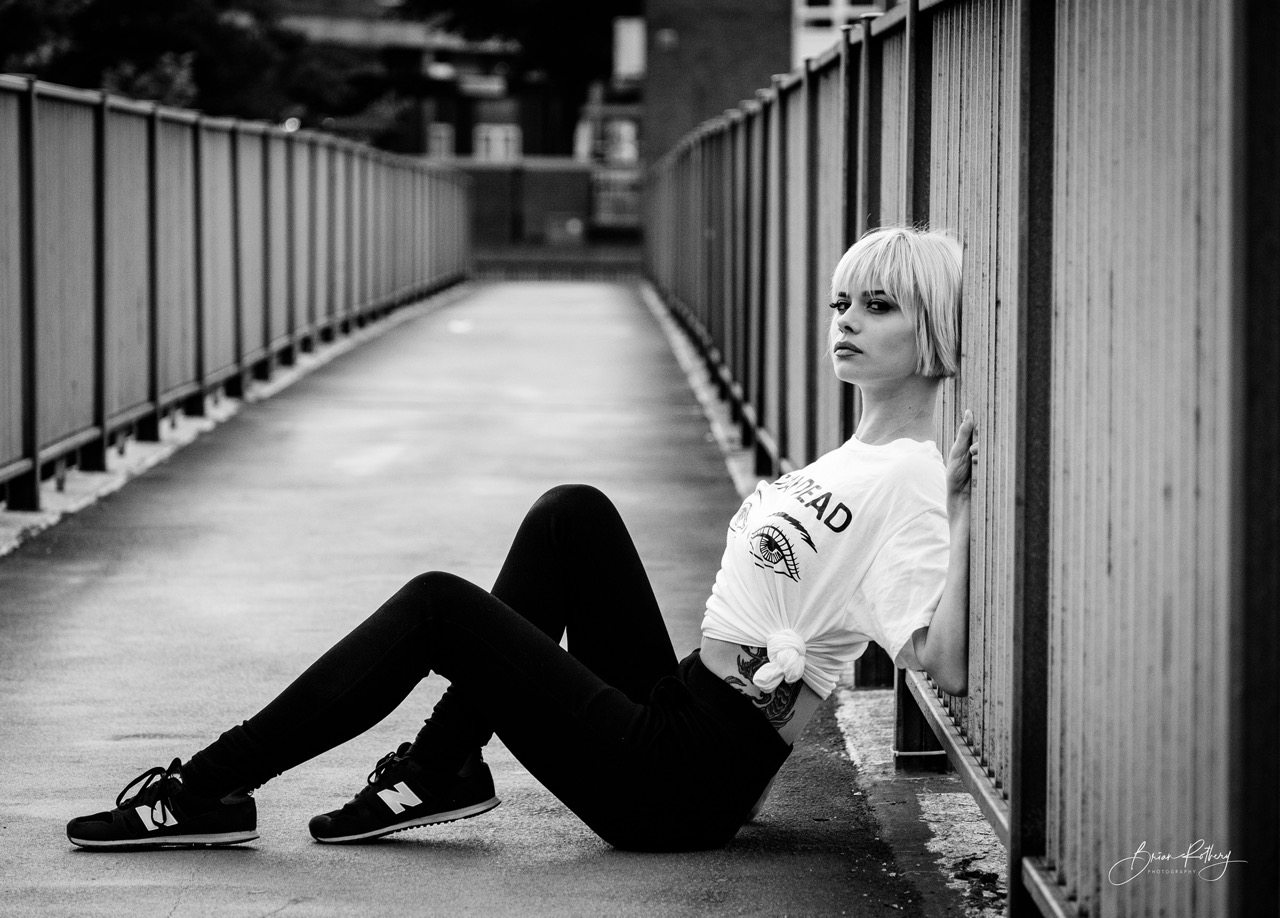
The modern UK market increasingly rewards authenticity over sterile perfection. This is where the 'urban' aesthetic excels. By incorporating grit, texture, and architectural elements, you signal that your brand is relevant, modern, and active in the real world. It moves away from the 'corporate' mask and toward a more fashion-forward, relatable identity that feels grounded in reality. This visual friction stops the scroll. It invites the viewer to look closer at the person behind the business, creating a connection that stock imagery could never facilitate.
Colour Theory and Emotional Resonance
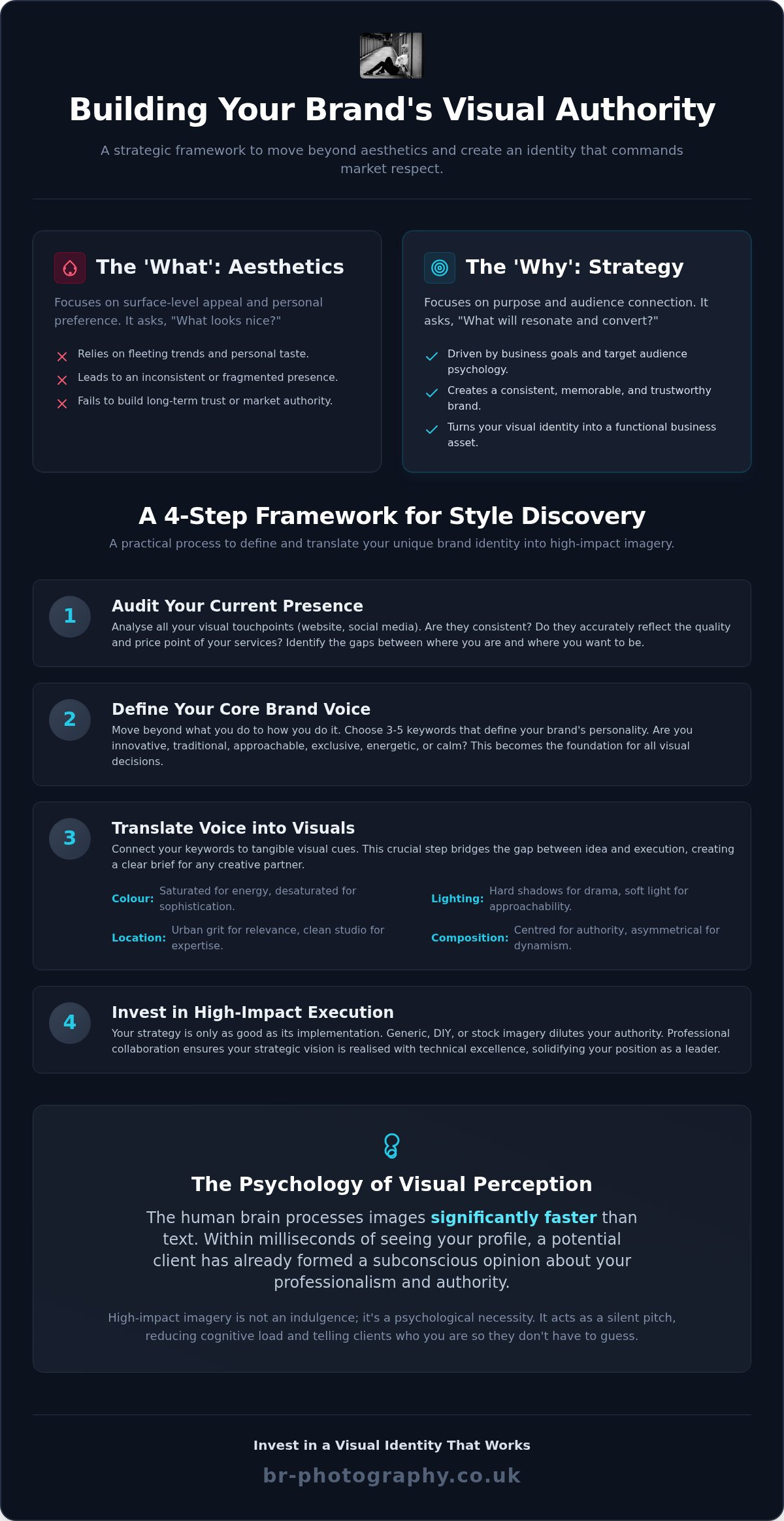
It's easy to pick a favourite colour and call it a brand. True strategy goes deeper. Saturation and tone dictate the emotional resonance of your imagery. A highly saturated palette suggests high energy, disruption, and confidence, whilst desaturated, muted tones convey sophistication, calm, and heritage. Your palette should reflect your brand’s strategic energy, not just what you happen to be wearing that day. Maintaining this consistency between your personal brand photography and your digital assets creates a seamless experience. This visual thread builds trust by proving that you're intentional about every facet of your professional presence.
Lighting and Composition as Brand Narratives
Lighting is the most powerful tool for defining personality. Hard light, with its sharp shadows and high contrast, communicates a bold, decisive, and contemporary mindset. It's often used in fashion-forward portraiture to project strength. Soft light, conversely, suggests empathy, warmth, and openness. Combining these choices with specific environments adds another layer of depth. Utilising urban portrait photography allows you to use the city itself as a supporting character. The sharp lines of a concrete staircase or the reflection in a glass facade create a sense of movement and ambition. This approach positions you as a dynamic professional who is comfortable in high-stakes environments.
If you're ready to explore how these psychological cues can be tailored to your specific market goals, let's start a conversation about your next session.
A Strategic Framework for Style Discovery
Discovery isn't an accidental epiphany. It's a deliberate, four-step process designed to bridge the gap between your current reality and your market potential. Finding your brand's visual style requires a transition from passive consumption to active curation. You aren't just looking for what you like; you're looking for what works. This process moves you away from the anxiety of the unknown and toward a structured, confident representation of your professional self. It's about building a visual language that speaks even when you aren't in the room.
Auditing Your Current Presence
The first step is a ruthless audit of your existing assets. Visual clutter, such as inconsistent filters, varying lighting styles, or poor-quality headshots, creates friction for your audience. It signals a brand that hasn't quite found its footing. Compare your current imagery against your three-year business goals. If you're aiming for high-stakes commercial contracts but your website features holiday snaps, the disconnect is damaging your authority. An external perspective, often from a strategic creative partner, is essential to spot these blind spots. We often become too close to our own work to realise where the narrative is fraying or where the quality has dipped below professional standards.
Mood Boarding with Commercial Intent
Mood boards are frequently misused as collections of 'pretty things' without a functional purpose. To make this tool work for your business, you must curate with commercial intent. Focus on textures, lighting patterns, and the specific 'vibe' that matches your core brand adjectives. Drawing inspiration from fashion photography can elevate your brand's aesthetic from standard corporate to market-leading. Look for images that reflect the feeling of your service. If your brand is about rapid growth and energy, your mood board should feature movement, sharp angles, and high-contrast light. If it's about stability and trust, look for architectural symmetry and softer tones. This isn't about copying; it's about identifying the visual language that speaks to your client's aspirations whilst remaining true to your professional identity.
Translating Identity into Professional Imagery
Transitioning from a mood board to a live photography session is where strategy meets execution. It's the moment your conceptual work becomes a tangible business asset. Finding your brand's visual style isn't a passive exercise; it requires active collaboration with a creative partner who understands your commercial goals. Clear communication is vital. Instead of vague descriptors, share your 'Core Three' adjectives and specific lighting references from your discovery phase. This ensures your photographer isn't just taking photos but is building a visual narrative that aligns with your market positioning.
Wardrobe and location choices must be intentional. They aren't just backdrops; they're extensions of your brand's voice. Your behaviour in front of the lens also plays a critical role. A strategic creative partner will guide your posing and expression to ensure you appear both authoritative and approachable. This collaborative alliance removes the anxiety often associated with being the subject of professional work, allowing your authentic self to lead the narrative.
Fashion and Urban Influences in Personal Branding
Adopting a fashion-forward approach doesn't mean creating an unreachable or cold persona. It means utilising the high-end production values of fashion photography to signal quality and attention to detail. By integrating urban portrait photography, you ground this sophistication in reality. Concrete textures, glass reflections, and metropolitan backdrops add a layer of modern relevance that sterile studio shots lack. Professional styling bridges the gap between your everyday person and your strategic professional persona. It allows you to feel at ease whilst projecting an image that justifies a premium price point.
Consistency Across Digital Touchpoints
A single professional headshot is no longer enough for a multi-channel digital presence. You need a comprehensive 'visual library' that provides months of cohesive content for LinkedIn, Instagram, and your website. This library should include 'hero' images designed specifically for website banners and landing pages, alongside more intimate portraits for social engagement. Inconsistency breeds doubt. When your visual style remains stable across every touchpoint, you reinforce your authority and make your brand instantly recognisable. Finding your brand's visual style is the first step, but executing it across a full suite of assets is what drives business growth.
Ready to translate your vision into high-impact imagery? Book your strategic branding session today.
The Collaborative Alliance: Investing in Your Visual Future
Finding your brand's visual style is a significant milestone, but the transition from concept to creation requires more than just a high-resolution camera. It demands a strategic creative partner. Many professionals fall into the trap of DIY imagery, viewing it as a cost-saving measure. This is a false economy. The hidden price of 'making do' is the lost opportunity to connect with high-value clients who prioritise quality. Inconsistent or amateur visuals signal a lack of professional maturity. When you choose to invest in a professional session with a specialist like Dark Falcon Productions, you aren't just buying photographs; you're securing a competitive advantage in a crowded UK market.
A photographer should be viewed as a strategic ally rather than a mere vendor. This relationship is built on a shared commitment to your brand's growth. By moving beyond the transaction, you allow for a deeper exploration of your professional truth. The process of finding your brand's visual style reaches its peak during this collaborative session, where conceptual ideas are forged into high-impact assets. This ensures that the final results aren't just aesthetically pleasing but are functionally aligned with your business objectives. It's about creating a visual legacy that supports your long-term ambitions and justifies your premium positioning.
Why Professional Expertise Surpasses DIY
The technical gap between DIY and professional production is vast. It involves a mastery of lighting, composition, and post-production that cannot be replicated with consumer-grade equipment. Beyond the gear, there is a vital psychological component. A professional has the expertise to put a nervous subject at ease, pulling out an authentic self that often remains hidden during a self-directed shoot. This ability to capture nuance and authority is what distinguishes a leader from a generalist. You can learn more about Brian Rothery and his specific approach to strategic brand storytelling, which focuses on the intersection of technical precision and creative empathy.
Planning Your Strategic Brand Session
Preparation is the key to a session that feels like a supportive collaboration rather than a chore. This starts long before the shutter clicks. A pre-session consultation is essential for aligning on the visual style discovered in the previous steps. We discuss everything from location textures to the emotional undertone of the lighting. This level of planning removes the anxiety of the unknown, giving you the confidence to lead the narrative. It transforms the experience into an empowering exercise in brand building. If you're ready to move from discovery to execution, the next step is a conversation. Book your strategic consultation to define your brand's style.
Elevating Your Authority Through Strategic Visuals
Your brand's visual identity is the most direct communication of your professional value. It's a strategic asset that bridges the gap between your expertise and your audience's perception. By moving beyond simple aesthetics and embracing a framework of psychological cues and intentional storytelling, you transform your digital presence from invisible to influential. Finding your brand's visual style is an investment in your future growth; ensuring that every portrait, urban backdrop, and fashion-forward detail works to build trust and command market authority.
Success in the UK's competitive landscape requires a collaborative alliance with a partner who understands the nuances of personal branding. As specialists in fashion-forward and urban portraiture, we provide national coverage to help entrepreneurs translate their unique vision into high-impact assets. Our results-oriented approach ensures you feel at ease whilst projecting a confident, expert mindset. It's time to stop blending in and start leading your industry with imagery that truly reflects your internal truth. Secure your strategic brand photography session today and begin the transition toward a more authentic, high-impact professional identity. Your vision deserves to be seen with clarity.
Frequently Asked Questions
What is the first step in finding my brand's visual style?
The first step is conducting a ruthless audit of your current digital presence to identify inconsistencies. You must compare your existing imagery against your future business goals to see where the narrative is failing. Once you've identified these gaps, you can begin defining the 'Core Three' adjectives that will filter every future creative decision. This structured approach ensures that finding your brand's visual style is a strategic investment rather than a series of random aesthetic choices.
Can I have a professional visual style if I'm not a 'creative' business?
Every professional needs a visual style regardless of their industry. Whether you're in finance, law, or tech, your visual identity acts as a silent pitch that establishes your authority before you speak. A sophisticated visual style signals that you're modern, successful, and attentive to detail. It replaces generic corporate masks with an authentic representation that builds trust and helps you stand out in the competitive UK market.
How do I ensure my visual style stays consistent on social media?
Consistency on social media is achieved by building a comprehensive visual library during your professional session. Instead of relying on one-off snapshots, you should use a suite of cohesive images that share the same lighting, colour grading, and emotional undertone. This ensures that your LinkedIn profile, Instagram feed, and website all speak the same language. Having a defined style guide makes it easier to maintain this professional standard across every digital touchpoint.
What should I bring to a mood boarding session for my brand?
You should bring a collection of references that focus on textures, lighting patterns, and the specific 'vibe' of your brand. Avoid simply gathering images you find 'pretty'; instead, select visuals that reflect the feeling of your service and the aspirations of your clients. Include your core brand adjectives and any fashion or urban influences you admire. This preparation allows your creative partner to align the technical execution with your strategic business goals.
How often should I update my brand's professional imagery?
Most professionals should update their brand imagery every 12 to 18 months. This ensures your visual assets remain current and reflect your evolving role or business direction. If you've undergone a significant strategic shift or are targeting a new market, an immediate update is necessary. Frequent refreshes keep your content library relevant for social media whilst proving that your brand is active, growing, and invested in its own professional representation.
Is an urban portrait style right for a corporate brand?
An urban portrait style is highly effective for corporate brands looking to signal modern relevance and authenticity. By moving away from sterile studio environments, you ground your high-end service in the real world. The textures and architectural elements of a metropolitan setting add depth and narrative to your portraits. This approach is particularly successful for entrepreneurs who want to appear dynamic and ambitious whilst maintaining a sophisticated, professional edge.
How do I choose the right colours for my personal brand photography?
Choosing the right colours involves understanding the psychology of saturation and tone rather than just following personal fashion preferences. You must select a palette that reflects your brand's energy and resonates with your target audience's expectations. For example, muted tones might signal heritage and stability, whilst high-contrast colours suggest disruption and confidence. Finding your brand's visual style requires aligning these colour choices with the strategic message you want to project to the market.
What happens if my personal style doesn't match my business goals?
If your personal style clashes with your business goals, you must prioritise the strategic persona that resonates with your clients. This doesn't mean being inauthentic; it means curating the version of yourself that best serves your professional objectives. A strategic creative partner helps bridge this gap by using wardrobe, lighting, and location to elevate your natural style into a commercially viable brand identity. This alignment ensures your visuals actually drive business growth.
Disclaimer
"The information provided in this Blog post is for general informational purposes only. While I strive to provide accurate information, I make no representations or warranties of any kind about the accuracy, reliability, or completeness of this information. Any reliance you place on such information is strictly at your own risk. In no event will I be liable for any loss or damage derived from the use of this blog."


