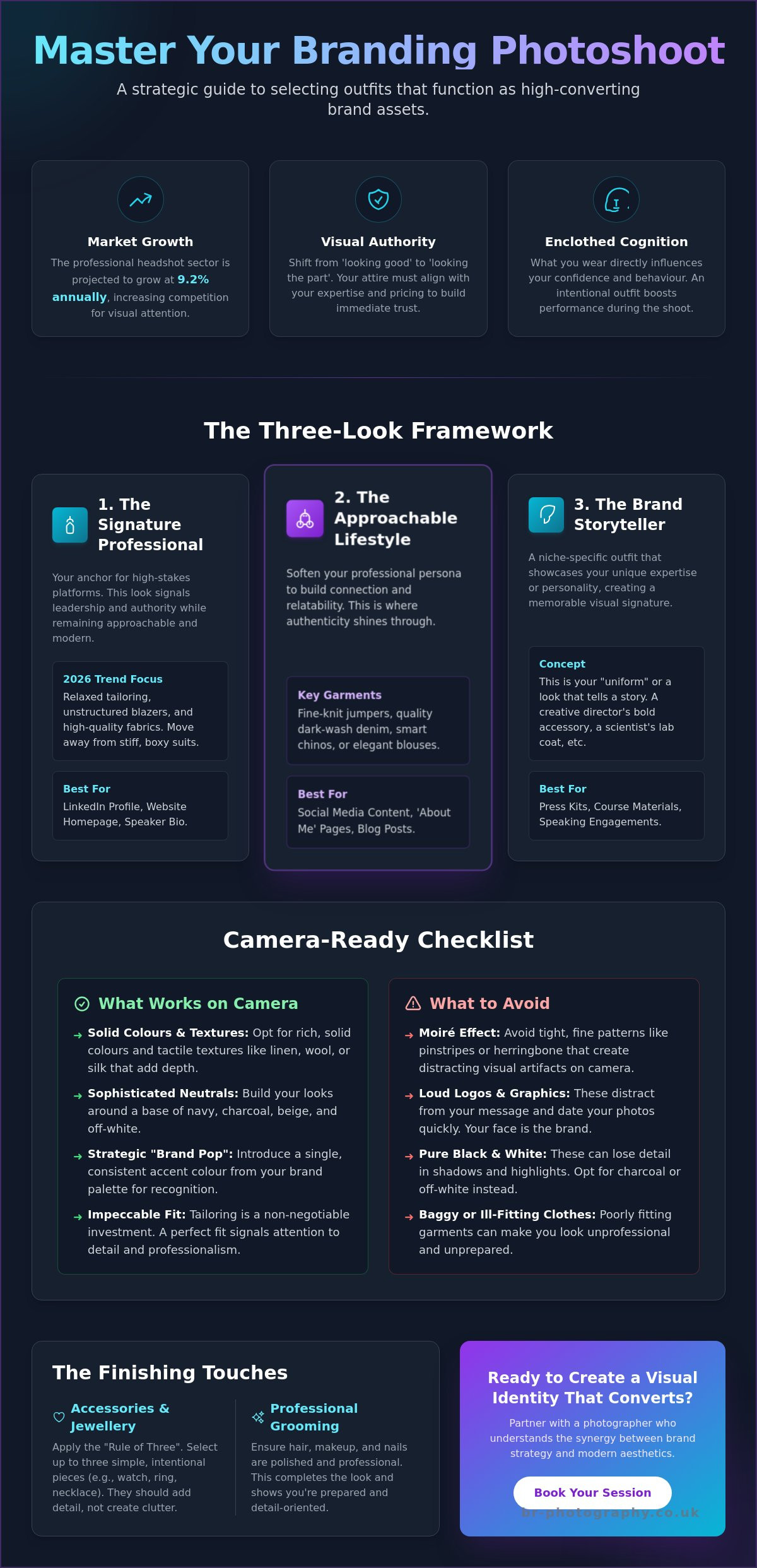
Your choice of attire is a silent business partner that either amplifies your authority or dilutes your message. Most professionals worry that deciding what to wear for a branding photoshoot means choosing between looking stiff in a boxy suit or appearing too casual to be taken seriously. You want to feel authentic, yet there's a lingering fear that your outfit choices might date quickly or clash with your website’s colour palette. It's a valid concern in a market where the professional headshot sector is projected to grow at 9.2% annually; the competition for visual attention is fierce.
This guide will show you how to master the art of selecting outfits that transform your personal brand into a high-converting visual asset. We'll explore the 2026 shift towards relaxed tailoring and tactile textures, giving you a clear plan for three to four distinct looks. You'll gain the confidence to step in front of the lens knowing your clothes look intentional, expensive, and perfectly aligned with your professional goals. It's time to move beyond the purely aesthetic and treat your wardrobe as a vital investment for your brand's growth.
Key Takeaways
- Shift your perspective from simple aesthetic choices to strategic brand assets that signal authority and build immediate trust within your industry niche.
- Master the modular three-look framework to ensure you know exactly what to wear for a branding photoshoot to maximise the variety and longevity of your image gallery.
- Learn to navigate technical pitfalls like the Moiré effect whilst balancing sophisticated neutrals with "brand pops" for a visual identity that won't date.
- Utilise the "Rule of Three" for jewellery and grooming to ensure your finishing touches add intentional detail without cluttering the frame or distracting from your message.
- Discover how a collaborative alliance with a photographer with a fashion and urban background ensures your styling remains modern, authentic, and business-savvy.
The Strategic Wardrobe: Why Your Outfit Choice is a Business Asset
Choosing what to wear for a branding photoshoot is often dismissed as a simple exercise in vanity. It isn't. In a digital economy where your online presence acts as your primary storefront, your wardrobe represents a calculated investment in your Visual Identity ROI. High-end visual assets influence how prospects perceive your value before you ever have the chance to speak. If your attire doesn't signal the same level of expertise as your service, you're creating a friction point that costs you conversions. Your clothes are a silent business partner, and they should be working just as hard as your marketing copy.
Modern personal branding requires a decisive shift from merely "looking good" to "looking the part". A creative director in a metropolitan hub needs a different visual language than a fintech consultant. This isn't about following fleeting trends; it's about establishing Visual Authority. When your clothes align with your pricing and positioning, you remove the psychological barriers that prevent clients from saying "yes" to premium rates. In 2026, authenticity is a strategic competitive advantage. As AI-generated content becomes more prevalent, audiences crave the human and the real. However, raw authenticity doesn't mean a lack of polish. It means your clothes must feel like a natural, elevated extension of your professional identity.
Aligning Aesthetics with Brand Values
To build a strategic wardrobe, you must first identify the three core values your brand projects. Innovation might translate to sharp, asymmetric cuts and modern technical fabrics. Stability is better represented by structured blazers and a palette of deep navy or charcoal. Creativity often leans into tactile textures like linen or silk. The goal is to translate abstract brand concepts into tangible fabrics and silhouettes. Avoid "costume" dressing at all costs. You shouldn't look like you're playing a role; you must look like the most successful, confident version of your actual self.
The Psychology of Professional Attire
Science backs the importance of your outfit choices through "enclothed cognition". This concept suggests that what you wear directly influences your psychological processes and your behaviour. If you feel "stiff" in a traditional suit that doesn't fit your personality, it will show in your body language and posture. Conversely, a well-fitted, intentional garment can boost your internal confidence, making the shoot feel like a collaborative alliance. Colour psychology also plays a pivotal role in first impressions. Whilst soft neutrals suggest approachability and calm, a single "brand pop" of colour can establish a visual signature that makes you instantly recognisable amongst a sea of generic competitors. These aren't just fashion choices; they're non-verbal cues that prime your audience for the specific professional experience you provide.
Designing Your Shoot Wardrobe: The Three-Look Framework
Efficiency in a photoshoot is not about rushing; it is about preparation. When deciding what to wear for a branding photoshoot, a modular wardrobe approach is the most effective way to maximise your gallery's variety without exhausting your energy. By selecting garments that can be layered, swapped, or adjusted, you create a diverse visual narrative from a single session. This strategic framework ensures every image serves a specific purpose in your marketing funnel, moving beyond the generic "backup outfit" suggestion often found in basic guides.
The Signature Professional Look
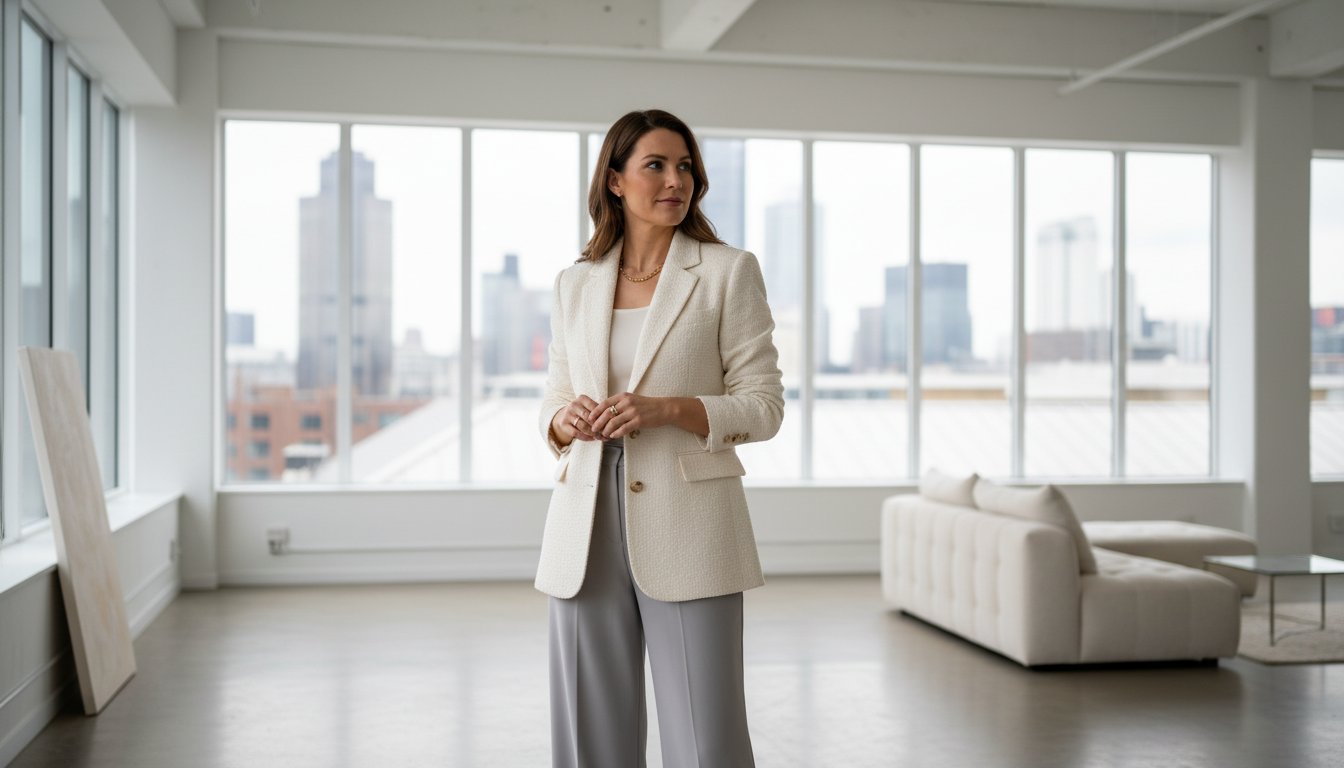
This is your anchor for high-stakes platforms such as LinkedIn or your website's home page. In 2026, the trend has shifted away from stiff, boxy suits toward relaxed tailoring. Think unstructured blazers, tailored trousers, or sophisticated midi-dresses that signal leadership whilst remaining approachable. Focus on the quality of fit. A hero piece, such as a bespoke blazer in a neutral tone, serves as your primary brand identifier. Choosing high-end materials helps elevate your professional image , ensuring you project authority without appearing dated or inaccessible.
The Approachable Lifestyle Aesthetic
Relatability is the currency of social media. The lifestyle look softens the edges of your professional persona through knitwear, high-quality denim, or relaxed shirting. It's designed to create "behind the scenes" vibes that feel authentic rather than accidental. Utilise tactile textures like linen, wool, and satin to add dimension to the frame. This look allows you to appear "off-duty" whilst maintaining your professional integrity. It's perfect for newsletter headers or Instagram stories where you want to build a deeper, more personal connection with your audience.
The Creative or Action Outfit
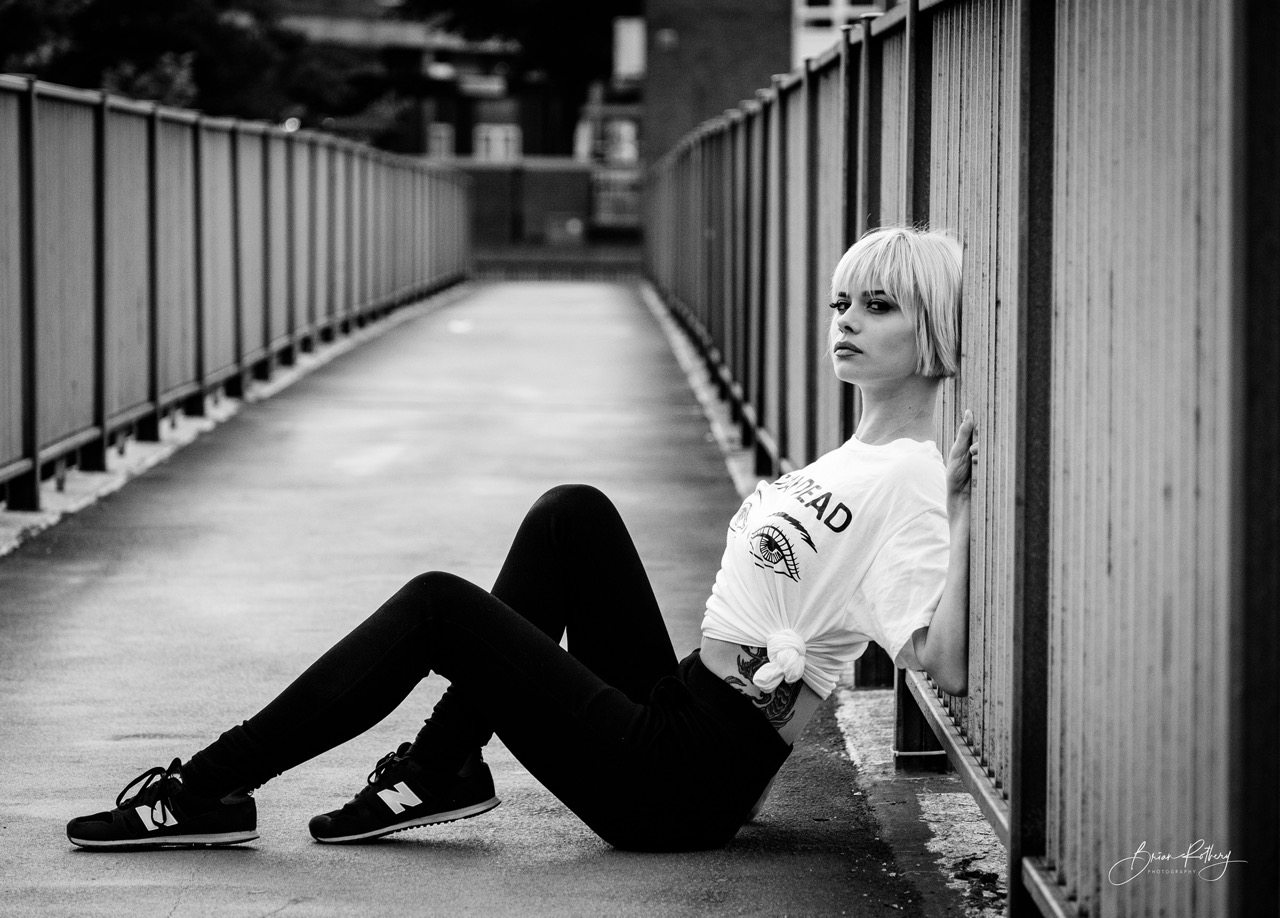
Your third look should reflect your actual work environment and your unique process. If your brand thrives on energy, consider an outfit that allows for movement, perhaps leaning into urban portrait photography styles. Use layers like a light trench coat or a textured cardigan to quickly transition between "doing the work" and "leading the business". Incorporate brand-relevant props like specific eyewear or a signature hat to showcase your industry personality. This outfit highlights your creative edge and distinguishes you from generalist competitors. If you're unsure how to balance these looks, you can discuss your wardrobe strategy with us during your pre-shoot consultation to ensure every piece aligns with your commercial goals.
Technical Guidelines: What Works (and What Fails) on Camera
Understanding the technical behaviour of garments under professional lighting is what separates a high-converting asset from a visual failure. When you are deciding what to wear for a branding photoshoot, you must account for how digital sensors interpret fabric. Professional strobes and high-resolution lenses are unforgiving. They highlight every stray thread, static cling, and digital interference pattern that the naked eye might miss. Success in this area requires a strategic approach to fabric selection and colour theory that prioritises the camera's perspective over personal fashion preferences.
One of the most common technical pitfalls is the Moiré effect. This occurs when tight grids, fine pinstripes, or small houndstooth patterns clash with the camera's sensor. It results in distracting, wavy lines that shimmer across the image, pulling focus away from your face. To ensure your gallery remains clean and professional, stick to solid colours or large-scale patterns. Additionally, fabric weight is a critical factor. Cheap synthetics often have a plastic-like sheen or a tell-tale "cling" under studio lights. Opt for natural fibres with weight and structure. Wool, heavy cotton, or thick silk maintain their shape whilst you move, providing a polished silhouette that looks expensive and intentional.
A sophisticated on-camera appearance usually follows the "Three-Colour Rule". Limit your palette to three primary shades: a base neutral, a secondary tone, and a single "brand pop". This creates a cohesive look that feels curated rather than cluttered. It allows you to project authority whilst ensuring the visuals remain timeless enough to last through several website iterations.
Mastering Colour Palettes and Brand Synchronicity
Your colour choice should do more than just match your logo. Analogous colours, which sit next to each other on the colour wheel, create a harmonious and trustworthy vibe. Complementary colours, the opposites, are used to make you pop against your background in urban portrait photography. Always perform a "Skin Tone Test" before the shoot. If a shade makes you look sallow or washed out, it doesn't belong in your wardrobe, regardless of your brand guidelines. For shirts and blouses, swap stark white for cream or off-white. Stark white often "blows out" highlights on digital sensors, causing a loss of texture and detail that can look harsh on screen.
Textures, Patterns, and Visual Depth
Texture is the secret to adding visual interest without the distraction of busy patterns. Mixing a matte wool blazer with a silk camisole or a leather accessory creates "expensive" depth in a portrait. Bold prints should be reserved for those whose brand identity is intentionally rebellious or avant-garde. Otherwise, they tend to date quickly. Finally, manage logos with extreme care. Wearing another company’s branding on your own shoot dilutes your message and can create legal or aesthetic clashes. You are the primary asset; don't allow a third-party logo to compete for your audience's attention.
The Finishing Touches: Accessories, Grooming, and Practical Prep
The difference between a generic headshot and a high-end visual asset often lies in the final five per cent of preparation. Once you have established the foundation of what to wear for a branding photoshoot, you must curate the details that signal meticulousness and professional standards. Accessories are not merely additions; they are the punctuation marks of your brand's visual sentence. When chosen with intent, they reinforce your status and industry positioning. When neglected, they become distractions that dilute your authority.
Adhering to the "Rule of Three" for jewellery ensures your look remains sophisticated rather than cluttered. This principle suggests limiting visible jewellery to three intentional pieces, such as a watch, a wedding band, and a single statement necklace or pair of earrings. This prevents the "clinking" of bangles or the visual noise of excessive layers from competing with your face for the viewer's attention. Every element should feel high-end and permanent, avoiding trendy costume pieces that might date your images by the following season.
Curating Accessories with Intention
Eyewear is a critical consideration for any professional. If you wear glasses daily, ensure they have an anti-reflective coating to prevent studio lights from obscuring your eyes. Your eyes are the primary point of connection in a portrait; don't hide them behind glare. Whilst shoes may not appear in every frame, they are essential for your posture. Wearing the correct footwear changes how you carry your weight and how you project confidence. Subtle status markers, such as a well-crafted watch or a sleek, modern tablet, can also act as non-verbal cues for success and tech-savviness in a business context.
Professional Grooming and Maintenance
"Camera Ready" is a distinct standard that differs significantly from your everyday routine. Professional hair and make-up application is a non-negotiable investment for high-stakes branding. High-definition sensors pick up every minor skin redness or stray hair. A professional artist knows how to manage shine and contour for the specific behaviour of photographic strobes. Don't forget your hands and nails. In "working" shots or detail-oriented urban portrait photography, your hands are often in the foreground. Ensure they are manicured and hydrated to maintain a polished, expensive aesthetic across your entire gallery. To ensure your grooming aligns with our creative direction, you can book your strategic branding session and discuss our recommended partners.
The Pre-Shoot Wardrobe Checklist
Logistical failures on the day of the shoot can lead to unnecessary anxiety. Establish a "Steam and Hang" protocol the night before to ensure every garment is crease-free. Creases are notoriously difficult and expensive to retouch; it is far more efficient to prevent them. Transport your wardrobe in breathable garment bags rather than folding them into a suitcase. Finally, assemble a small emergency kit including:
- A lint roller for dark fabrics.
- Safety pins for minor fit adjustments.
- Double-sided tape to keep lapels or necklines in place.
- Neutral undergarments that don't create visible lines under professional lighting.
Navigating the Creative Partnership with BR-Photography
High-end visual assets are never the result of a single day's work. They are the outcome of a collaborative alliance that begins long before the first shutter click. At BR-Photography, our approach is rooted in Brian Rothery’s extensive background in fashion photography and urban portrait photography. This dual expertise ensures that your styling isn't just "correct" for a headshot; it's elevated to a standard seen in high-end editorial work. Deciding what to wear for a branding photoshoot shouldn't be a solitary task. It requires a strategic creative partner who understands how fabric, light, and metropolitan environments interact to tell a compelling business story.
We tailor every aesthetic choice to the specific nuances of the UK market. Whether you are a creative disruptor in East London or a corporate leader in Manchester, your visual narrative must feel native to your sector. We move beyond the generic "polished" look to create imagery that serves a specific marketing purpose. By finalising your wardrobe strategy early, we ensure that every shot in your final gallery is a high-converting asset ready for immediate deployment across your digital platforms.
The Collaborative Styling Process
Alignment is the foundation of our process. We encourage you to share Pinterest boards or mood films that capture the "feeling" of your brand. This allows us to see the world through your lens before the shoot date. Our dedicated wardrobe consultation serves as an expert second opinion, helping you curate your selections for maximum impact. We also discuss how to adapt your looks for different locations. A structured blazer might work perfectly against the minimalism of a studio, whilst tactile knitwear or leather might be better suited to the "urban grit" of a city-centre street session.
Investing in Authenticity Over Perfection
In a market saturated with AI-generated imagery and generic stock photos, character is your greatest competitive advantage. We prioritise authentic character over polished genericism. The goal isn't to look like a stock photo of a "successful person"; it's to look like you. When you feel comfortable and confident in your choices, you can relax into your clothes, allowing your personality to lead the image. This creates a sense of creative empathy that resonates with your audience and builds genuine trust. Visual assets are a vital investment for your brand's growth, and they deserve a strategic, professional approach. Let’s organise your strategic brand session today.
Transforming Your Professional Narrative into a Strategic Asset
Your wardrobe isn't just about aesthetic preference; it's a strategic choice that signals your market value and professional authority. By mastering the modular framework and understanding the technical nuances of how different fabrics and colours behave on camera, you've moved beyond the common anxiety of what to wear for a branding photoshoot. You now possess the roadmap required to create a visual gallery that is both authentic and commercially potent.
Visual storytelling is a vital investment for your brand's growth and long-term success. Brian Rothery brings a results-oriented approach to every project, blending his specialist expertise in portrait, fashion, and urban portraiture to ensure your character leads every frame. Don't leave your digital first impression to chance. Elevate your visual identity with a strategic branding session and transform your personal brand into a high-converting asset.
It's time to move beyond generic imagery and embrace a visual narrative that truly reflects your ambition. We look forward to initiating our collaborative alliance and capturing the best version of your professional self.
Frequently Asked Questions
How many outfits should I bring to a branding photoshoot?
You should aim to bring three to four distinct outfits to your session. This provides enough variety for a modular wardrobe approach without causing decision fatigue or logistical delays. By swapping layers like blazers or cardigans, you can efficiently expand this to six or seven visual variations. This strategy ensures your gallery contains enough diverse content to last for several months of social media and marketing updates.
Should I wear my brand colours in every photo?
No, you shouldn't wear your primary brand colours in every single shot. Doing so can make your website appear repetitive or overly curated in a way that feels unnatural. Instead, use your brand palette as a subtle thread throughout the shoot. Incorporate your signature shade through accessories or a single "brand pop" garment whilst keeping the rest of your wardrobe in sophisticated neutrals for maximum longevity.
What is the best colour to wear for a professional headshot?
Mid-tone neutrals such as charcoal, navy, and forest green are generally the most effective choices for a professional headshot. These shades provide enough contrast to make your features stand out whilst remaining timeless. Avoid stark white or jet black, as they can sometimes "wash out" skin tones under professional studio lights. Choosing a colour that complements your eye colour often adds a layer of subconscious connection with your audience.
Can I wear patterns or stripes for my branding session?
You can wear patterns, but you must avoid fine stripes or small, tight grids. These textures often cause the Moiré effect, which creates distracting wavy lines on digital sensors. If you want to incorporate patterns into what to wear for a branding photoshoot, opt for large-scale prints that align with your brand identity. Generally, solid colours or tactile textures like wool and silk photograph more reliably than busy patterns.
Do I need to hire a professional stylist for my shoot?
Whilst not strictly mandatory, hiring a professional stylist is a vital investment for high-stakes commercial projects. A stylist understands how garments drape on camera and can help curate a cohesive visual narrative that matches your business goals. If you choose to style yourself, we recommend a pre-shoot wardrobe consultation with us. We'll provide a strategic second opinion on your selections to ensure your clothes support your professional positioning.
What should I avoid wearing for a personal branding photoshoot?
You should avoid wearing heavy logos, cheap synthetic fabrics with a plastic-like sheen, and ill-fitting garments. Clothes that are too tight or too baggy will be amplified by high-resolution lenses, potentially undermining your professional authority. Additionally, stay away from "trendy" items that will date your photos within six months. The goal is to create visual assets that look expensive and intentional, rather than a collection of generic snapshots.
Should I wear glasses in my branding photos?
You should wear your glasses if they are a core part of your daily professional identity. They act as a recognisable visual signature for your brand. However, ensure your lenses have an anti-reflective coating to prevent studio strobes from obscuring your eyes. If you alternate between glasses and contacts, we can capture a mix of looks to provide maximum flexibility for your different marketing and social platforms.
How do I choose shoes if they might not be in the shot?
You should choose your footwear based on how it influences your posture and confidence, even if your feet aren't visible. Wearing the correct shoes changes how you carry your weight and stand, which directly affects your body language on camera. For urban portrait photography sessions, your shoes are more likely to be featured, so ensure they are polished and consistent with the high-end aesthetic of your chosen wardrobe.
Disclaimer
"The information provided in this Blog post is for general informational purposes only. While I strive to provide accurate information, I make no representations or warranties of any kind about the accuracy, reliability, or completeness of this information. Any reliance you place on such information is strictly at your own risk. In no event will I be liable for any loss or damage derived from the use of this blog."


