A personal brand photoshoot is not a creative luxury; it is a tactical hunt for visual assets that execute your business strategy. In a digital environment where first impressions are formed in milliseconds, your visual identity is your most potent currency. Research shows that consistent brand presentation can increase revenue by up to 23 per cent. Your images are a direct driver of growth. Yet, many professionals hesitate because they fear looking "forced" or feeling awkward in front of the lens. Learning how to plan a personal brand photoshoot is about bridging the gap between that anxiety and a polished, authoritative presence.
We recognise that the transition from behind the scenes to the centre of the frame is often daunting. You want a visual presence that feels like you, only more refined. This guide will teach you how to transform a simple photography session into a high-end strategic asset that elevates your professional identity and secures a clear ROI. We will walk through the essential stages of preparation. From defining your visual narrative to ensuring your assets work across every digital touchpoint in 2026, you will learn to lead your brand with confidence.
Key Takeaways
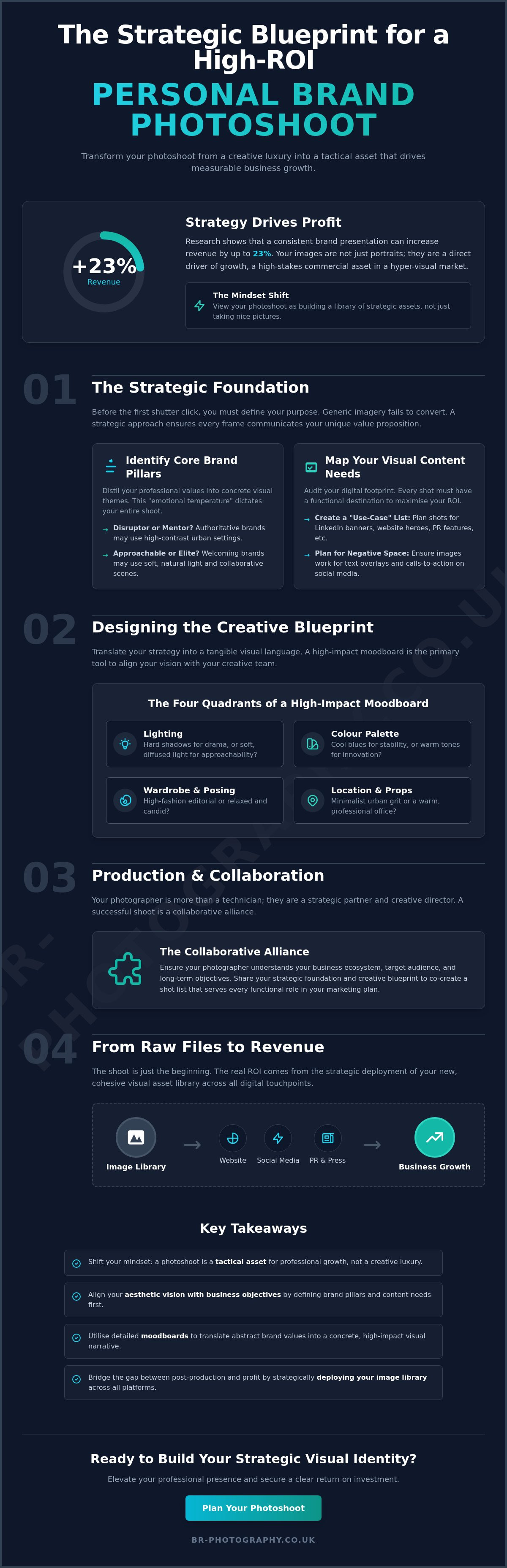
- Shift your mindset from viewing photography as a creative luxury to seeing it as a tactical asset designed to drive professional growth.
- Master the essential steps of how to plan a personal brand photoshoot by aligning your aesthetic vision with your long-term business objectives.
- Learn to utilise moodboards and curated locations to translate abstract brand values into a concrete, high-fashion visual narrative.
- Optimise your production timeline and collaborative approach to ensure every frame captured serves a functional role in your marketing ecosystem.
- Bridge the gap between post-production and profit by strategically deploying your image library across websites and social platforms.
Why Strategy Must Precede the Lens in 2026
In the hyper-visual market of 2026, your image is not a vanity project. It is a high-stakes commercial asset. Many professionals treat a photoshoot as a checklist item; they show up, smile, and hope the photographer works some magic. This "winging it" approach is a recipe for generic, soul-less imagery that fails to convert. If your visuals don't immediately communicate your value proposition, they are essentially invisible to your target audience. A strategic approach to personal branding ensures that every frame serves a distinct purpose. It moves the needle from a "nice to have" creative output to an essential driver for business growth.
You aren't just hiring someone with a fancy camera. You are entering a collaborative alliance. The misconception that a photographer's only job is to press a shutter button is outdated and limits your potential ROI. In a digital-first world, your photographer should act as a creative director and strategic partner who understands your business ecosystem. Without this alignment, you risk ending up with corporate headshots that feel stiff and disconnected from your actual professional life. Understanding how to plan a personal brand photoshoot starts with this mental shift: you are building a library of strategic assets, not just taking a few portraits.
Identifying Your Core Brand Pillars
Strategy begins by distilling your professional values into concrete visual cues. Are you the disruptor in the boardroom or the empathetic mentor? This choice determines the "emotional temperature" of your shoot. An authoritative brand might require high-contrast lighting and structured urban environments to signal power. Conversely, an approachable brand might lean into soft, natural light and collaborative settings to foster trust. A brand pillar is a non-negotiable visual theme that remains consistent across every single image you release. By identifying these pillars early, you ensure your visual identity remains cohesive even as your business scales and evolves.
Mapping Your Visual Content Needs
Before the first light is set, you must audit your digital footprint. Your LinkedIn banner requires a different composition and orientation than a PR feature or a website landing page. We recommend creating a "use-case" list to guide the production. This is where you determine the ratio of lifestyle shots to formal portraits based on where your audience spends their time. If you are active on social media, you need "negative space" in your images for text overlays and call-to-action buttons. If you are targeting high-end editorial outlets, you need sophisticated, polished compositions that command attention. Every shot must have a functional destination. This level of planning ensures you don't just leave with beautiful photos, but with a versatile toolkit that drives engagement and revenue.
Designing Your Creative Blueprint: Aesthetic and Mood
Translating your business strategy into a visual language requires a deliberate creative blueprint. Without a defined aesthetic, your shoot risks becoming a collection of "nice" photos that lack a cohesive message. In 2026, the trend has shifted away from overly polished perfection toward a blend of minimalist urban grit and high-fashion editorial sophistication. This isn't just about style; it's about signaling your market position. If you are wondering how to plan a personal brand photoshoot that actually resonates, you must first master the art of the moodboard. This tool acts as the bridge between abstract values and concrete visual directives.
Colour theory is your silent ambassador. It subtly influences how a potential client feels when they land on your digital profile. Cool blues and greys might project stability and professional authority, whilst warmer, vibrant tones suggest innovation and approachability. Consistency amongst these elements is what separates a professional brand from an amateur one. If your website uses a minimalist palette but your photos are saturated and chaotic, you create cognitive dissonance for your audience. Strategic colour choices ensure that your visual assets feel like a natural extension of your existing brand ecosystem.
Curating a High-Impact Moodboard
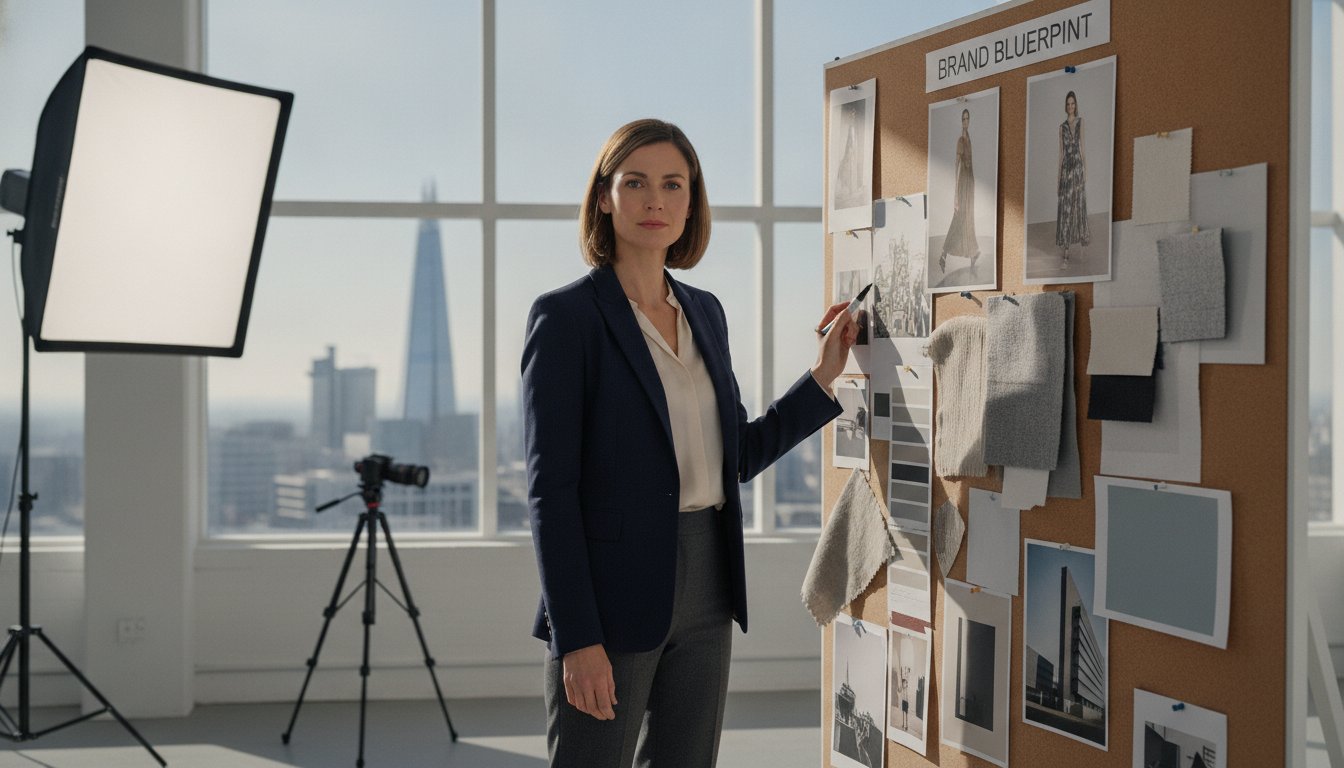
A high-impact moodboard is the primary tool for establishing a collaborative alliance with your creative team. Don't rely solely on generic stock imagery. Look to architectural journals, fashion editorials, and film cinematography to find unique visual cues that reflect your energy. Categorise your board into four distinct quadrants to provide clarity:
- Lighting: Hard shadows for drama or soft, diffused light for warmth.
- Posing: Static, powerful stances versus fluid, candid movement.
- Colour Palette: Specific tones that complement your existing brand assets and hex codes.
- Energy: The overarching mood, whether that is high-octane and modern or quiet and contemplative.
Sharing this blueprint ensures your photographer is aligned with your vision before the first shutter click, transforming the session from a simple transaction into a strategic partnership.
Storytelling Through Fashion-Forward Content
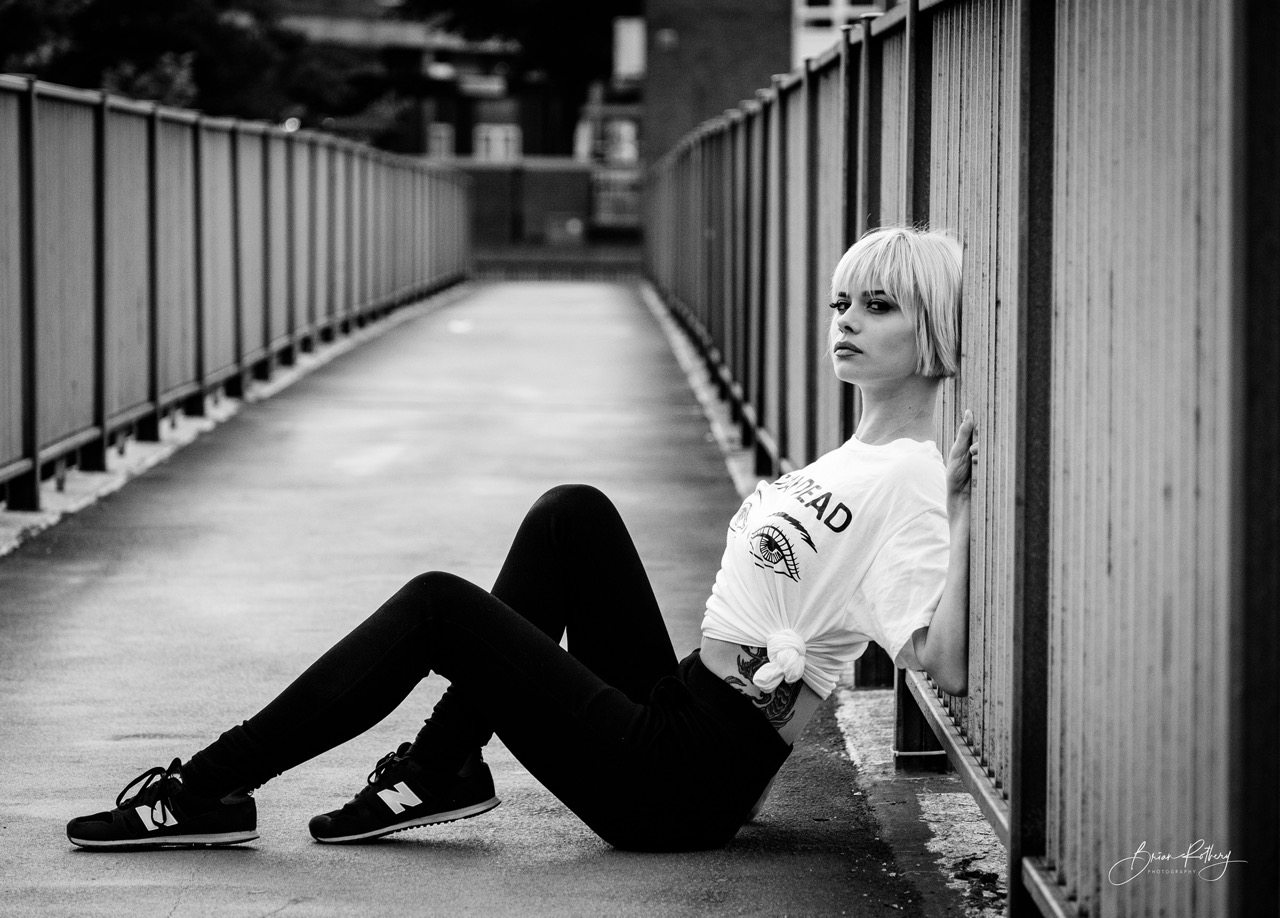
Modern brand storytelling demands a departure from the traditional, stiff "power suit" aesthetic. Authentic representation in 2026 often involves urban portrait photography that captures you in a fast-paced, real-world environment. This signals that you are an active participant in your industry, not just a figurehead in a studio. Incorporating movement, such as walking or gesturing, removes the awkwardness of being the subject. It creates a sense of life and dynamism that static corporate shots simply cannot achieve. If you are ready to refine your visual narrative, discuss your creative blueprint with us to start the process of building your asset library.
The Logistics of a Professional Production
Execution is where strategy meets reality. A well-structured production timeline ensures you aren't rushing through your final outfit change whilst the sun is setting. Timing is everything. We recommend organising your schedule to align with your peak energy levels and the specific lighting requirements of your chosen environment. Understanding how to plan a personal brand photoshoot requires a meticulous approach to these moving parts. If you're shooting in an urban setting, the "golden hour" provides a sophisticated, high-end glow, but midday sun offers a sharp, modern grit that suits a disruptive brand. Your logistics should never be an afterthought; they are the framework that allows your authenticity to shine without the distraction of poor planning.
Props should act as subtle anchors of context. They tell a story about your process without screaming for attention. A designer fountain pen, a specific piece of tech, or even a curated architectural journal can signal your industry expertise. For entrepreneurs who deal with physical goods, featuring sophisticated logistics and packaging from D-PACK can effectively communicate a narrative of quality and care. These items should feel like natural extensions of your workspace. If a prop feels forced, it will look forced on camera. The goal is to create a scene that feels lived-in and professional, positioning you as a leader who is active in their craft. This level of detail transforms a standard session into a high-value production.
Selecting the Perfect Location
Your location is a character in your brand story, not just a backdrop. Evaluating whether a controlled studio setting or an environmental urban location better suits your needs is vital. Studios offer a minimalist "centre" where the focus remains entirely on you, making them ideal for high-fashion editorial styles. Conversely, urban portrait photography captures the fast-paced energy of a metropolitan hub. When scouting, consider practicalities like privacy and natural light. A quiet, light-filled loft might reflect a transparent, modern brand, whilst a brutalist concrete structure signals strength and resilience. Always ensure you have the necessary permissions to avoid disruptions during your session.
Wardrobe and Styling Strategy
Your wardrobe should reflect your favourite professional version of yourself. We utilise the "Rule of Three" to ensure a versatile library of assets. This includes one "Corporate" look for formal authority, one "Smart-Casual" ensemble for day-to-day engagement, and one "Authentic-Personal" outfit that reveals your character. Professional hair and makeup is a non-negotiable investment for high-end results; it ensures you look polished under high-intensity lighting and reduces the need for heavy post-production. Avoid fine, repetitive patterns that cause "strobe" effects on digital screens. Instead, opt for rich textures and solid colours that complement your brand palette and add depth to the frame.
The Collaborative Alliance: Working With Your Photographer
Choosing your creative partner is the most critical decision in the production process. It is not about who has the most expensive lens; it is about who has the sharpest strategic eye. When you are learning how to plan a personal brand photoshoot, you must prioritise a photographer who understands the intersection of fashion aesthetics and commercial utility. A generalist might take a technically sound photo, but a strategic partner captures a narrative that aligns with your 2026 business goals. This relationship is a collaborative alliance built on a shared vision of your professional success. Trust is the foundation of this partnership.
The pre-shoot consultation is where this trust is solidified. It is your opportunity to move beyond the technical and into the psychological. A professional who leads with creative empathy will acknowledge your anxieties whilst simultaneously projecting a confident, expert mindset. They should be able to challenge your assumptions about what "works" on camera, offering a provocative but supportive perspective that pushes your brand forward. This dialogue ensures that when you step in front of the lens, you aren't just a subject; you are a partner in a high-stakes commercial project.
Communication and Expectations
Success must be defined before the first frame is captured. Setting clear KPIs for the session is essential. Are you looking to increase your command of premium rates? Research indicates that experts with recognised personal brands can command 13.57 times more for their services. Perhaps your goal is more specific, such as securing a role in a competitive sector where 44 per cent of employers hire based on a strong online presence. Discussing these objectives alongside image usage rights and delivery timelines ensures there are no surprises. A photographer who understands both fashion and business will help you curate a library of assets that meet these specific professional benchmarks.
On-the-Day Mindset and Behaviour
Projecting confidence is a skill, not a personality trait. Even the most seasoned executives feel a degree of camera shyness. We use professional direction to help you overcome this. Trusting the professional's eye for urban and fashion angles allows you to stop worrying about your "good side" and focus on your energy. Maintaining high energy levels throughout a multi-hour session is vital for a consistent result. We recommend brief breaks and active movement to keep the "in-between" moments feeling natural and authentic. If you are ready to secure your visual future, book your strategic consultation to begin our collaboration.
From RAW Files to Revenue: Implementing Your Assets
The post-production phase is where your creative blueprint finally manifests as a tangible business tool. Selecting the right images is a tactical exercise; you aren't just looking for the most flattering shot, but for the one that best executes your stated strategy. If you followed the steps on how to plan a personal brand photoshoot, you should now possess a diverse library that serves multiple functional purposes. This phase is about curation. You must choose images that maintain the emotional temperature established during your shoot. A cohesive digital presence is built on this consistency, ensuring that your brand feels like a singular, authoritative voice across every touchpoint.
To streamline this selection and delivery process, many high-end photographers utilise professional platforms like Mirino to provide a seamless experience for reviewing and downloading your strategic assets.
Maintaining a rhythmic variation in your content calendar is only possible with a deep asset library. You can't rely on the same three headshots for an entire year. By using your lifestyle, urban, and fashion-forward shots interchangeably, you create a sense of momentum. This prevents your visual presence from feeling static or corporate in a negative sense. View this shoot as the first step in a long-term visual brand evolution. Your business will grow, and your visual assets must grow with it. Consistently presenting a brand has been shown to increase revenue by up to 23 per cent, making this implementation phase the most critical part of your ROI.
Strategic Asset Distribution
Optimising your images for different platforms is a non-negotiable step in your distribution strategy. A LinkedIn header requires a panoramic orientation with negative space for profile overlays, whilst an Instagram reel might benefit from the 'in-between' movement shots captured during your session. Editorial portraits should be reserved for high-impact PR opportunities and guest speaking engagements where you need to command immediate authority. Updating your 'About' page is also vital. It should reflect your new, sophisticated visual identity, providing a seamless transition for potential clients moving from social media to your home site. This alignment reduces cognitive friction and builds trust.
Measuring the Investment
Tracking the impact of your new assets is essential for understanding the value of your investment. You should observe brand perception shifts and engagement levels post-launch. Data indicates that 82 per cent of people are more likely to trust a company if its senior executives are active on social media with a polished presence. High-end imagery reduces friction in the sales process by establishing credibility before you even enter the room. It positions you as a premium choice in a crowded market. Ready to elevate your brand? Explore our Personal Brand Photography services to begin your strategic transformation.
Securing Your Visual Future
Your personal brand is a living asset. It requires more than just a set of nice portraits; it demands a deliberate, strategic framework that aligns with your 2026 business goals. By prioritising strategy before the lens and treating your session as a collaborative alliance, you transform a simple shoot into a high-end commercial production. You now understand how to plan a personal brand photoshoot that doesn't just look good but functions as a driver for professional growth. This is about building a versatile library that works for you whilst you focus on leading your industry.
Our expertise in fashion and urban portraiture ensures your aesthetic is modern, relevant, and authoritative. We move beyond generic corporate imagery to deliver a results-oriented approach that reflects your unique professional energy. It is time to stop settling for generic visuals and start investing in assets that secure your market position. Ready to translate your identity into a potent marketing engine? Book your strategic personal brand consultation with BR-Photography. Your brand evolution starts with a single, informed choice.
Frequently Asked Questions
How far in advance should I plan my personal brand photoshoot?
You should ideally begin the process four to eight weeks before your desired shoot date. This lead time allows for a comprehensive strategy phase, meticulous location scouting, and wardrobe curation. Rushing the production often results in generic imagery that fails to meet your business objectives. Planning ahead ensures that every detail, from the lighting to the narrative, is aligned with your brand evolution.
What is the difference between a headshot and a personal branding session?
A headshot is a singular portrait focused on your face, whilst a personal branding session is a strategic production designed to create a diverse library of assets. Branding sessions incorporate storytelling, multiple locations, and varied outfits to communicate your professional narrative. It is the difference between a simple ID photo and a high-fashion editorial campaign that drives engagement and trust.
How many outfits should I bring to a brand shoot?
We recommend bringing between three and five distinct outfits to maximise the versatility of your asset library. Whilst we previously discussed the core styles in the "Rule of Three," having additional options allows for subtle variations in texture and energy. This ensures your content calendar remains visually engaging over several months without feeling repetitive or predictable to your audience.
Do I really need a professional makeup artist for my session?
Professional hair and makeup is essential for achieving a high-end, polished result that stands up to professional lighting. It is not about changing your appearance, but about enhancing your natural features and ensuring you feel confident under the lens. This investment significantly reduces the need for extensive post-production and ensures a consistent, authoritative look amongst all your final images.
What happens if it rains during an urban portrait session?
If it rains during an urban portrait session, we either pivot to pre-selected covered architectural locations or reschedule to ensure the best possible light. We monitor weather patterns closely in the days leading up to the production. Flexibility is part of our collaborative alliance, and we always prioritise the integrity of your visual assets over a rigid, uncompromising schedule.
Can I use my brand photos for commercial advertising and PR?
Yes, you can typically use your images for PR and commercial advertising, provided you have discussed usage rights with your photographer. Understanding how to plan a personal brand photoshoot involves clarifying these legalities upfront to avoid friction later. High-resolution assets are perfect for guest speaking features, book covers, and targeted digital ad campaigns that require a sophisticated visual identity.
How do I choose the right location for my brand's aesthetic?
Choose a location that serves as a physical manifestation of your brand pillars and core values. If your brand is rooted in modern innovation, a brutalist urban environment or a minimalist loft might be the ideal "centre." For those in more traditional sectors, a structured studio setting provides a timeless sense of authority and focus, ensuring you remain the undisputed subject of every frame.
What should I look for when hiring a personal brand photographer?
Look for a photographer who demonstrates a clear understanding of both fashion aesthetics and modern business strategy. Review their portfolio for consistency in lighting and storytelling rather than just looking for nice pictures. A successful partnership requires a strategic creative partner who can provide professional direction whilst making you feel at ease throughout the entire high-stakes commercial project.
Disclaimer
"The information provided in this Blog post is for general informational purposes only. While I strive to provide accurate information, I make no representations or warranties of any kind about the accuracy, reliability, or completeness of this information. Any reliance you place on such information is strictly at your own risk. In no event will I be liable for any loss or damage derived from the use of this blog."


