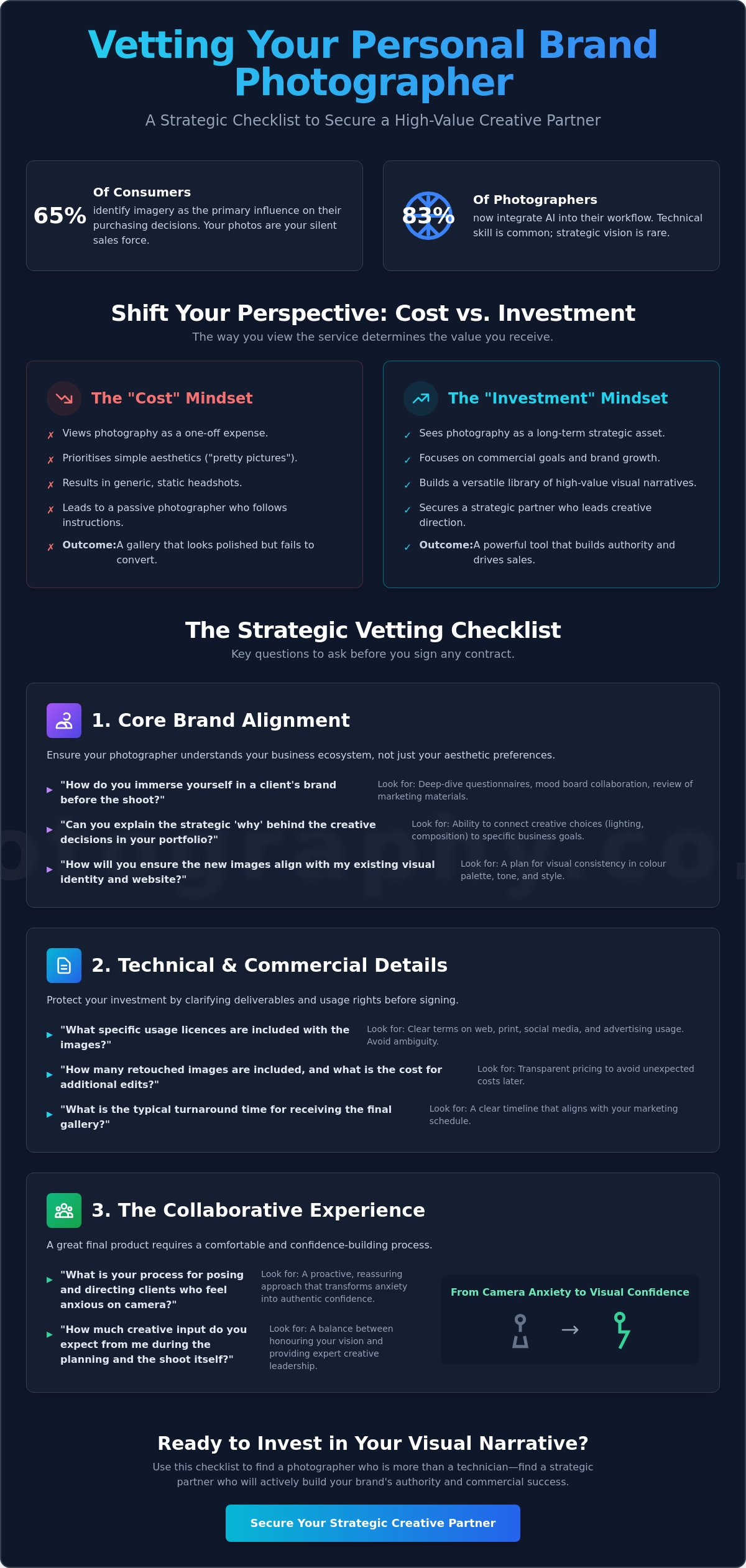
What if the most expensive mistake you make this year isn't a failed marketing campaign, but a gallery of images that look polished yet say nothing about your brand? You already know that over 65% of consumers identify imagery as the primary influence on their purchasing decisions. With 83% of photographers now integrating AI into their daily workflow, the technical barrier has dropped, yet the fear of looking "staged" or wasting budget on photos that don't convert remains high. Identifying the right questions to ask a personal brand photographer is the only way to move beyond a simple transaction and secure a strategic creative partner.
Visual assets are your silent sales force. You deserve a collaborative alliance that prioritises your commercial goals over mere aesthetics. This guide will help you master the art of vetting your photographer with a strategic checklist designed to turn a photoshoot into a high-value business investment. We are diving into how to ensure your creative partner leads the direction, protects your usage rights, and provides a versatile asset library that builds genuine confidence in your professional image.
Key Takeaways
- Shift your perspective from viewing photography as a simple expense to seeing it as a strategic asset that communicates your professional authority.
- Master the specific questions to ask a personal brand photographer to ensure your creative partner understands the nuances of your business ecosystem.
- Secure your commercial interests by vetting technical details like usage licences and retouched image deliverables before signing a contract.
- Prioritise the collaborative experience to ensure you receive active posing guidance that transforms camera anxiety into visual confidence.
- Build a versatile library of high-value assets that move beyond aesthetics to drive real-world conversion and brand growth.
Why the Right Personal Brand Photographer is a Strategic Business Investment
High-growth brands don't just "book a shoot". They invest in a visual narrative. A personal brand photographer is a specialist who translates abstract business values into tangible, high-converting imagery. Whilst a standard portrait captures how you look, a strategic brand asset captures how you lead. This distinction is the difference between a vanity project and a commercial driver. Visual assets are silent sales people. They work when you don't.
Shifting your mindset from "cost" to "long-term brand equity" is essential. When you view these sessions as a one-off expense, you settle for mediocrity. When you view them as an investment in your visual reputation, the vetting process becomes your most critical marketing stage. This is why knowing the right questions to ask a personal brand photographer before signing a contract is the most effective way to ensure your vision is realised. It's about protecting your brand integrity from the start.
To better understand the investment required for high-quality results, you can explore Professional Photography Session Fees at Michelle Vaz Photography as a benchmark for premium portrait services.
The Role of Visual Storytelling in 2026
Static, corporate headshots are a relic. In 2026, your digital presence requires a narrative that feels both authentic and aspirational. Research shows that over 65% of consumers find images to be the most influential factor in their purchasing decisions. High-end visuals don't just look "nice"; they build immediate trust with high-ticket clients by signalling professionalism and attention to detail. Understanding what personal branding is helps you realise that your visual identity is the foundation of your market authority. Consistent, high-quality imagery elevates your perceived value, allowing you to command premium rates in a crowded marketplace.
Moving Beyond the "Pretty Picture" Fallacy
Aesthetic appeal is merely the baseline. It's only 50% of the job. A true creative partner understands marketing funnels, content placement, and how an image will function on a landing page versus a social feed. You need a lead, not a follower. Identifying a photographer who understands these business mechanics is vital. They should be able to explain why a certain composition works for a LinkedIn banner but fails as an Instagram post. This level of expertise distinguishes a generalist from a strategic partner who can actually grow your business.
- Strategic assets are designed for specific conversion goals rather than just "looking good".
- Visual narratives create a cohesive brand experience that builds familiarity and trust amongst your audience.
- Collaborative partners take the lead on creative direction, ensuring your images align with your long-term business goals.
Core Brand Alignment: Questions to Ensure They Understand Your Vision
A photographer who doesn't understand your business is simply a technician with a camera. To elevate your professional image, you need a partner who digs beneath the surface of your aesthetics to find the core of your commercial mission. The difference between a generalist and a brand-focused specialist lies in their ability to adapt. Vetting their process for creative direction is one of the most vital questions to ask a personal brand photographer. Without a clear strategy for immersion, your final gallery will likely feel disjointed and generic.
Evaluating Creative Empathy and Strategic Insight
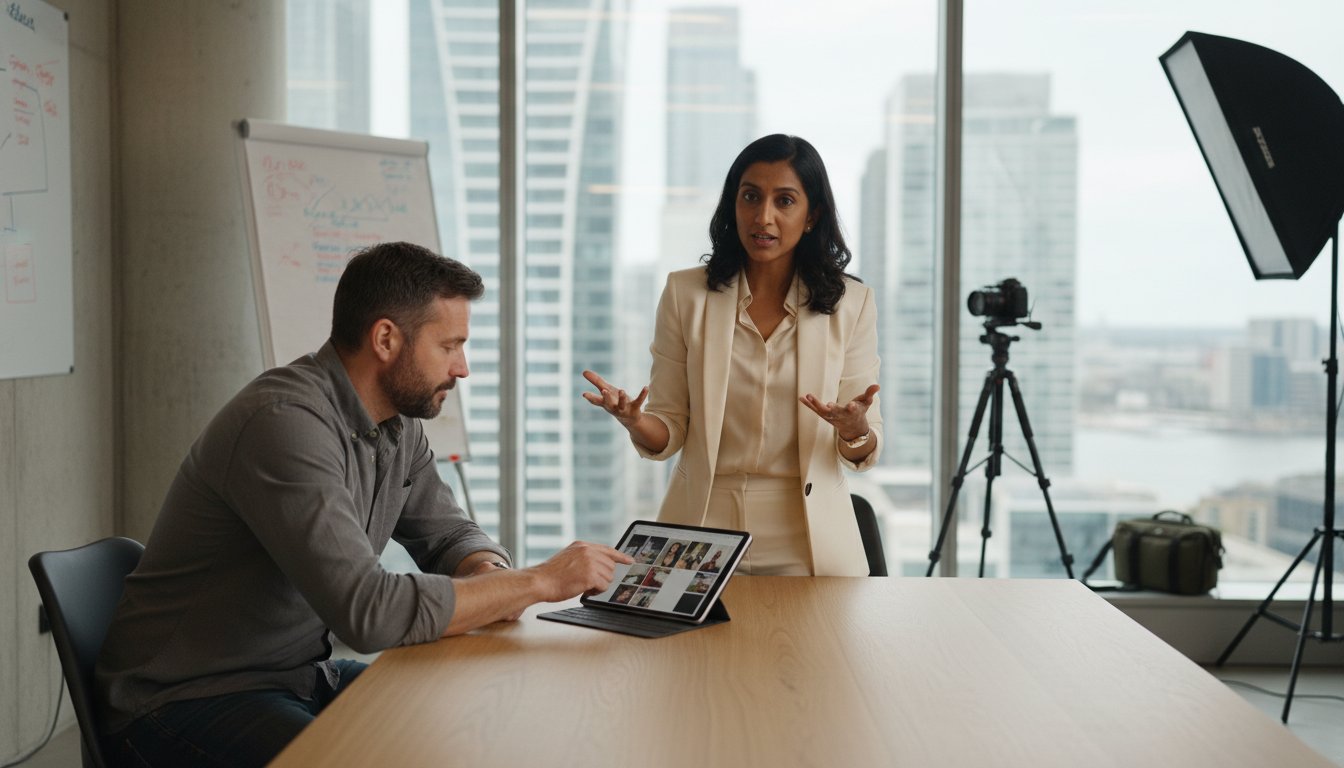
Ask potential partners: "How do you immerse yourself in a client’s brand before the shoot?" A strategic partner should have a structured programme for pre-shoot discovery. This might involve deep-dive questionnaires, mood board collaborations, or a review of your current marketing funnels. You are looking for a professional who can show you case studies where they solved a specific brand problem. Perhaps they helped a consultant shift from "approachable coach" to "authoritative industry leader" through specific lighting and wardrobe choices. If they cannot explain the strategic "why" behind their creative decisions, they are likely a generalist who prioritises their own style over your business objectives.
Visual Consistency and Brand Evolution
Your new images must coexist with your existing digital footprint. A common pitfall is receiving a beautiful set of photos that clash violently with your website's colour palette or the tone of your current social feed. Ask: "How do you ensure the final images will fit my existing aesthetic?" A high-end photographer will request your brand guidelines and consider your primary and secondary colours during the edit. This ensures a seamless transition for your audience.
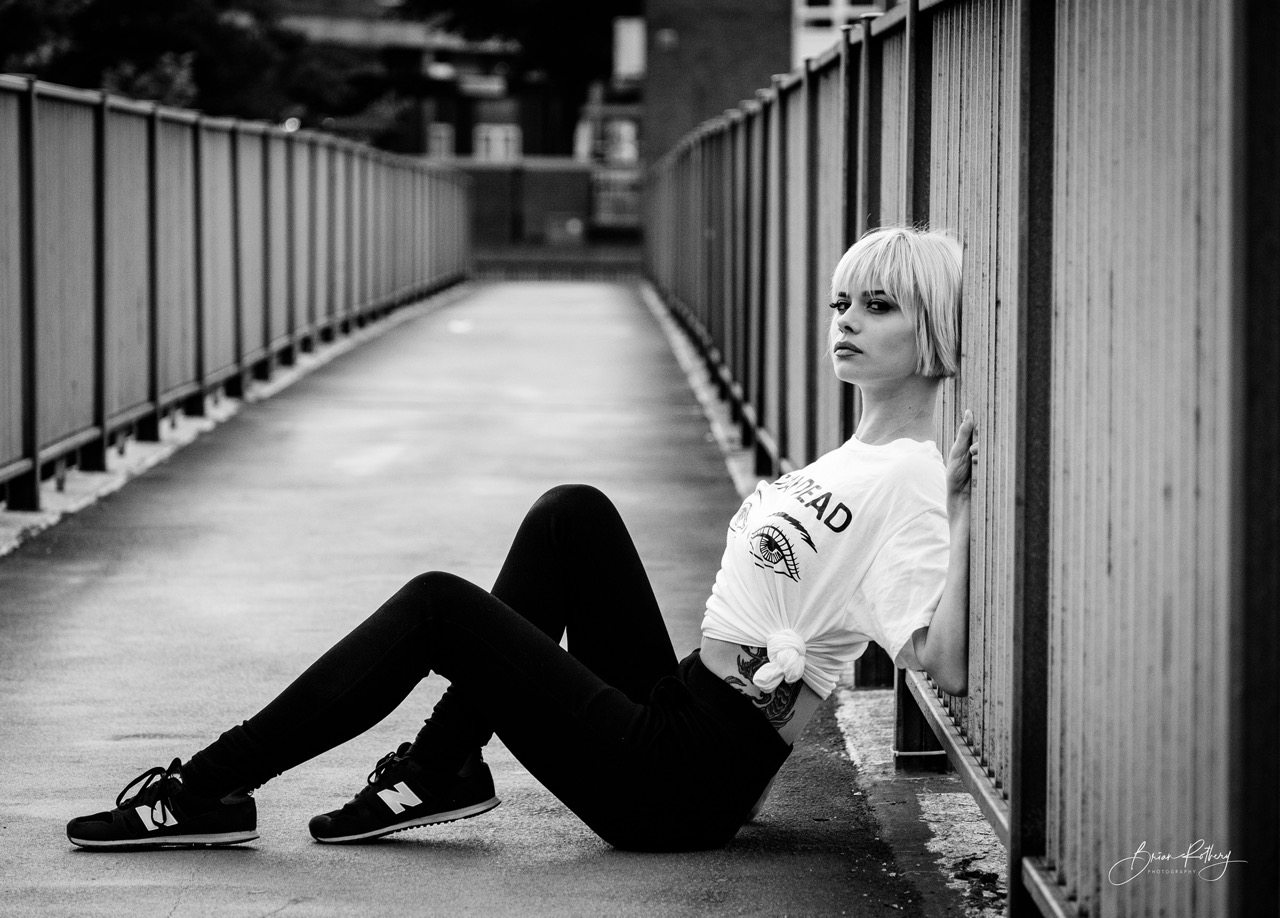
- Adaptability: Can they produce a variety of content, such as urban portrait photography and studio work, whilst maintaining a single brand identity?
- Longevity: How do they ensure the content feels current and trend-aware without becoming dated within six months?
- Technical Precision: What is their process for handling brand-specific tones and skin-tone accuracy in post-production?
The pre-shoot consultation is the most critical stage of the creative workflow. This is where the collaborative alliance is formed and the visual blueprint is finalised. If you are ready to move beyond the generic and build a visual identity that resonates with your ideal clients, reach out to discuss your strategy. Investing time in these conversations now prevents the anxiety of receiving images that don't convert later.
Technical and Commercial Considerations: Questions to Ask a Photographer Before Booking
Protecting your commercial interests is just as important as the creative vision itself. Whilst most people focus on the "look" of the shoot, the most critical questions to ask a personal brand photographer often involve the legal framework of the partnership. A creative output is only a strategic asset if you actually have the right to use it where it matters most: in your paid advertising, PR campaigns, and digital lead magnets. Without clarity on these terms, you risk investing in a library of images that you cannot legally deploy across all your marketing channels.
Understanding Usage Rights and Licensing
Many entrepreneurs mistakenly ask for "full copyright". In reality, you rarely need to own the copyright; you need a comprehensive commercial usage licence. This ensures you can use the images for business growth without recurring fees. Ensure the contract explicitly covers usage in paid media. If you plan to feature in a major publication or run a high-spend social media campaign, your licence must reflect that. Ask: "What exactly is included in your commercial usage licence?" and "Does this cover third-party PR?" Clarifying this now prevents costly legal hurdles later as your brand expands.
Deliverables and Post-Production Standards
Post-production is where the raw files are polished into professional assets. The current market trend in 2026 heavily favours authenticity over perfection, moving away from the plastic, over-processed look of previous years. You want retouched images that preserve your character whilst removing temporary distractions. Inquire about the selection process: do you get to choose the final frames, or does the photographer curate the gallery? This level of control ensures the final library aligns with your personal comfort level and professional standards.
Beyond the edit, consider the technical versatility of the files. A modern digital presence requires more than just a standard portrait. Ask about platform-specific crops and formats:
- Banners: Wide-angle shots for LinkedIn or website headers.
- Squares: Optimised for Instagram grids and profile icons.
- Verticals: High-resolution files for Stories and Reels covers.
The Collaborative Experience: Vetting the Process and Comfort
Technical skill is a baseline requirement, but the human element determines the success of a session. Even the most accomplished leaders often feel a surge of vulnerability when the lens is pointed their way. If you look uncomfortable, your audience will feel it. This is why the most critical questions to ask a personal brand photographer centre on their ability to lead the creative process whilst keeping you at ease. You aren't just hiring a technician; you're hiring a director who understands the psychology of professional presence.
Managing Subject Anxiety and Authenticity
Confidence isn't accidental. It's engineered. Ask potential partners: "How do you help clients who feel anxious in front of the camera?" A strategic partner won't just tell you to "act natural". They should provide active posing guidance and specific direction that translates your brand values into body language. There's a common misconception that "unposed" photos are the result of luck. In reality, capturing a genuine, approachable expression whilst maintaining professional authority requires precise coaching. Industry data from 2026 indicates that photographers who offer this level of personalised, collaborative experience see up to a 20% increase in client satisfaction and revenue, as the resulting assets are far more effective at building trust.
Logistics and On-Set Collaboration
A typical shoot day should feel like a well-orchestrated production rather than a chaotic scramble. Vetting the logistics is essential for maintaining brand integrity. If you are investing in urban portrait photography, you must know how your photographer handles the unpredictable nature of metropolitan environments. Ask about their contingency plans for weather or lighting shifts. While our expertise lies in these urban settings, those looking for guidance in more wild and unpredictable environments can check out Tusk Photo for their specialist wildlife expeditions. A professional should be able to manage a complex shot list, including multiple outfit changes, whilst remaining open to spontaneous creative moments that often produce the most authentic results.
- Outfit Coordination: How do they advise on wardrobe to ensure visual variety across your asset library?
- Creative Alliance: Do they collaborate with hair and make-up artists to ensure you look your best under professional lighting?
- Rhythm: How do they maintain energy and focus throughout a half-day or full-day session?
Capturing your professional essence requires more than just a camera; it requires a collaborative alliance built on trust and clear communication. If you're ready to experience a shoot where you feel led, supported, and confident in the final outcome, contact Brian today to discuss your visual strategy. Moving beyond the anxiety of being the subject allows you to focus on the long-term growth of your brand.
Finalising Your Decision: Why BR-Photography is the Strategic Choice
Choosing a creative partner is the final, most consequential step in your visual marketing plan. By now, you understand the essential questions to ask a personal brand photographer to ensure they align with your commercial goals. At BR-Photography, Brian Rothery bridges the gap between high-end fashion aesthetics and the functional requirements of modern business. We don't just take pictures; we build brand equity. Our approach is designed for the ambitious professional who recognises that their visual identity is a vital investment for success and growth.
Operating across major metropolitan hubs like London and Manchester, our service provides a sophisticated, modern aesthetic that resonates in a globalised market. We understand the fast-paced nature of new ventures and the competitive landscape of creative sectors. This regional presence, combined with a fashion-forward mindset, ensures your assets feel current and authoritative. We move beyond the purely aesthetic to focus on how your images function within your larger business ecosystem, turning a nervous subject into a confident brand leader.
Our Strategic Creative Process
Our collaborative alliance begins long before the first shutter click. We reject budget-focused shortcuts that risk your brand integrity; instead, we prioritise a high-end programme that delivers measurable value. The process starts with a deep-dive consultation to organise your visual narrative, followed by a meticulously planned session focusing on urban portrait photography and fashion-led brand content. This ensures every frame serves a specific purpose in your marketing funnel. We lead the creative direction, providing the active posing guidance needed to capture authentic, high-impact imagery that commands attention.
Your Next Steps to Visual Authority
Preparation is the foundation of a successful shoot. Once you've vetted your partner, the focus shifts to execution. We work closely with you to refine your wardrobe, select locations that reflect your brand personality, and finalise a shot list that covers all your digital platforms. This level of detail ensures that by the day of the session, all anxiety is replaced by a sense of professional ambition. You aren't just booking a photographer; you're securing a strategic partner dedicated to your long-term reputation.
If you're ready to transform your professional image into a high-value business asset, the next step is a direct conversation about your goals. We invite you to Enquire about your personal brand session today. Let's discuss how we can create a library of versatile visual assets that truly represent your authority in the market.
Securing Your Visual Reputation for the Future
Your visual reputation is too valuable to leave to chance. By mastering the specific questions to ask a personal brand photographer, you've moved beyond the "pretty picture" fallacy and into the realm of strategic asset creation. You now know how to vet for commercial usage rights, creative empathy, and a partner who leads the direction whilst ensuring your brand values remain the focal point. This level of scrutiny distinguishes a simple vendor service from a collaborative alliance that prioritises your long-term commercial success.
As a specialist in urban and fashion-led portraiture, Brian Rothery acts as a strategic creative partner for national UK brands seeking authentic, high-end storytelling. We don't just capture images; we build the visual infrastructure for your business growth. It's time to stop settling for generic headshots and start investing in a library of assets that truly work for you. Invest in your visual authority with BR-Photography and turn your next photoshoot into a high-value commercial investment. Your brand's next chapter starts with a single, confident frame.
Frequently Asked Questions
Do I own the copyright to the photos after the shoot?
In professional photography, the creator typically retains the legal copyright, whilst the client is granted a comprehensive commercial usage licence. This licence allows you to use the imagery across your website, social media, and marketing materials for business growth. It's one of the most important questions to ask a personal brand photographer to ensure you have the necessary rights for paid advertising and PR without unexpected future costs.
How far in advance should I book my personal brand photographer?
High-end creative partners often require a booking lead time of four to eight weeks. This duration allows for a thorough pre-shoot strategy and creative direction phase, ensuring every visual asset is aligned with your business goals. Whilst last-minute sessions are occasionally possible, planning ahead secures your preferred date and ensures a collaborative alliance rather than a rushed transaction that might overlook vital brand details.
Can I bring a friend or colleague to the shoot for support?
You are welcome to bring a trusted friend or colleague if their presence helps put you at ease during the session. However, it's vital that they support the creative direction rather than causing distraction. A strategic photoshoot requires focus and a collaborative atmosphere. If a companion helps you project a more authentic, confident professional image, they are a valuable addition to the set environment.
What happens if I need to reschedule my session?
Rescheduling policies are defined within your initial contract and typically require a specific notice period. Professional photographers manage tight schedules across various metropolitan hubs, so clear communication is essential. If unexpected circumstances or weather impact an urban portrait photography session, we work together to find the next available strategic window. This ensures your project momentum is maintained without compromising the quality of the final assets.
Do you provide the raw, unedited files as part of the package?
Raw, unedited files are not provided as they represent an unfinished stage of the creative process. The value of a professional session lies in the expert culling, colour grading, and retouching that transforms a raw capture into a high-end business asset. Delivering only the final, polished gallery ensures your brand integrity is maintained and that every image you publish meets a sophisticated, commercial standard.
How do I know which locations will best suit my brand identity?
Location selection is a strategic decision based on your brand identity and the specific narrative we aim to tell. During our pre-shoot consultation, we review your marketing funnels and target audience to identify settings that signal authority and relevance. Whether it's a sleek corporate environment or a dynamic urban backdrop, the location must function as a cohesive element of your visual storytelling and professional reputation.
Will you help me choose which outfits to wear?
Posing and wardrobe guidance are integral parts of the collaborative experience. We help you select outfits that not only look sophisticated on camera but also resonate with your industry's expectations and your personal brand goals. Choosing the right textures and colours ensures you remain the focal point whilst projecting a modern, fashion-forward aesthetic that distinguishes you from generalist competitors in your specific sector.
How long does a typical personal brand session last?
A typical personal brand session lasts between two and five hours, depending on the complexity of your shot list and the number of locations involved. This timeframe allows for multiple outfit changes and a variety of setups, from formal portraits to lifestyle content. It's a key detail amongst the questions to ask a personal brand photographer to ensure the schedule accommodates the depth of content required for your annual marketing plan.
Disclaimer
"The information provided in this Blog post is for general informational purposes only. While I strive to provide accurate information, I make no representations or warranties of any kind about the accuracy, reliability, or completeness of this information. Any reliance you place on such information is strictly at your own risk. In no event will I be liable for any loss or damage derived from the use of this blog."


