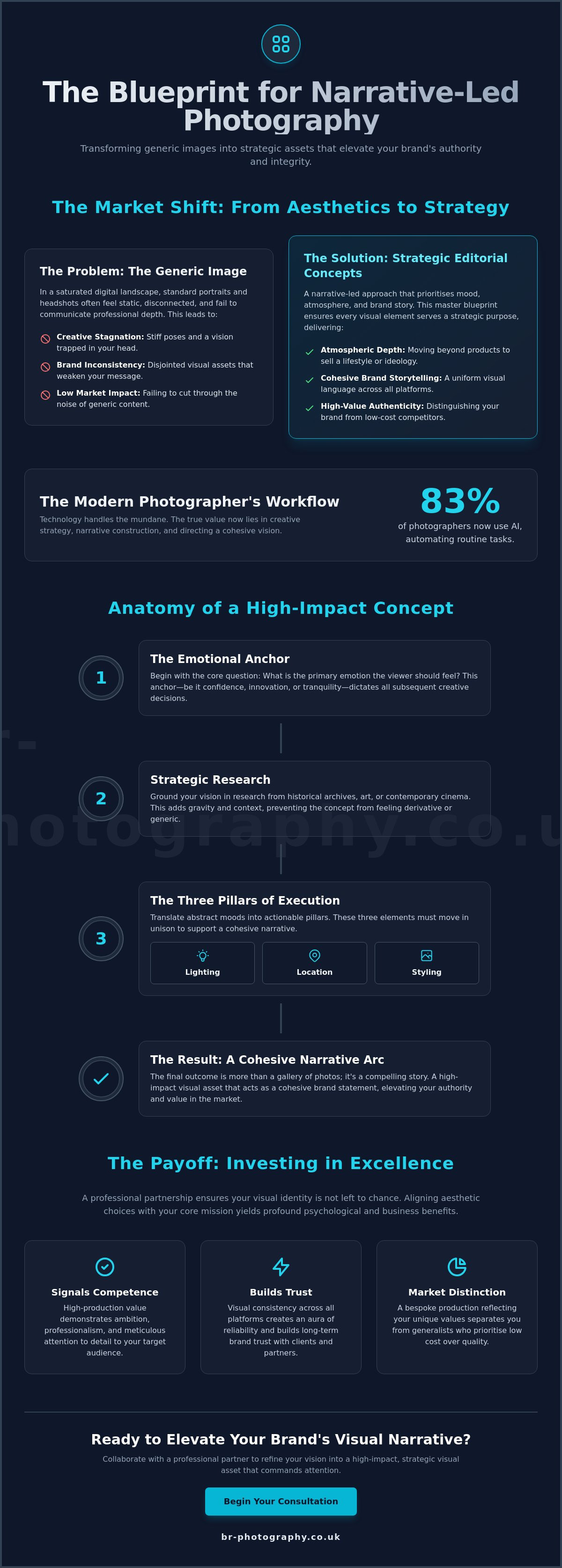
A stunning image is a poor investment if it fails to articulate a clear narrative. Strategy matters. In an era where 83% of photographers are already integrating AI into their workflows to handle the mundane, the real value of a professional lies in the depth of their creative strategy. Developing sophisticated editorial fashion photography concepts is about more than just selecting a colour palette or a trendy location; it is the architectural foundation of your brand's visual identity.
You likely know the frustration of a shoot that feels generic. The poses feel stiff. The technical requirements often overshadow the art. It is difficult to lead a crew when your vision feels trapped in your head. This guide provides a clear framework to move past those creative blocks. You will discover how to transform abstract ideas into high-impact narratives that elevate your authority. We will examine how to align your concepts with your professional identity whilst gaining the confidence to lead a high-stakes creative collaboration.
Key Takeaways
- Learn how to pivot from generic commercial imagery to narrative-led editorial fashion photography concepts that prioritise atmospheric depth and brand storytelling.
- Master the transition from abstract ideas to actionable visual narratives by grounding your creative vision in historical research and strategic moodboarding.
- Explore high-impact aesthetic frameworks, such as Urban Minimalism and Narrative Noir, to distinguish your professional identity amongst market competitors.
- Understand the critical role of creative chemistry and pre-shoot consultations in ensuring technical execution aligns perfectly with your strategic brand goals.
- Recognise why a professional partnership is a vital investment for maintaining brand integrity and moving beyond derivative, low-quality productions.
Defining Editorial Fashion Photography Concepts as Strategic Assets
In the competitive markets of metropolitan hubs, aesthetics alone no longer suffice. A high-quality image is expected; a strategic narrative is required. When we discuss editorial fashion photography concepts, we are referring to a narrative-led approach that prioritises mood, atmosphere, and subtext over the literal presentation of a product. Whilst standard commercial photography aims to sell a specific garment, an editorial concept sells a lifestyle, an ideology, or a specific moment in time. It is the difference between a catalogue shot and a cinematic frame.
A well-defined concept acts as the master blueprint for every creative decision on set. It dictates the lighting, the choice of lens, the model's movement, and the post-production colour grading. Without this architectural foundation, a shoot becomes a series of disjointed experiments rather than a cohesive brand statement. In 2026, where digital spaces are saturated with generic content, these bespoke narratives are what allow a brand to cut through the noise with high-value, authentic imagery. Understanding the history of fashion photography reveals that the most enduring images are those that tell a story. They invite the viewer into a constructed reality. This isn't just about art; it's about business strategy.
The Shift from Passive Portraits to Active Narratives
Traditional headshots are no longer enough for modern entrepreneurs. They often feel static and disconnected. For a brand leader, looking directly into the lens with a practiced smile can feel uncomfortably generic. Editorial concepts replace this passivity with active narratives. Instead of simply looking at the camera, you are inhabiting a world. This creates an implied narrative that suggests depth and professional authority. It signals that you are a protagonist in your industry, not just a participant. It's about capturing the behaviour of a leader in their natural element, whether that is a stark urban environment or a refined studio setting.
Strategic Visual Identity: Why Concepts Matter for Your Brand
Your visual assets are a vital investment in your brand's growth. Aligning your aesthetic choices with your core mission is essential for building long-term trust. High-production value has a profound psychological impact on your target audience; it signals competence, ambition, and attention to detail. Editorial fashion photography concepts ensure that your visual language remains uniform across all platforms, from your website to high-end social media placements. This consistency builds an aura of reliability. Moving beyond the Pinterest board to a bespoke production reflects your unique values and distinguishes your business from generalist providers who prioritise low costs over quality. It's a commitment to excellence that your clients will notice immediately.
The Anatomy of a Concept: From Moodboards to Visual Narratives
Strategy is the bridge between a vague idea and a high-impact visual asset. Developing editorial fashion photography concepts is not a passive exercise in collecting pretty images; it is a rigorous process of construction. It begins with a single, foundational question: what is the core emotion you want the viewer to feel? Whether it is the quiet confidence of a minimalist leader or the restless energy of an urban innovator, this emotional anchor dictates every subsequent choice. Grounding this vision in research is essential. By looking at historical archives or contemporary cinema, you provide your vision with a sense of gravity that prevents it from feeling derivative.
Once the message is clear, you must distill the vision into actionable pillars. This involves translating abstract moods into specific fashion photography techniques. Lighting, styling, and location are the three gears that must move in unison. If the lighting is harsh but the styling is soft, the narrative breaks. A successful concept ensures that these elements support a cohesive narrative arc. This arc is what transforms a gallery of individual photos into a compelling story that elevates your brand authority. If you find the conceptualisation process overwhelming, you can collaborate with a professional partner to refine your vision into a workable shoot plan.
Building a Strategic Moodboard that Works
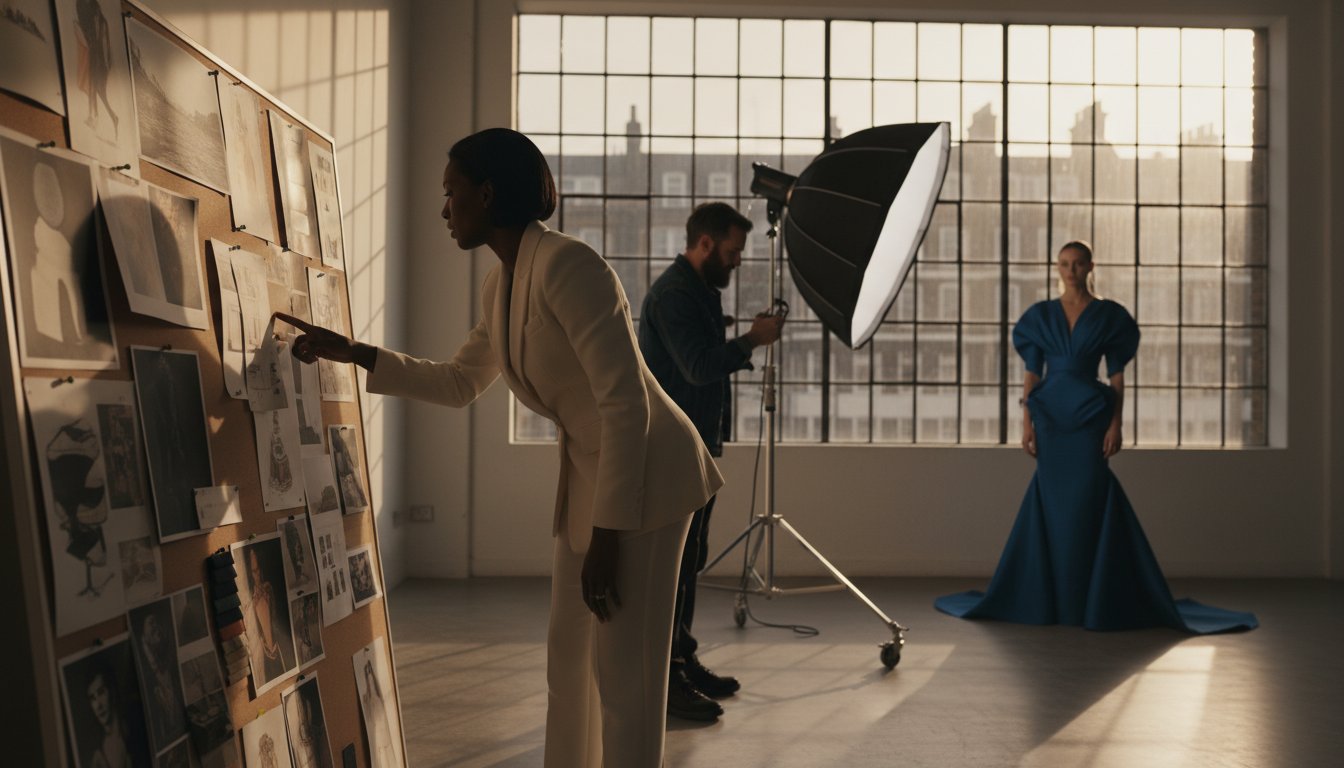
A professional moodboard is a technical translation for your crew. Avoid the trap of "Pinterest fatigue" by looking beyond the platform's most popular pins, which often lead to visual echo chambers. Focus on selecting images for their light behaviour, specific textures, or colour palettes rather than literal poses. Organise your board to communicate clearly with your stylist and makeup artist. A well-structured board ensures everyone is working towards the same atmospheric goal, reducing friction on the day of the shoot and ensuring the final output matches your original intent.
Defining the Colour Palette and Atmospheric Texture
Colour is a psychological tool. Muted, desaturated tones often evoke a sense of calm authority and timelessness, whilst high-contrast, vibrant palettes signal modern energy and disruption. Consider the role of atmospheric texture as well. The presence of film grain, deep shadows, or soft-focus elements defines the "editorial feel" of the work. These textures must align with the intended platform. A grain-heavy, noir-inspired concept might work beautifully for a high-end print publication, whilst a crisp, high-detail aesthetic may be more effective for a digital brand presence. Consistency in these choices builds a visual language that your audience will recognise amongst a sea of generic content.
5 Impactful Editorial Concepts to Elevate Your Professional Brand
Selecting the right framework is a strategic decision that goes beyond simple aesthetics. In the realm of personal brand photography, your choice of theme communicates your market position before you say a single word. Unlike the uncurated collections found on generalist platforms, these editorial fashion photography concepts are designed to function as commercial assets. They provide a narrative structure that ensures your visual identity is both authentic and aspirational. Each concept offers a different psychological entry point for your audience, allowing you to control the perception of your professional authority.
The Urban Minimalist: Clean Lines and Strategic Space
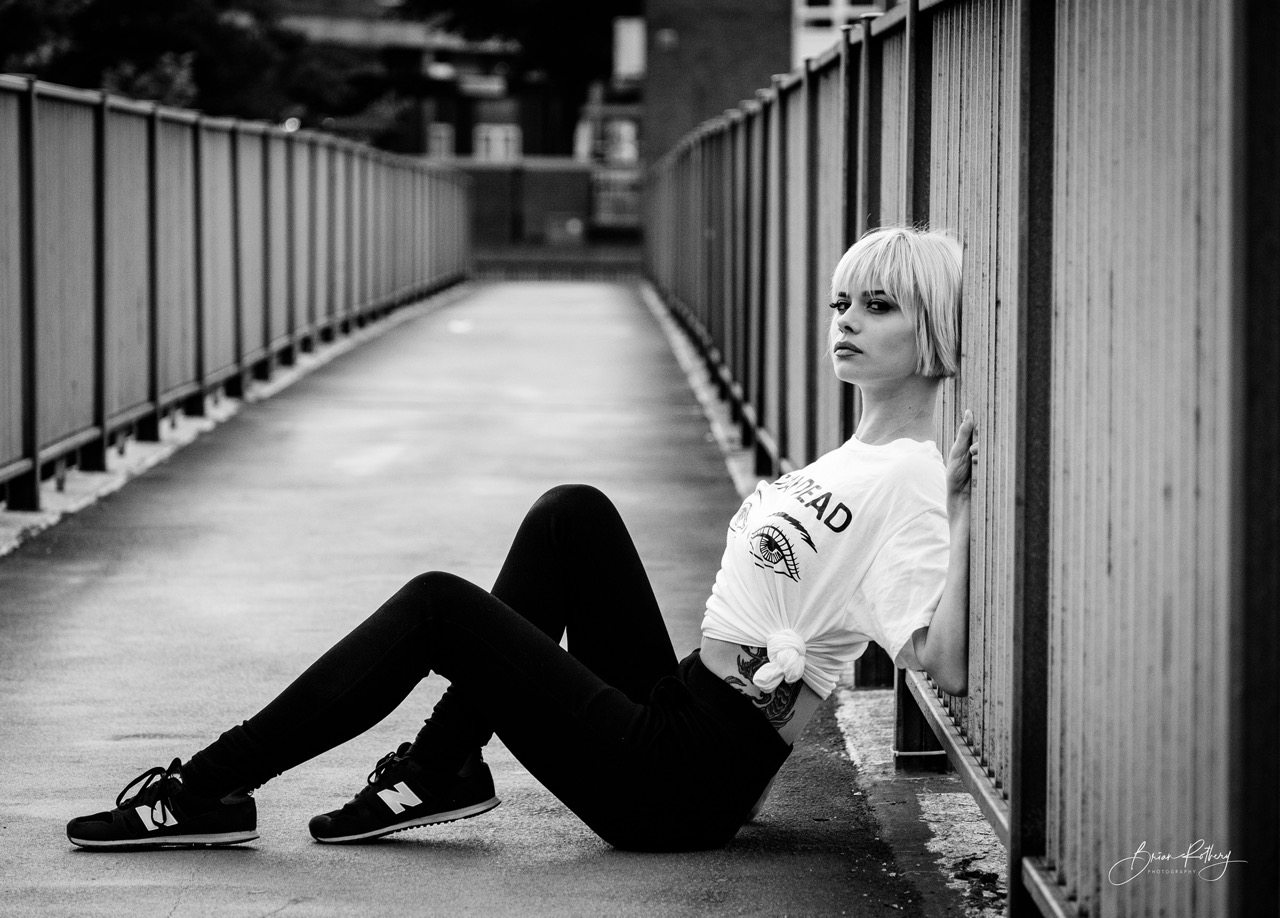
This concept thrives on the interaction between the individual and the hard edges of modern urban architecture. It is a study in scale. By utilising negative space, the subject is framed as the central point of importance amidst a vast, organised world. This creates a sense of focus and calm. Styling should prioritise monochromatic palettes and structured silhouettes to mimic the architectural surroundings. It is a perfect fit for those whose brand identity is built on precision, logic, and clarity.
Narrative Noir: The Power of Cinematic Shadow
Moving away from the brightly lit, generic headshot, Narrative Noir creates a "film still" aesthetic. It uses low-key lighting and cinematic shadows to create a sense of mystery and sophistication. This approach invites the viewer to engage more deeply with the image, wondering about the subtext. For personal brands that value depth and a sense of history, this concept highlights professional confidence through what it chooses to hide as much as what it reveals. It suggests a leader with a complex, thoughtful perspective.
The Heritage Remix
This concept blends traditional British styling with the grit of contemporary urban settings. It is a strategic juxtaposition. By placing classic tailoring amongst modern glass and steel, you signal a brand that respects tradition whilst leading innovation. It is an excellent way to ground a modern venture in a sense of established authority, making it ideal for those in finance, law, or high-end consultancy.
The Ethereal Professional
Utilising soft, diffused lighting and fluid movement, this concept is designed for the creative and approachable brand. It moves away from rigid poses to capture a sense of agility and imagination. It is highly effective for leaders in creative industries or ethical business sectors where empathy and vision are core brand values.
The High-Octane Corporate
This is the choice for the market disruptor. It employs bold colour palettes, aggressive camera angles, and high-contrast lighting. It is designed to be high-impact and impossible to ignore, signalling a disruptive presence in a crowded market. It works best for entrepreneurs who want to project energy, speed, and a refusal to adhere to the status quo.
Executing the Vision: Technical Precision and Creative Collaboration
Execution is the bridge between a strategic map and a tangible brand asset. Even the most sophisticated editorial fashion photography concepts will falter if the technical delivery lacks discipline or the crew lacks cohesion. A high-end shoot is a complex machine with many moving parts. Success depends on your ability to transition from a visionary leader to an effective project manager. This phase is about risk mitigation. It ensures that the atmospheric depth you've planned is actually captured in-camera, rather than lost in a sea of logistical oversights or creative misalignments.
Organising Your Creative Alliance
The photographer acts as the creative director on set, ensuring every element remains cohesive. When briefing your stylist and makeup artist, focus on the "why" behind the aesthetic. If the goal is a disruptive, high-octane corporate look, the makeup must reflect that aggressive energy. Managing the timeline is a delicate balance. You must maintain a steady rhythm to hit your deliverables, whilst allowing enough breathing room for spontaneous creative moments. These "happy accidents" often produce the most authentic, high-impact frames that move beyond the original brief.
Lighting and Technical Mastery
Technical choices are narrative tools. Natural light might serve an Ethereal Professional concept beautifully, but a high-contrast Heritage Remix often demands the controlled precision of studio strobes. Every lens choice and aperture setting must support the story. A wide-angle lens can emphasise the scale of an urban environment, whilst a tighter focal length creates the intimacy required for personal brand storytelling. Post-production is the final stage of conceptualisation. Colour grading and retouching should never be an afterthought; they are the final layers of atmospheric texture that solidify your brand's visual identity.
Achieving authentic, non-posed expressions requires a director who understands human behaviour. It is about creating an environment where the subject feels safe enough to stop "performing" and start "inhabiting" the world you've built. If you are ready to transform your professional narrative into a high-end visual asset, book a consultation to discuss your project.
Investing in Excellence: Why Professional Partnership is Non-negotiable
Visual storytelling is a high-stakes endeavour where the margin for error is slim. Choosing low-cost, "budget" alternatives often results in generic, uninspired imagery that actively harms your market position. Editorial fashion photography concepts require a level of technical and creative mastery that generalist providers simply cannot offer. It's a significant risk to brand integrity. When execution is poor, the narrative feels forced or amateur, which can alienate a sophisticated target audience. This isn't just about a single photoshoot; it's about the long-term perception of your brand's value and competence.
Moving beyond the Pinterest board requires a transition from passive inspiration to active, bespoke production. Relying on a collection of screenshots is a starting point, but it isn't a strategy. A bespoke production requires an intimate understanding of how textures, light behaviour, and architectural lines interact with your specific brand values. This level of detail is what distinguishes a market leader from a follower. A strategic creative partner doesn't just take photos; they function as a vital component of your business ecosystem. Agencies such as Studio 204 specialise in this type of high-impact production, ensuring that every visual element aligns with a brand's broader narrative. They understand how a specific aesthetic movement or a cinematic lighting choice translates into consumer trust. At BR-Photography, we focus on the intersection where sophisticated art meets rigorous business strategy. This ensures every frame serves a functional purpose in your growth.
From Inspiration to Implementation
Abstract ideas are only valuable when they are translated into polished, professional assets. Our approach prioritises a collaborative alliance rather than a simple vendor transaction. We don't just deliver files; we deliver strategic assets. By working together over multiple editorial sessions, we help you build a consistent visual asset library. This consistency is what builds brand authority over time. It allows you to maintain a high-end digital presence without the constant stress of starting from scratch for every new campaign. We transform your initial spark of inspiration into a cohesive, recognisable visual language that resonates amongst your peers and clients alike.
Your Next Step: Defining Your Visual Future
Your brand's visual future depends on the choices you make today. Securing your market position requires a proactive approach to your visual narrative. Don't wait for your competitors to set the standard or for your current imagery to become obsolete. Initiating a project with a focus on long-term professional outcomes is a commitment to your own success. It is time to move past the generic and embrace a narrative that truly reflects your ambition and unique market position. You can elevate your brand with a bespoke editorial session and begin the process of defining a visual future that commands respect and drives results.
Secure Your Brand’s Visual Narrative
Transforming an abstract vision into a high-impact asset requires a strategic blueprint rather than a collection of random inspirations. We've examined how editorial fashion photography concepts act as the architectural foundation of your professional identity; they ensure every creative choice supports your commercial goals. Success lies in the intersection of technical precision and authentic storytelling. It's about moving beyond generic poses to inhabit a world that reflects your professional authority.
As specialists in high-end portrait and fashion editorial, BR-Photography provides a strategic, business-led approach to creative imagery across the UK. Our service focuses on the functional value of your visual assets, moving beyond the purely aesthetic to drive genuine brand growth. Don't leave your brand's first impression to chance. It's time to invest in a bespoke production that commands attention and solidifies your market position.
Partner with BR-Photography to bring your editorial vision to life. Your brand's narrative is its most valuable asset; let's build it together with the confidence and expertise your business deserves.
Frequently Asked Questions
What is the difference between commercial and editorial fashion photography?
Commercial photography focuses on the literal presentation of a product to drive immediate sales. Editorial work prioritises the narrative and atmospheric depth to build brand equity. Whilst commercial shots are often clean and product-centric, editorial fashion photography concepts use storytelling to evoke emotion and establish a sophisticated visual identity. It's the difference between showing what a garment looks like and showing how it feels to inhabit that brand's world.
How do I come up with a unique editorial concept for my personal brand?
Start by identifying the core values of your business and the specific emotional response you want from your audience. Look for intersections between your professional industry and unexpected aesthetic movements. For example, a fintech leader might explore Urban Minimalism to signal precision. Avoid copying current trends; instead, ground your vision in historical references or cinematic styles that reflect your unique professional journey and market position.
Do I need a professional stylist for an editorial photoshoot?
A professional stylist is a vital investment for ensuring your visual narrative remains cohesive. They don't just pick out clothes; they curate textures and silhouettes that support the specific editorial concept. Without a stylist, small details like fabric mismatch or incorrect tailoring can undermine the high-production value you are aiming for. Their expertise allows the photographer to focus on light and composition whilst ensuring every sartorial choice is strategically aligned.
Can editorial fashion photography concepts be used for corporate branding?
Editorial concepts are highly effective for corporate branding because they cut through the digital noise of generic stock imagery. Modern corporate sectors use these narratives to project authority, innovation, and a forward-thinking mindset. By moving away from static headshots towards active, atmospheric storytelling, a corporation can signal a disruptive presence in their market. This approach transforms standard corporate assets into high-value strategic tools that build long-term trust with a sophisticated audience.
How much input should I have in the creative direction of the shoot?
Your input is essential for defining the strategic goals and core message of the shoot. You are the expert on your brand's mission; your role is to provide the narrative foundation. However, once the concept is established, it is best to allow your creative partner to lead the technical execution. This collaborative alliance ensures that your vision is translated into professional assets through expert lighting, composition, and direction whilst remaining true to your original intent.
What should I include in a fashion photography moodboard?
A strategic moodboard should include specific references for lighting behaviour, colour palettes, and atmospheric textures. Don't just collect poses; look for images that capture the feel you want to achieve. Include notes on hair and makeup direction to ensure the crew remains aligned. A well-organised board acts as a technical translation for your stylist and photographer, ensuring the final output is a bespoke production rather than a derivative collection of favourite images.
How long does a typical editorial fashion shoot take to organise?
A high-end editorial shoot typically requires two to four weeks of preparation. This timeline allows for thorough concept development, location scouting, and crew assembly. Rushing the pre-production phase often leads to logistical oversights that can damage the final result. Proper planning ensures that every element, from the lighting setup to the styling details, is intentionally curated to support your brand's long-term growth and visual integrity.
Is editorial photography suitable for people who aren’t professional models?
Editorial photography is perfectly suited for entrepreneurs and leaders who aren't professional models. The focus of an editorial session is on authentic expression and inhabiting a world, rather than perfect posing. A skilled photographer provides the direction needed to put you at ease, helping you move past anxieties about being the subject. This approach captures your genuine professional authority, creating imagery that feels both high-end and deeply authentic to your personal brand identity.
Disclaimer
"The information provided in this Blog post is for general informational purposes only. While I strive to provide accurate information, I make no representations or warranties of any kind about the accuracy, reliability, or completeness of this information. Any reliance you place on such information is strictly at your own risk. In no event will I be liable for any loss or damage derived from the use of this blog."


