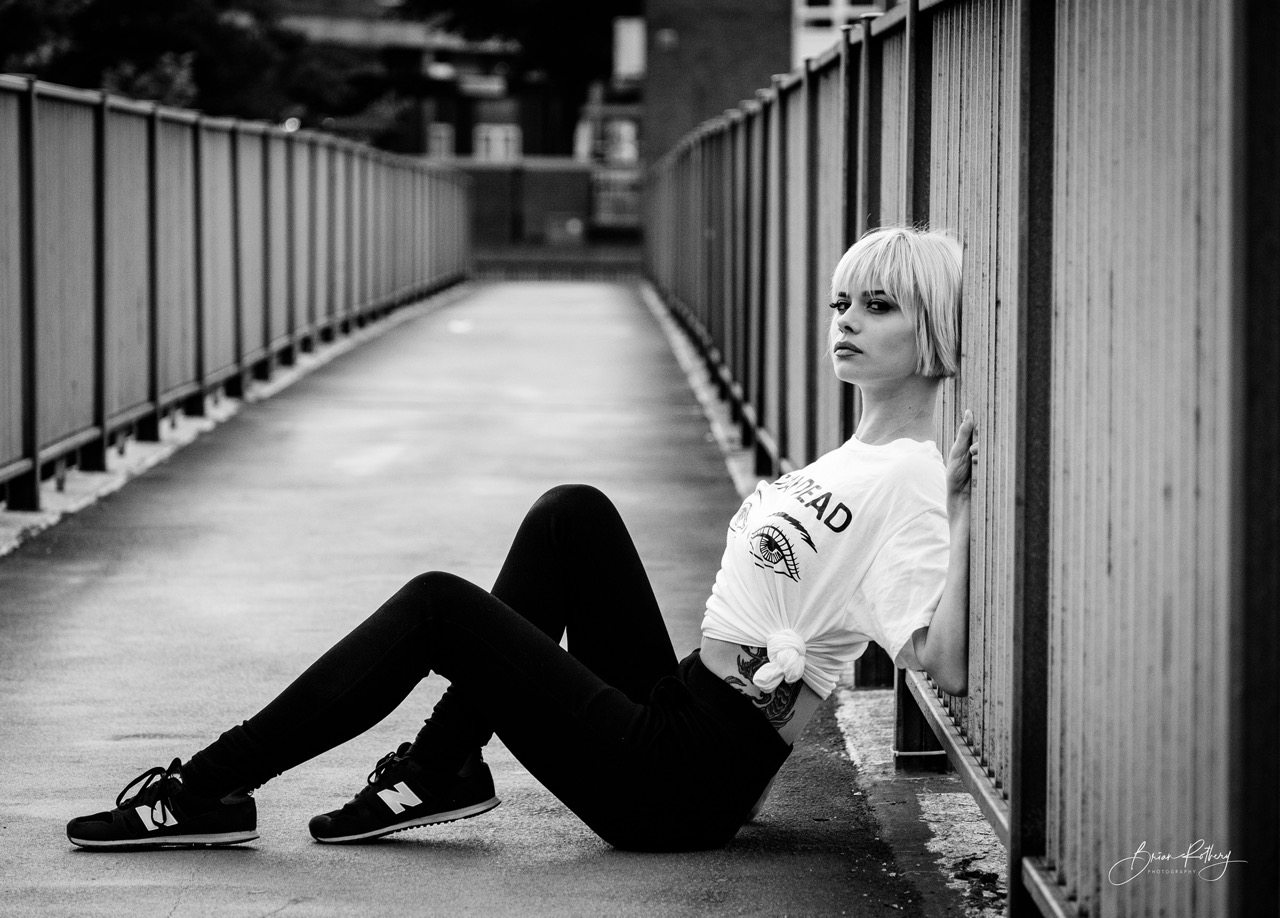

A commercial portfolio is not a collection of your most beautiful moments; it is a strategic asset designed to solve a casting director's immediate problem. If your current book feels too editorial or niche, you likely lack the relatability that household brands crave. By studying successful commercial model portfolio examples, you can transition from simply looking good to looking like the solution to a brand's marketing brief. It's about moving beyond the aesthetic and focusing on the functional value you bring to a campaign.
You probably feel the pressure of balancing the cost of professional photography against the uncertainty of future bookings. It's a valid concern amongst those who view their career as a business rather than a hobby. I promise to show you exactly how to curate a book that commands attention and justifies every penny of your investment. We'll explore the essential frameworks for 2026, including a clear list of required shots and an analysis of current market requirements, to give you total confidence in your professional visual identity.
Key Takeaways
- Understand why your portfolio must function as a professional visual CV that prioritises relatability over the "perfect" imagery of previous decades.
- Identify the five essential commercial model portfolio examples, including the "Clean Digital" and the approachable "Commercial Headshot", to meet modern casting requirements.
- Learn to distinguish between artistic editorial storytelling and the strategic, mass-market focus required for high-impact commercial bookings.
- Master the art of shoot preparation by selecting a wardrobe and colour palette that resonates with major retailers and professional brands.
- Shift your mindset from being a passive subject to a strategic partner, using professional photography as a vital investment for your long-term growth.
Why Commercial Model Portfolio Examples Matter for Your Career in 2026
Your portfolio is not a personal photo album; it is a visual CV designed for a high-stakes business environment. Whilst many beginners view their book as a gallery of their favourite looks, professionals understand it is a calculated business asset. In the current market, the industry has shifted away from the unattainable, "perfect" imagery of the past. Brands now prioritise relatability and authenticity. They want to see a version of a person that their customers can actually identify with at a bus stop or in a supermarket aisle. Studying modern commercial model portfolio examples reveals this trend clearly: the most successful books focus on "real" moments rather than overly staged poses.
Trust is the primary currency between a model and a brand. High-street retailers and global agencies don't have the time to guess if you can deliver the right energy on set. A curated selection of 6-10 high-quality images is far more effective than a bloated 50-image gallery. A concise book signals that you understand your own brand identity and respect the casting director's time. It proves you can be the face of a campaign without the need for heavy digital manipulation, establishing you as a reliable professional partner from the first click.
The Portfolio as a Strategic Business Investment
Viewing professional photography as a "cost" is a common pitfall that stalls many careers. Instead, successful models treat their shoots as a vital investment in their business infrastructure. High-end portrait photography and fashion photography provide the technical foundation that reduces friction for casting directors. When your imagery is technically flawless and strategically aligned with market needs, you remove the risk for the client. This professional clarity ensures your book remains relevant in a fast-paced digital market, providing a much higher ROI than a series of amateur snapshots.
Commercial vs. Social Media: The Professional Boundary
Instagram is a useful supplement, but it is never the foundation of a professional career. Relying on "unfiltered" social content for high-stakes applications is a significant risk to your brand integrity. A professional portfolio establishes a cohesive visual identity that signals you are ready for the demands of a commercial set. For those understanding the role of a commercial model, it's clear that agencies require a specific standard of lighting and composition that social media simply cannot replicate. By maintaining this professional boundary, you position yourself as a serious contender for major contracts, whilst your social presence remains a secondary tool for engagement.
The Anatomy of a Successful Commercial Portfolio: 5 Essential Examples
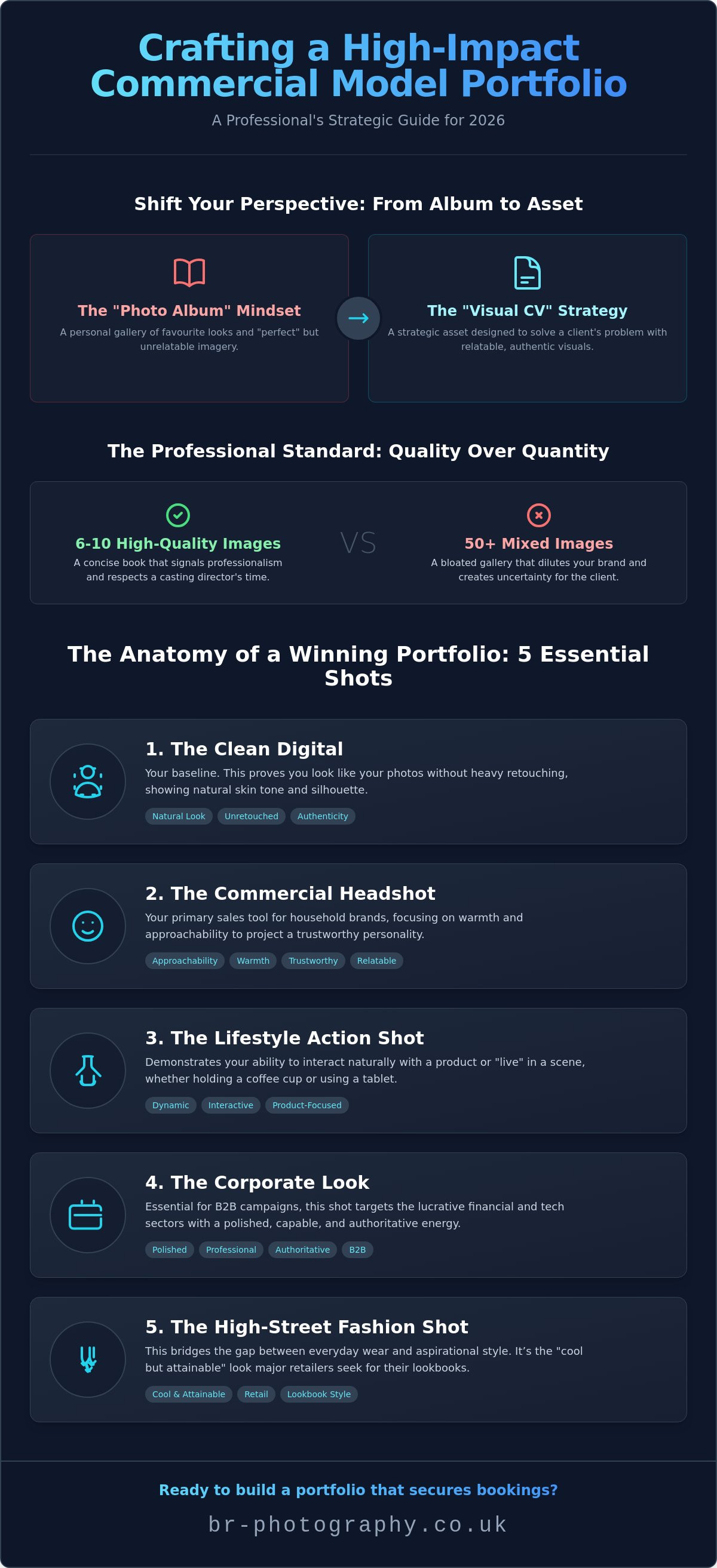
Building a book that secures consistent bookings requires more than just high-quality images. It requires a strategic selection of archetypes. When reviewing commercial model portfolio examples, you will notice a recurring structure designed to answer five specific questions for a client. Can you look natural? Are you approachable? Can you move? Do you look professional? Can you sell a lifestyle? Your portfolio must provide these answers instantly, removing any hesitation from the casting process.
To ensure your book is competitive in 2026, you need these five pillars:
- The Clean Digital: This is your baseline. It proves you look like your photos without heavy retouching or deceptive lighting. Casting directors use these to see your natural skin tone and silhouette.
- The Commercial Headshot: This is your primary sales tool for household brands. It focuses on warmth and approachability, projecting a personality that customers trust.
- The Lifestyle Action Shot: This demonstrates your ability to interact with a product naturally. Whether it's holding a coffee cup or using a tablet, it proves you can "live" in a scene.
- The Corporate Look: Essential for B2B campaigns, this shot targets the lucrative financial and tech sectors. It requires a polished, capable, and authoritative energy.
- The High-Street Fashion Shot: This bridges the gap between everyday wear and aspirational style. It’s the "cool but attainable" look that major retailers use for their seasonal lookbooks.
Mastering the "Clean Digital" Look
Simplicity is often the most sophisticated tool at your disposal. Casting directors use digitals to see your "raw" canvas. This means employing natural lighting, minimal makeup, and form-fitting clothing that doesn't distract from your silhouette. It is vital to show your bone structure and hair texture clearly. Agencies need to see the reality of what they are hiring. If a client can't see the real you, they won't take the risk of booking you for a full production day. Keep it honest. Keep it clean.
The Psychology of the Commercial Headshot
A marketable headshot is vastly different from a "pretty" photo. It relies on eye contact and subtle micro-expressions that project warmth and reliability. The goal is to make the viewer feel they already know you. Mastering the "commercial smile" is a technical skill. It must look effortless, not forced. It's about being the person people want to buy from. If you're unsure how to achieve this balance, it's worth speaking to a specialist to discuss your professional visual identity. This approach ensures your headshot isn't just a portrait. It's a functional asset that speaks directly to the needs of major retailers.
Commercial vs Editorial: Understanding the Strategic Difference
Many aspiring models make the mistake of thinking versatility means having a bit of everything in one book. It doesn't. In fact, blending commercial and editorial styles without a clear strategy often backfires. Whilst editorial work is about the "art" of the image, commercial work is about the "utility" of the subject. When you look at high-performing commercial model portfolio examples, the distinction is sharp. One sells a dream; the other sells a product. If you don't define your direction, you risk appearing too "niche" for high-street brands whilst being too "relatable" for high-fashion houses.
The primary difference lies in the psychology of the pose. Commercial work requires a natural and fluid energy. You're meant to look like a person living their life, caught in a moment of genuine joy or focus. Editorial work, however, embraces the angular and the avant-garde. It prioritises the storytelling of the clothes or the concept over the person. Mixing these two incorrectly can confuse casting directors. If a director for a major financial services campaign sees too many "high-fashion" micro-expressions, they'll doubt your ability to connect with their mass-market audience. This misalignment is a primary reason why many books fail to generate a return on investment.
Identifying Your Primary Market
You must analyse your natural "look" to determine which sector offers the highest ROI for your specific features. Are you the face of a seasonal campaign for a major retailer, or are you the silhouette for an independent London fashion zine? Some models successfully navigate a "commercial-editorial" hybrid, but this requires a sophisticated understanding of how to separate these assets. When submitting to UK agency boards, you must tailor your book to their specific divisions. Most agencies maintain separate boards for commercial and main-board fashion; your portfolio must speak the specific language of the board you desire to join.
The Role of Styling and Grooming
Styling is the most immediate indicator of your intended market. Commercial styling should be recognisable, aspirational, and strictly brand-aligned. Think of clean textures and palettes that wouldn't look out of place in a department store. Editorial styling is the opposite: it's conceptual, trend-heavy, and often provocative. In a commercial shoot, less is always more. You want the brand to be able to "see" you in their own campaign. Excessive styling or heavy makeup acts as a barrier, whereas a clean, professional look allows a casting director to project their brand's identity onto you. This clarity is what transforms a simple shoot into a strategic business asset.
Planning Your Shoot: How to Curate a Versatile Commercial Book
A professional hair and makeup artist (HMUA) is a vital component of this strategy. Their role is not to transform you into someone else, but to provide the subtle enhancement required for high-definition commercial standards. They ensure your skin looks healthy and your hair has the right texture without appearing over-styled. This level of polish is what separates a hobbyist from a professional ready for a national campaign. It allows brands to see your potential as a reliable face for their products.
Selecting the Right Photographer
You need a specialist who understands that a commercial book is about personality, not just symmetry. This is a collaborative alliance, not a simple vendor transaction. Evaluating a photographer’s ability to capture micro-expressions is more important than their ability to take a "pretty" picture. Technical mastery of lighting is non-negotiable. Whether you are shooting urban portrait photography or fashion photography, the lighting must be intentional and clean. This precision ensures your images look expensive and brand-ready, meeting the exacting standards of modern casting directors.
The Art of Image Curation
Your final selection must be ruthless. Never include "filler" images just to take up space. A shorter, high-impact book is infinitely more effective than a long, mediocre one. Follow the "First Image" rule: your lead shot must make a definitive impact within the first three seconds. If it doesn't, a casting director will likely move on to the next candidate. The flow of your book should demonstrate range whilst maintaining brand cohesion. To stay relevant for 2026, you should update your imagery whenever your look changes significantly or market trends shift. If you are ready to build a book that functions as a high-impact business tool, you can book a professional session to elevate your portfolio. This ensures every frame in your book serves a specific commercial purpose and demonstrates the commercial model portfolio examples that agencies actually want to see.
Elevating Your Professional Identity with Strategic Photography
Your transition from an aspiring model to a professional asset requires a mental shift. You are no longer just a subject in front of a lens; you are a strategic partner to a brand. High-end commercial work is a collaborative effort to drive consumer behaviour. When you present a book filled with accurate commercial model portfolio examples, you signal that you understand this business dynamic. It shows you aren't just looking for a "pretty" picture. You are looking to provide the visual solution a marketing team needs to hit their quarterly targets.
The psychological benefit of a professional shoot cannot be overstated. Walking into a casting with a book you trust changes your performance. It replaces anxiety with a quiet, expert confidence. This shift in energy is often what clinches a booking during the final rounds of selection. Brands want to work with individuals who are comfortable in their professional identity. They want partners who can lead high-stakes projects without hesitation. A professional shoot is the catalyst for this growth.
The BR-Photography Collaborative Approach
At BR-Photography, we don't just take pictures. We form a collaborative alliance with our clients to ensure their visual assets are fit for purpose. Our sessions are tailored to the specific creative needs of each model, focusing on stylish, modern portraits that resonate with the UK commercial market. Whether we are producing fashion photography, portrait photography, or urban portrait photography, the goal is always authenticity. We also offer personal brand photography for models looking to establish a unique digital presence. We specialise in putting nervous subjects at ease. This allows us to capture the genuine, marketable moments that casting directors prioritised in our earlier analysis.
Securing Your Professional Future
Now is the time to refine your visual identity. The upcoming season will demand a fresh, relatable look that aligns with 2026 market trends. High-quality imagery has a measurable impact on your agency applications and direct bookings. It reduces the perceived risk for the client. It positions you as a premium choice amongst a sea of generalists. Investing in your book is investing in your career's longevity. You can Book your commercial portfolio session with BR-Photography today to ensure your visual CV is ready for the challenges of the new year.
Secure Your Market Position for 2026
Building a book that commands attention in the current landscape requires a shift from purely aesthetic choices to strategic business decisions. You now understand that your portfolio is a professional visual CV designed to solve a casting director's problem. By prioritising relatability and authenticity over outdated perfection, you position yourself as a versatile asset for household brands. We have explored the essential commercial model portfolio examples that agencies demand, from the "Clean Digital" to the "Lifestyle Action" shot, ensuring your book is functional and results-oriented.
Success in this industry is rarely accidental. It requires a collaborative alliance with a specialist who understands the nuances of fashion and urban portraiture. Expert photographer Brian Rothery leads our team with a strategic approach that moves beyond the lens to focus on your long-term career growth. Don't leave your bookings to chance. It's time to refine your visual identity and present a book that reflects your professional ambition. Invest in your career with a professional commercial portfolio session and enter the new season with total confidence in your brand.
Frequently Asked Questions
What is the difference between a commercial and fashion modelling portfolio?
Commercial portfolios prioritise mass-market relatability and the functional utility of the model as a brand partner, often focusing on warmth and approachability. Fashion portfolios, particularly editorial ones, focus on avant-garde storytelling and artistic concepts. Whilst fashion work requires angular posing, commercial work demands fluid, natural energy that customers can identify with in their daily lives.
How many photos should be in a commercial model portfolio in 2026?
A curated book of 6-10 high-quality images is the professional standard for 2026. Quality always overrides quantity in a competitive market. Casting directors often make decisions within seconds; a concise selection of commercial model portfolio examples ensures your strongest assets are seen immediately without the distraction of mediocre filler.
Do I need professional photos to apply to a commercial modelling agency?
You don't strictly need a full book to apply, but professional imagery significantly increases your chances of being signed. Agencies often use simple "digitals" to assess your raw potential. However, a professional portfolio proves you can handle a high-stakes set and understand technical lighting, which reduces the perceived risk for the agent.
What should I wear to a commercial portfolio photoshoot?
Select clothing that appeals to major high-street retailers. Neutral colours, soft pastels, and classic navy perform best in a commercial context. Avoid heavy patterns or logos that might date the images or distract from your features. The goal is to provide a clean canvas that allows a brand's marketing team to project their own product identity onto you.
How often should I update my commercial model portfolio?
Aim to update your book every 6-12 months to ensure your visual identity remains current. You must also refresh your imagery immediately if you change your hair colour, lose significant weight, or age into a new commercial bracket. Keeping your portfolio relevant to the current year shows agencies you're an active, professional partner.
What are "digitals" or "polas" and do I need them in my book?
Digitals, also known as polas, are raw, unretouched snapshots that show your natural canvas to casting directors. They are essential for every professional book. These shots prove that your current appearance matches your professional portfolio, ensuring there are no surprises for the client when you arrive on set for a production day.
Can I include editorial shots in a commercial portfolio?
You can include editorial shots if they are strategically selected to show range without diluting your commercial brand. Use them sparingly as "accent" images rather than the foundation of your book. If an editorial shot is too provocative or niche, it might confuse a mass-market client who needs to see your approachable, relatable side.
How do I choose the best commercial model portfolio examples to follow?
Analyse the websites of leading UK agencies to see which commercial model portfolio examples they prioritise for their signed talent. Match your features to their specific boards. Look for models with a similar "look" to your own and identify which sectors they are successfully booking. This data-driven approach helps you curate a book that targets specific markets with a high ROI.
Disclaimer
"The information provided in this Blog post is for general informational purposes only. While I strive to provide accurate information, I make no representations or warranties of any kind about the accuracy, reliability, or completeness of this information. Any reliance you place on such information is strictly at your own risk. In no event will I be liable for any loss or damage derived from the use of this blog."


