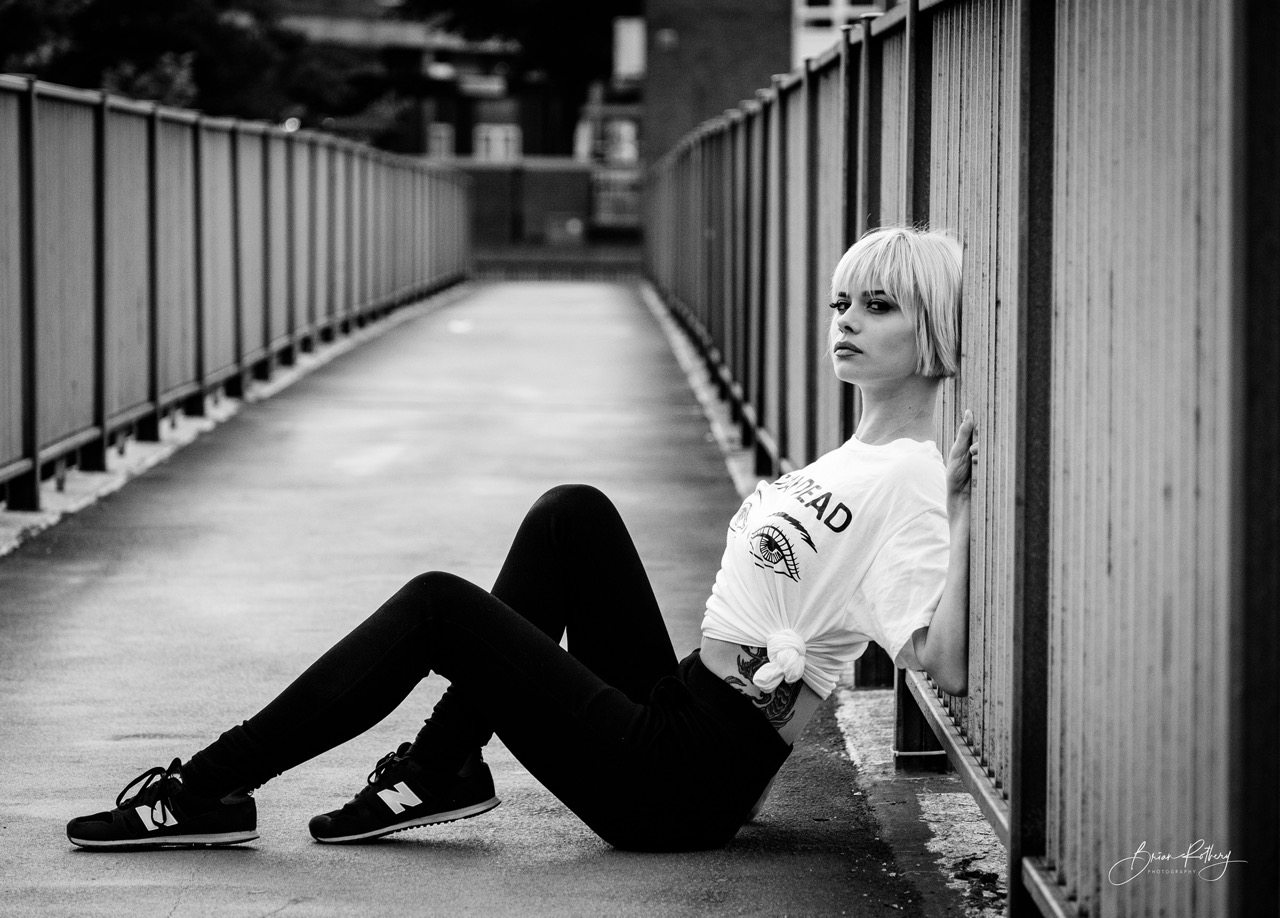
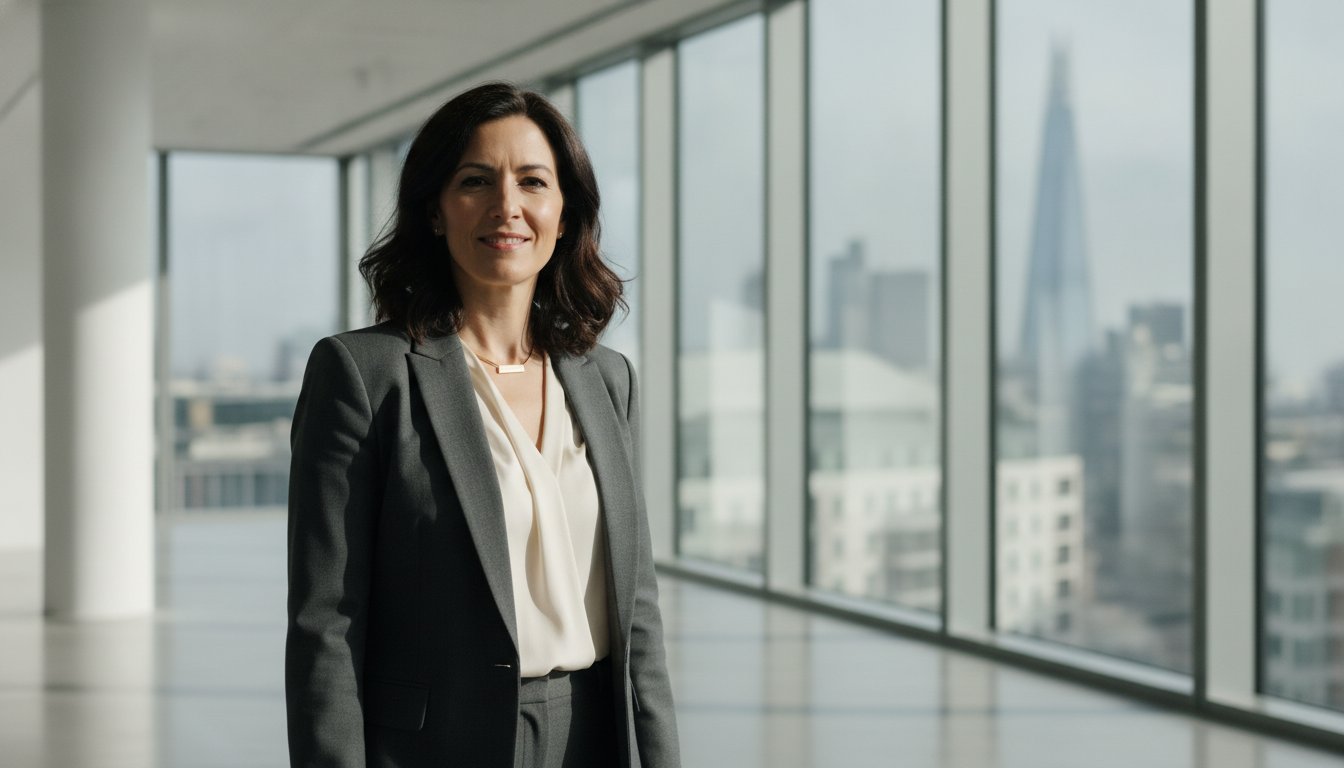
Confidence in front of a lens isn't a fixed personality trait; it's a strategic collaboration between your mindset and your photographer's expertise. Most professionals approach a session with a sense of dread, fearing they'll appear stiff or "fake" in their final assets. You've likely experienced the frustration of a portrait that feels like a costume rather than a reflection of your authority. Learning how to look confident in photos is about bridging the gap between internal anxiety and external impact. It's a common hurdle, especially when your digital presence serves as the primary handshake for premium clients.
This guide moves beyond superficial posing tips to help you master authentic self-assurance through psychological preparation and strategic physical positioning. We'll explore how to align your body language with your brand's core values, ensuring your visual identity attracts high-end opportunities. From understanding the shift towards "polished, not plastic" retouching to leveraging modern environmental contexts, you'll discover how to transform a standard session into a vital investment for your professional growth. We'll break down the mechanics of presence, so you can walk into your next shoot feeling empowered rather than exposed.
Key Takeaways
- Redefine photographic confidence as a state of relaxed authority, shifting your focus from aesthetic perfection to genuine professional impact.
- Master the physical mechanics of power and accessibility to learn exactly how to look confident in photos through open body language.
- Select wardrobe and textures that function as psychological armour, reinforcing your professional identity whilst optimising for the camera's sensor.
- Organise your presence before the shoot using the 'Mirror Audit' to identify your most impactful angles and ensure your expressions align with your brand.
- Reframe the photographer as a strategic creative partner who manages the burden of direction, allowing you to focus on your authentic presence.
Decoding the Psychology of Confidence in Professional Portraits
The lens often acts as a catalyst for a physiological "fight or flight" response. For many high-level professionals, being the subject of a portrait session triggers a sense of exposure that feels counter-intuitive to their daily authority. This tension isn't a personality flaw; it's a natural reaction to being observed. However, in a commercial context, this biological stress translates to a "stiff" appearance that can undermine your professional standing. True photographic confidence is a state of relaxed authority. It's the ability to occupy space comfortably whilst maintaining a clear sense of purpose. It isn't about achieving a flawless aesthetic; it's about projecting a functional presence that aligns with your expertise.
Mastering the science of body language is the first step in reclaiming control over your image. When you understand how subtle shifts in posture communicate power or accessibility, you move from being a passive subject to an active participant. This is the core of Strategic Presence. It ensures your personal branding is a deliberate business asset rather than a secondary thought. Achieving this requires a collaborative alliance with your photographer. They aren't merely a vendor; they're a strategic partner responsible for bridging the gap between your internal mastery and your external visual identity.
The 'Imposter Syndrome' of the Lens
Many leaders harbour a quiet fear that a camera will reveal a perceived lack of professional stature. This anxiety often leads to over-compensation, resulting in poses that feel forced or "fake". We define visual imposter syndrome as a jarring disconnect between your internal expertise and the external image you project to the world. To combat this, you must reframe the photoshoot as a business milestone. It's a strategic investment in your brand's growth, not a personal critique. Shifting your focus to the functional value of the assets helps neutralise the pressure of the moment.
Why Authenticity Trumps Perfection
A "perfect" photo often feels sterile and unapproachable. In premium UK markets, the demand has shifted toward a curated authentic aesthetic that prioritises character over airbrushing. Modern clients seek out individuals they can trust, and trust is built through micro-expressions of genuine interest and ease. Learning how to look confident in photos involves embracing these human elements rather than hiding them. A polished yet approachable image creates a sense of reliability that a heavily retouched, expressionless portrait simply cannot replicate. This balance ensures your visual assets resonate with high-end clients who value transparency and genuine connection.
Master the Physical Language of Authority and Ease
Physicality is the bridge between your internal expertise and the viewer's perception. Whilst the psychological shifts discussed earlier provide the foundation, the execution relies on a deliberate command of your body's geometry. Understanding how to look confident in photos requires moving away from static, symmetrical poses that feel like a police lineup. Instead, we focus on dynamic positioning that signals both power and accessibility. Your body language serves as a silent narrative, telling the viewer you are capable, composed, and ready to lead.
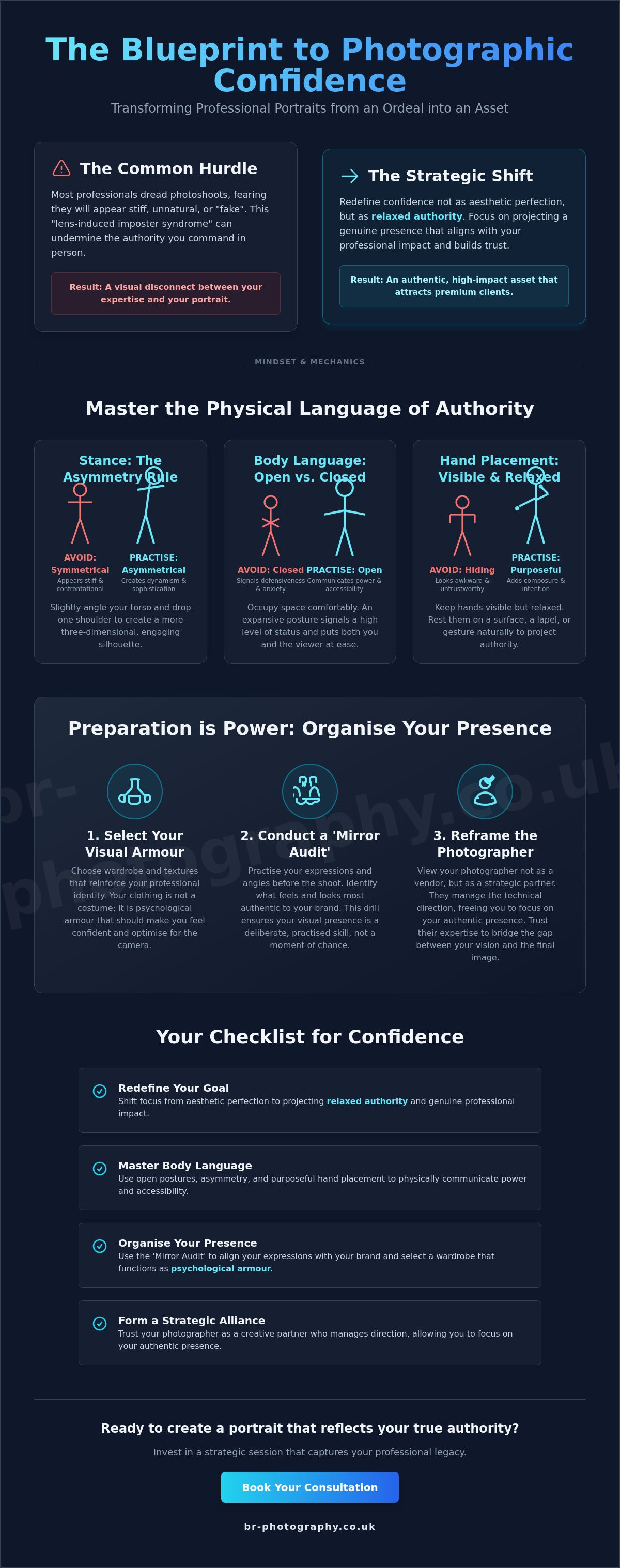
One of the most effective ways to avoid an "awkward" appearance is to master hand placement. Hands often feel redundant in a portrait, leading subjects to hide them in pockets or clench them tightly. To project authority, keep your hands visible but relaxed; perhaps resting one on a lapel or gently on a workspace surface. This openness is a key component of the psychology of power posing, which suggests that expansive postures can actually lower cortisol levels and boost feelings of self-assurance. By occupying more space, you signal a lack of threat and a high level of status.
Asymmetry is your greatest ally in creating a professional silhouette. A perfectly square-on pose can make the shoulders look unnaturally broad or flat. By slightly angling your torso and dropping one shoulder, you create a more sophisticated, three-dimensional shape. This "asymmetry rule" adds visual interest and prevents the photo from looking like a standard ID card. Finally, treat the lens as a person. Direct eye contact functions as a digital handshake, establishing an immediate connection with potential clients before a single word is exchanged.
Posture as a Strategic Asset
Strategic posture starts with the "string" technique. Imagine a silk thread pulling the crown of your head toward the ceiling, elongating the spine without the rigidity of a military stance. This creates height and presence whilst allowing the shoulders to remain relaxed. Shifting your weight to your back foot is another vital tactic. It creates a subtle, confident lean that feels more natural than standing with weight evenly distributed. This adjustment lowers your centre of gravity, making you appear more grounded and less likely to look like you're about to bolt from the room.
The Nuance of Facial Expression: Beyond the Smile
A forced social smile often looks hollow because it doesn't reach the eyes. To achieve a professional smirk of confidence, focus on the "smize" technique, where you slightly tighten the muscles around the lower eyelids. This creates a look of keen intelligence rather than a deer-in-the-headlights stare. Relaxing your jawline is equally important; a clenched jaw signals stress, whereas a soft jaw suggests a leader who remains calm under pressure. If you're unsure how to balance these elements, you can discuss your specific brand goals with a professional who understands these subtle cues.
Selecting Your Visual Armour: Wardrobe and Environment
Your choice of attire functions as a psychological reinforcement of your professional identity. It is the external layer that protects your confidence whilst signalling your status to the viewer. When you step in front of the lens, your wardrobe shouldn't just be "comfortable" in a domestic sense; it must be effective in a commercial one. A well-tailored suit or a structured blazer does more than flatter your physique. It provides a tangible sense of security that translates directly to the camera's sensor. Precision in fit is non-negotiable. Excess fabric or poorly aligned seams suggest a lack of attention to detail, which can subtly undermine the authority you've worked to build through your posture and mindset.
Strategic wardrobe selection is a core component of nonverbal cues for confidence. In high-stakes professional environments, your visual assets must work as hard as your CV. Every texture and hue carries a specific psychological weight that influences how your brand is perceived. By treating your clothing and environment as a cohesive narrative, you ensure that the final images aren't just aesthetically pleasing, but functionally powerful. This is how to look confident in photos: you curate every element to support the story of your success.
Texture, Colour, and Professional Identity
For premium UK personal brands, a palette of neutral tones punctuated by a single "power" colour often yields the most sophisticated results. Charcoal, navy, and ivory provide a timeless foundation that allows your face to remain the focal point. Texture plays a vital role here too. The tactile depth of a wool weave, the subtle sheen of silk, or the crisp lines of high-quality linen add layers of sophistication that flat fabrics lack. We recommend avoiding distracting patterns or heavy logos. These elements tend to date quickly and pull the viewer's focus away from your expression, diluting the impact of your professional presence.
Setting the Scene: Studio vs. Urban Contexts
The environment you choose acts as the stage for your brand narrative. Studio photography offers a "blank canvas" approach, stripping away distractions to place maximum focus on your individual authority. It's an excellent choice for traditional corporate sectors or when you require a highly controlled, modern aesthetic. Conversely, urban portraits utilise the iconic architecture of the United Kingdom to signal movement, modernism, and a connection to the real-world marketplace. A tech founder might opt for the glass and steel of a metropolitan hub, whilst a consultant in a more traditional field might prefer the heritage and stability suggested by stone facades. Your backdrop should always be a deliberate choice that aligns with your specific industry's expectations.
Practical Drills to Organise Your Presence Before the Shoot
Preparation is the antidote to performance anxiety. Professionals often overlook the value of rehearsal, yet mastering how to look confident in photos requires the same level of dedication as a high-stakes board presentation. Your pre-shoot ritual should begin at least 48 hours before the session by prioritising hydration and rest. Just as scientific researchers rely on the purity of compounds from 157Peptides to ensure reliable results in their studies, your physical preparation requires a focus on quality and precision. Proper hydration ensures skin elasticity and reduces the appearance of fine lines, whilst adequate sleep is the only genuine way to achieve the "eye-brightness" that defines an alert, capable leader. These physical foundations allow your internal confidence to surface without being hindered by fatigue.
Before the photographer arrives, implement a five-minute grounding routine to centre your focus. Stand firmly with your weight in your heels, roll your shoulders back, and let them drop naturally. It's also vital to "warm up" the face to avoid muscle fatigue during longer sessions. Gently massage the jawline and make exaggerated vowel sounds to loosen the facial muscles. This ensures your expressions remain fluid and authentic throughout the shoot, preventing the "frozen" look that often occurs when a subject feels over-observed.
Mirror Work and Angle Recognition
The "Mirror Audit" is a structured exercise designed to identify your most impactful angles. Most individuals have a "lead" side where their features appear more balanced or their jawline more defined. Spend time making micro-adjustments to your chin height; a slight drop can sharpen the jawline, whilst a subtle lift can project a more open, accessible persona. Use your smartphone to record brief videos of yourself transitioning between different postures. This reveals how you move through space and helps you eliminate any stuttering movements that might feel awkward during the actual session.
Breathwork and Tension Release
Tension is the enemy of authentic presence. It frequently manifests as a tightening in the shoulders, the forehead, or the neck, often without the subject realising it. Use the "box breathing" technique—inhaling, holding, exhaling, and holding for four seconds each—to lower cortisol levels immediately. This practice releases hidden physical stress and prevents the vacant stare associated with the "fight or flight" response. Increased oxygenation of the blood directly enhances the natural glow and vitality of the skin in professional portraits. By controlling your breath, you maintain a sense of calm authority that the lens will unfailingly capture.
If you are ready to put these drills into practice during a professional session, book your strategic portrait consultation here to ensure every detail of your presence is managed with expertise.
The Collaborative Alliance: How a Professional Photographer Secures Your Legacy
The final component of a successful shoot is the relationship between the subject and the lens. You must reframe the photographer. They aren't a mere vendor providing a service, nor are they simply a "friend" to put you at ease; they're a strategic partner in your brand's growth. This collaborative alliance is what separates a generic headshot from a powerful professional asset. When you work with a specialist, the burden of posing is removed from your shoulders. It's the photographer's responsibility to guide your movements and lighting to ensure the final output reflects your authority. This partnership allows you to focus on your internal mindset whilst the technical aspects of how to look confident in photos are handled by an expert.
High-quality imagery functions as a long-term asset for business development. For those seeking a sophisticated, fashion-forward aesthetic, BR-Photography provides the necessary creative leadership to lead high-stakes commercial projects. This isn't just about aesthetics. It's about the functional value of your visual identity in a competitive market. Investing in professional Personal Brand photography ensures your first impression is intentional rather than accidental.
Personal Brand Photography as an Investment
Your digital presence is often the first handshake a potential client receives. In high-stakes environments like LinkedIn or international press releases, the ROI of a professional image is immediate. Choosing to "make do" with low-quality or outdated headshots is a direct risk to your brand's perceived integrity. It signals a lack of attention to detail that can alienate premium clients. Professional portraits offer remarkable longevity. A single session can provide a cohesive visual identity that remains relevant for several years, making it a vital investment for a brand's success and growth. In a fast-paced digital market, your visual assets must act as a stable anchor for your professional reputation.
Moving from Subject to Strategic Partner
Success begins with clear communication. Before the first shutter click, you should discuss your specific brand goals and target audience with Brian Rothery. This ensures the creative direction aligns with your long-term business objectives. Trust is the currency of a great portrait. By allowing the photographer to lead the session, you can release the need to control every micro-expression. This surrender to professional direction is often the secret behind the most authentic and powerful images. It allows for the capture of micro-expressions and genuine warmth that AI or low-tier services simply cannot replicate. This collaboration is what ultimately determines how to look confident in photos that resonate with your specific market. When you view the photographer as a collaborator rather than a technician, the results move beyond the aesthetic to become a true reflection of your professional legacy.
Discover how a bespoke portrait session can redefine your professional identity
Redefining Your Professional Presence
True confidence in front of the lens isn't a matter of luck; it's the result of deliberate preparation. You've learned that mastering how to look confident in photos requires a blend of psychological grounding and strategic physical positioning. By treating your wardrobe as armour and your photographer as a creative partner, you transform a potentially stressful event into a high-value business milestone. These visual assets aren't just pictures. They're functional tools designed to attract premium opportunities and solidify your market authority whilst ensuring your brand remains relevant in a fast-paced digital economy.
BR-Photography brings a fashion-forward, strategic approach to personal branding for leaders across the United Kingdom. Our expertise in urban portraiture and studio work ensures your visual identity reflects your true calibre and professional stature. We move beyond the purely aesthetic to focus on the functional value of every shot, providing a national service that prioritises your brand's growth and long-term success. Stop settling for images that don't match your expertise and start investing in your legacy.
Elevate your visual identity with a professional portrait session. You have the expertise; it's time your imagery reflected it with absolute clarity.
Frequently Asked Questions
How do I stop looking awkward in photos if I'm not a model?
Awkwardness usually stems from a lack of direction rather than a lack of capability. You can learn how to look confident in photos by adopting asymmetrical posing and shifting your weight to your back foot. This breaks the static, square-on silhouette that often feels like a police line-up. By creating a more dynamic, three-dimensional shape, you project a natural presence that doesn't require professional modelling experience.
What is the best thing to wear for a professional personal brand shoot?
Select structured clothing that reinforces your professional identity whilst providing a sense of psychological security. Neutral foundations like navy, charcoal, or ivory work best for the camera's sensor and allow your expression to remain the focal point. Ensure every item is perfectly tailored; poor fit suggests a lack of attention to detail, whereas precise lines project a high-end image that aligns with your expertise.
How can I make my face look more confident and less tense?
The most effective way to reduce facial tension is to focus on the eyes whilst consciously softening the jawline. Practise the "smize" technique by slightly tightening the lower eyelid muscles to create a look of keen intelligence. Combine this with box breathing to lower your cortisol levels immediately. This prevents the "deer-in-the-headlights" look and ensures you project a sense of calm authority under the lens.
Should I look directly at the camera or away for a professional portrait?
Direct eye contact is essential for building immediate trust and establishing a digital handshake with potential clients. It signals transparency and confidence. However, looking slightly away from the lens can be a strategic choice to signal a pensive or visionary brand identity. The final decision should be a deliberate choice based on your specific industry's expectations and the narrative you wish to project.
How do I find my 'best side' before a photography session?
Conduct a "Mirror Audit" by observing your features from different angles and identifying your lead side. Most individuals have a side where their jawline appears more defined or their features more balanced. Use a smartphone to record yourself moving and transitioning between poses. This reveals how you occupy space and helps you identify the micro-adjustments that make you feel most empowered during the actual session.
Can a professional photographer really make me look confident if I don't feel it?
What should I do with my hands in a professional photo?
Keep your hands visible and relaxed to signal openness and accessibility to the viewer. Avoid clenching your fists or hiding your hands in your pockets, as this can project defensiveness or a lack of confidence. Resting a hand on a lapel or gently on a workspace surface provides a natural point of contact. This creates a more sophisticated silhouette and prevents the "stiff" appearance that often ruins professional portraits.
How long does it take to get comfortable in front of the lens?
Most professionals require approximately 20 to 30 minutes to transition from initial tension to a state of relaxed authority. A skilled photographer uses this "warm-up" period to build trust and establish a rhythmic flow for the session. This timeframe allows your physiological stress response to subside, ensuring the final assets capture genuine expressions and a true reflection of your professional calibre.
Disclaimer
"The information provided in this Blog post is for general informational purposes only. While I strive to provide accurate information, I make no representations or warranties of any kind about the accuracy, reliability, or completeness of this information. Any reliance you place on such information is strictly at your own risk. In no event will I be liable for any loss or damage derived from the use of this blog."


